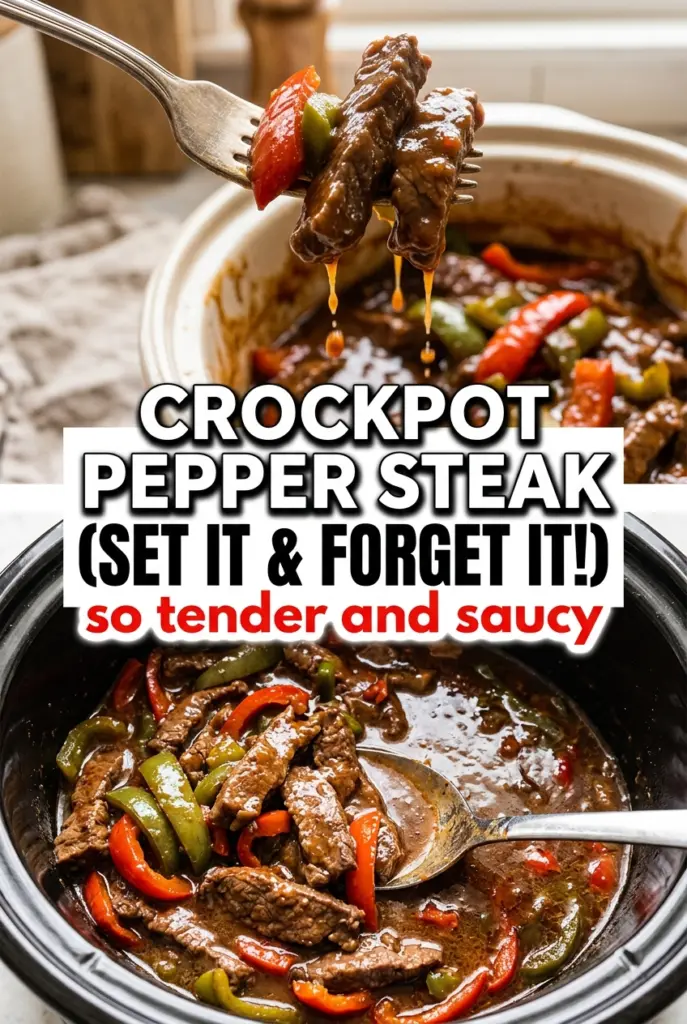
Tender beef, soft onions, and bell peppers soaked in a savory-sweet sauce make Crock Pot Pepper Steak one of those dinners that earns its place in the regular rotation fast. The slow cooker does the heavy lifting, but the dish still tastes layered and intentional, not like everything was dumped in and walked away from. What you get at the end is beef that’s supple enough to pull apart with a fork and vegetables that still taste like themselves instead of disappearing into the sauce.
The difference here is starting with a quick sear on the beef before it goes into the crockpot. That step adds flavor you can’t get from the slow cooker alone, and it keeps the sauce from tasting flat. The soy sauce, brown sugar, rice vinegar, garlic, and ginger hit the right balance of salty, sweet, and bright, while the cornstarch slurry at the end turns the cooking liquid into a glossy sauce that clings to rice instead of pooling at the bottom of the bowl.
Below, I’ve included the detail that matters most if you want the beef tender instead of stringy, plus a few easy swaps if you need to work with what’s already in your kitchen.
The sauce thickened up beautifully at the end, and the beef was tender without falling apart. I served it over jasmine rice and my husband asked if I could put this in the dinner rotation every week.
Save this slow-cooked pepper steak for the kind of night when you want tender beef, glossy sauce, and a dinner that goes straight over rice.
The Sear Is What Keeps Crock Pot Pepper Steak from Tasting Flat
Slow cookers are great at tenderness, but they’re not great at building flavor on their own. If you skip the sear, the beef can still turn out soft, but it often tastes boiled instead of savory. Browning the strips first gives you those browned bits that carry into the sauce and make the finished dish taste like something that started with intention.
The other trap is overcooking the peppers. Bell peppers hold up better than most vegetables in a slow cooker, but they still go from pleasantly tender to limp if they sit too long. That’s why slicing them into thicker strips matters here. They soften enough to melt into the sauce a little, but they don’t disappear.
- Beef sirloin — Sirloin stays tender in the slow cooker better than leaner, tougher cuts. Slice it thin across the grain so it doesn’t cook up chewy.
- Soy sauce — This is the salty backbone of the dish. Use a regular soy sauce, not low-sodium unless you want a gentler finish, because the beef broth dilutes the seasoning a bit.
- Brown sugar and rice vinegar — The sugar rounds out the soy sauce, and the vinegar keeps the sauce from tasting heavy. That balance is what makes the dish taste like takeout instead of just salty beef.
- Cornstarch slurry — This is what turns the cooking liquid into a clingy sauce. Stir it in at the end, not at the beginning, or it can break down and lose its thickening power.
What Each Ingredient Is Actually Doing in This Dish
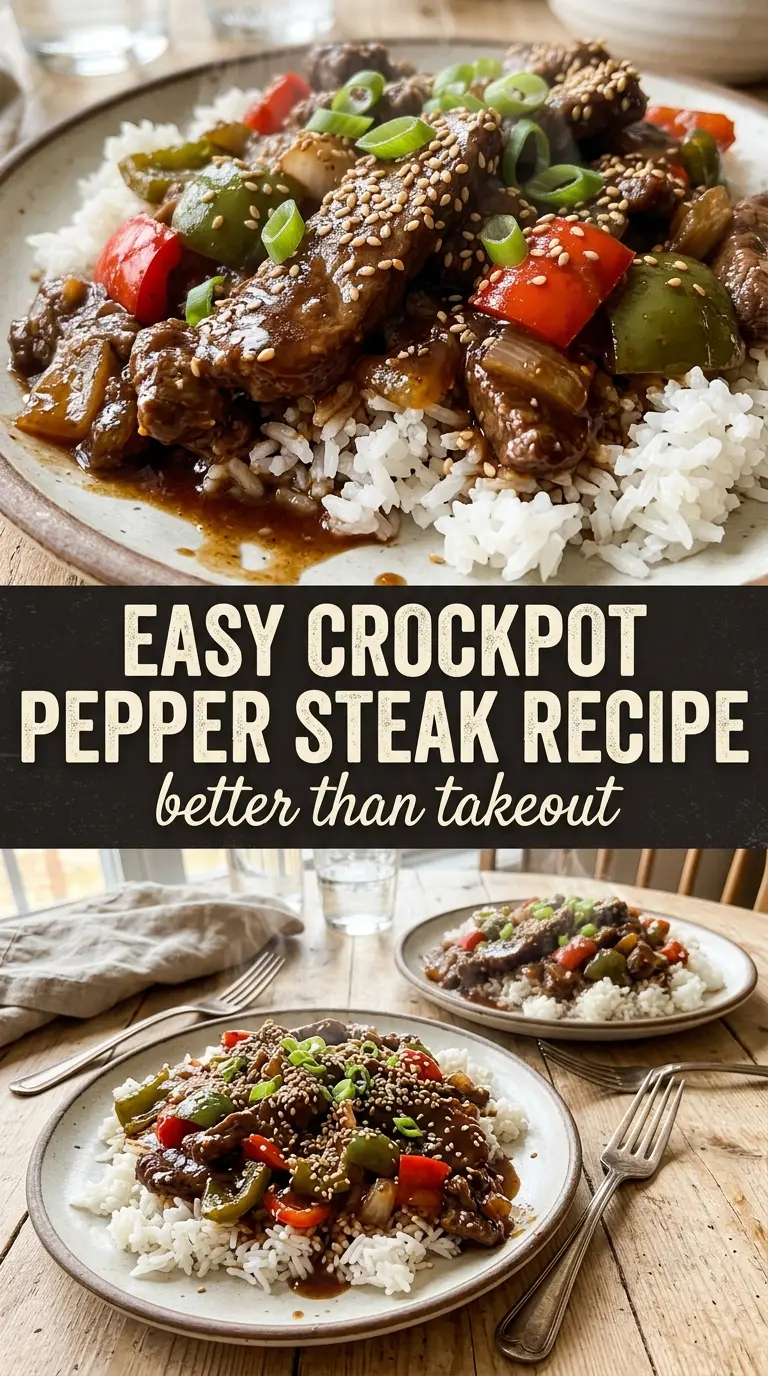
Beef sirloin gives you tender slices without needing an all-day braise. If you use a tougher cut, it can still work, but it needs the full low-and-slow time and thin slicing against the grain matters even more.
Bell peppers and onion build the body of the dish. Yellow onion melts into the sauce a little and adds sweetness, while the peppers bring color and a fresh note that keeps the finished dish from feeling heavy.
Ginger and garlic are small ingredients that carry a lot of weight here. Fresh ginger gives the sauce a clean bite that powdered ginger doesn’t quite match, but if dried is all you have, use 1/4 teaspoon and expect a flatter finish.
Beef broth stretches the sauce and helps the soy mixture coat everything. Use a broth you’d actually drink; thin, bland broth makes the whole dish taste diluted.
Building the Sauce Before the Slow Cooker Does Its Work
Browning the Beef First
Season the strips with salt and pepper, then sear them in hot olive oil just until they pick up color on the outside. You’re not cooking them through here; you’re building flavor and giving the surface enough browning to deepen the sauce. If the pan is crowded, the beef will steam instead of sear, so work in batches if needed.
Making the Slow Cooker Sauce
Whisk the soy sauce, brown sugar, rice vinegar, garlic, ginger, and beef broth together until the sugar dissolves. That first mix matters because undissolved sugar can settle at the bottom and leave the sauce uneven. Pour it over the beef, peppers, and onion so the seasoning gets distributed before the long cook.
Cooking Until the Beef Gives Easily
Cover and cook on low for 6 to 7 hours or on high for 3 to 4 hours. The beef should feel tender when you stir it, and the onions should look soft and glossy. If the beef still feels tight or resistant, it needs more time; pulling it too early is what gives you that firm, slightly dry texture people blame on the cut instead of the timing.
Thickening the Sauce at the End
Stir in the cornstarch slurry and cook on high for 10 to 15 minutes until the liquid turns glossy and lightly coats the beef and peppers. If you add the slurry too early, it can thin out again over the long cook. At the end, it should look like a proper sauce, not broth with ingredients floating in it.
How to Adapt This for Dairy-Free, Lower-Carb, or a Different Cut of Beef
Make it lower-carb
Replace the brown sugar with a low-carb sweetener that measures like sugar, then taste the sauce at the end and add a little more vinegar if it needs brightness. The sauce will still thicken with cornstarch, but you can use a smaller amount if you want it lighter.
Use flank steak or chuck if that’s what you have
Flank steak gives a similar slice and stays tender if cut thin against the grain, but it can dry out faster, so don’t push the cook time. Chuck works too, though it will be richer and less like classic takeout pepper steak; it needs the longer end of the cooking window to break down.
Make it gluten-free
Swap in a gluten-free soy sauce or tamari and keep everything else the same. Tamari tastes a touch deeper and rounder, which works well with the ginger and brown sugar.
Storage and Reheating
- Refrigerator: Store in an airtight container for up to 4 days. The peppers soften a bit more as it sits, but the flavor deepens.
- Freezer: It freezes well for up to 2 months. Cool it completely first and freeze with a little sauce so the beef doesn’t dry out when reheated.
- Reheating: Reheat gently on the stove over medium-low or in the microwave in short bursts, stirring between each one. High heat can tighten the beef and make the sauce look greasy before it warms through.
The Things That Trip People Up With This Dish
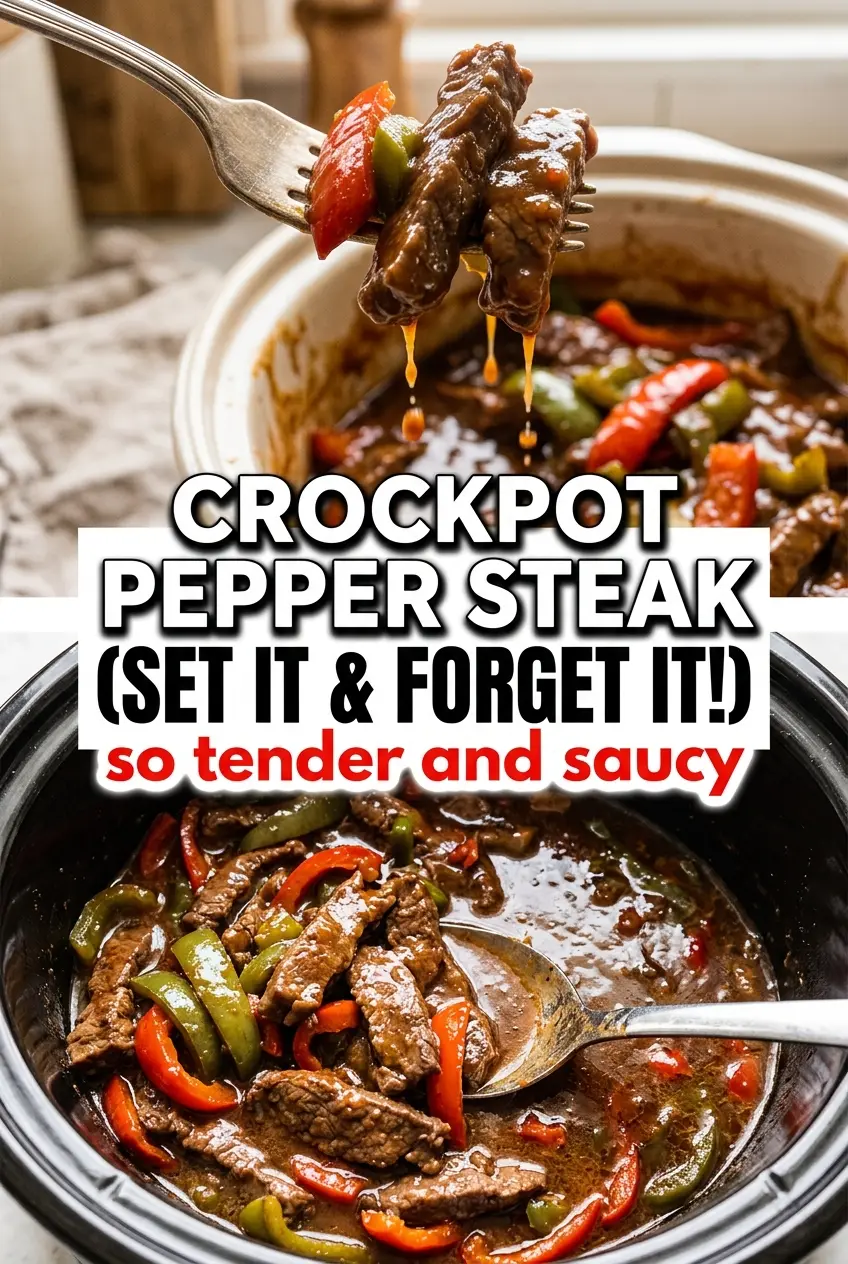
Crock Pot Pepper Steak
Ingredients
Equipment
Method
- Season the beef strips with kosher salt and black pepper. Heat the olive oil in a cast iron skillet over medium-high heat, then sear the beef for 2–3 minutes until browned with visible color on the edges.
- Transfer the beef, bell peppers, and yellow onion to the crockpot. Spread them out as evenly as possible so the vegetables cook consistently.
- Whisk together soy sauce, brown sugar, rice vinegar, garlic, fresh ginger, and beef broth until the sugar dissolves. Pour the mixture over the beef and vegetables so everything is coated.
- Cover and cook on low for 6–7 hours until the beef is tender. If using high, cook for 3–4 hours until the beef is tender, keeping the crockpot covered between check-ins.
- Stir the cornstarch slurry into the crockpot. Cook on high for 10–15 minutes, stirring once, until the sauce thickens and looks glossy.
- Serve immediately over rice. Spoon the pepper steak sauce over the rice while it’s hot.