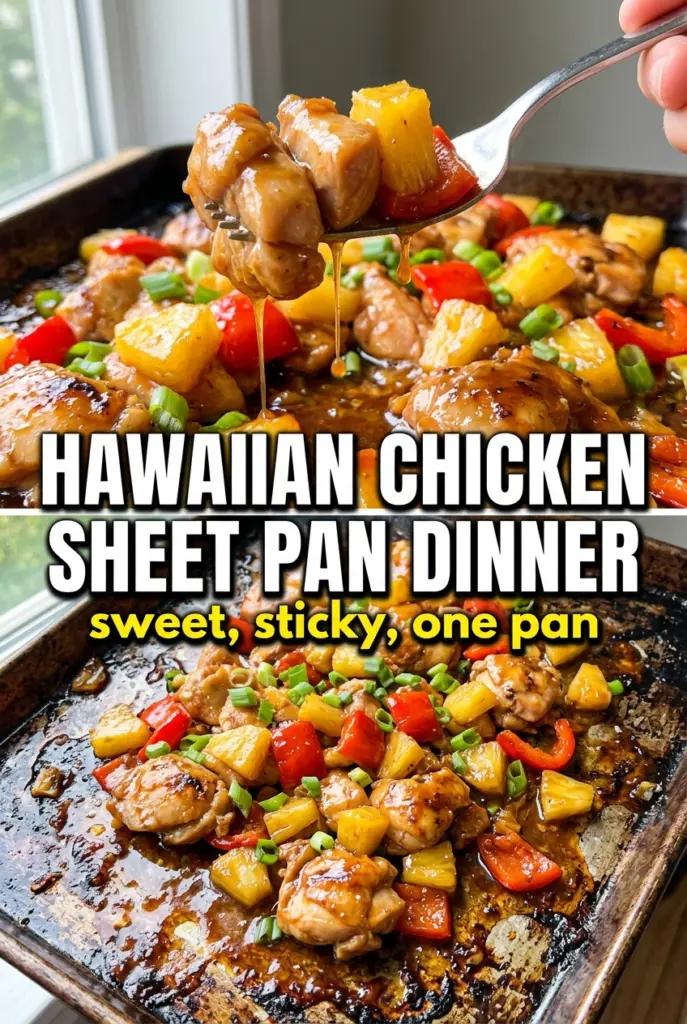
Hawaiian Chicken Sheet Pan lands on the table with sweet pineapple edges, tender chicken, and peppers that still have a little bite under a glossy teriyaki-style glaze. The best part is that the whole pan caramelizes in the oven at the same time, so you get that sticky, takeout-style finish without standing over a stove or juggling three separate pans.
The trick is balance: enough brown sugar to help the sauce cling and caramelize, but not so much that the pineapple turns the whole pan syrupy. Cutting the chicken into chunks helps it cook quickly and pick up more of the sauce, while a hot oven gives the onion and peppers enough color before they go soft. Parchment also matters here because the sugars in the glaze can grab onto bare metal fast.
Below, I’ve included the timing detail that keeps the chicken juicy, the swap I’d use if you only have canned pineapple, and what to do if you want to stretch this into lunches for the week.
The sauce caramelized on the pan instead of pooling, and the pineapple stayed bright and juicy. I served it over rice and my husband asked if I could pack the leftovers for lunch the next day.
Save this Hawaiian Chicken Sheet Pan for a fast dinner with caramelized pineapple, juicy chicken, and almost no cleanup.
The Secret to Keeping Pineapple from Turning the Whole Pan Watery
Pineapple is the ingredient that makes this dish taste bright and tropical, but it can also be the thing that throws the texture off. If the fruit is too wet or the pan is crowded, you end up steaming the chicken and peppers instead of roasting them, which means less color and a thin sauce that never really clings. The fix is simple: use a large enough sheet pan and spread everything into a single layer so the heat can hit the food directly.
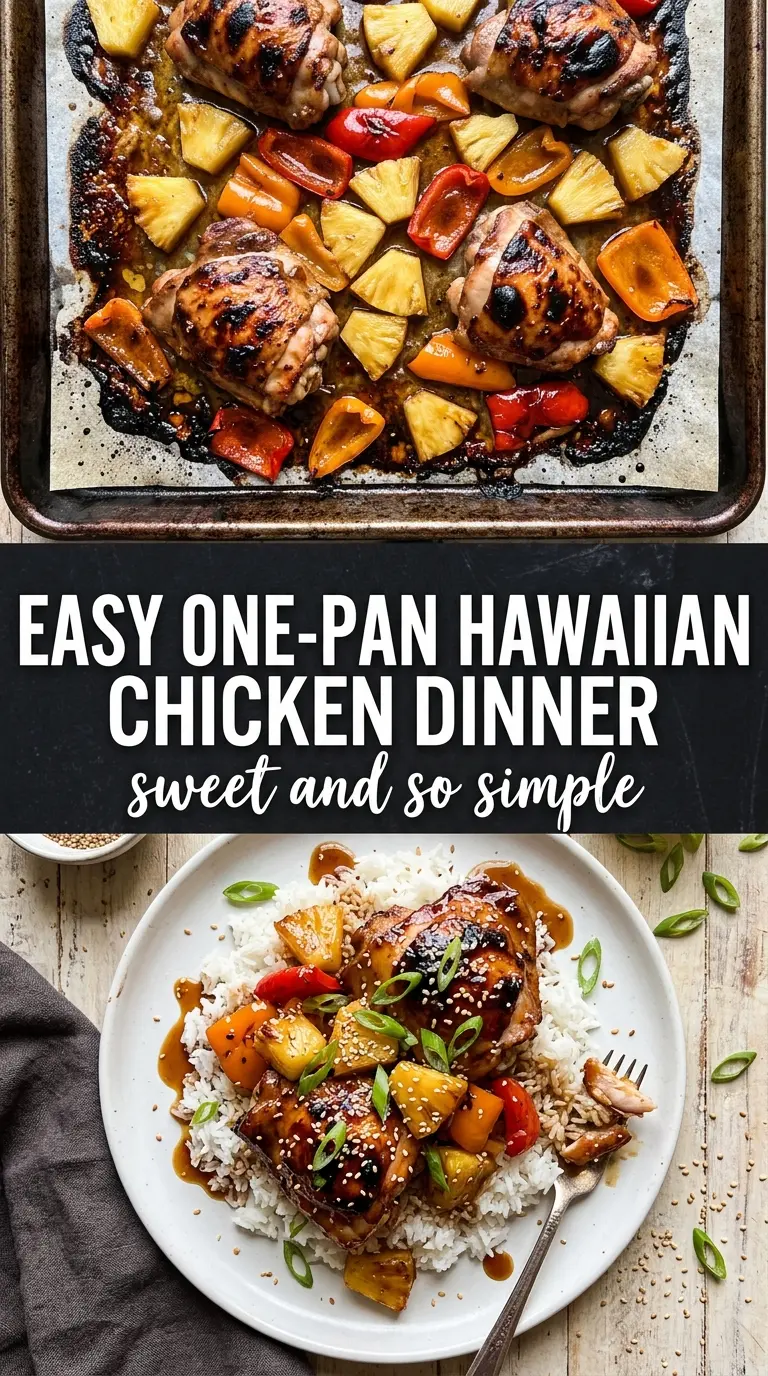
The other part that matters is the order of the sauce. The olive oil, soy sauce, brown sugar, vinegar, garlic, and ginger should coat the chicken and vegetables lightly, not drown them. That gives you caramelized edges without burning the sugars before the chicken is cooked through. If your pineapple is extra juicy, pat it dry first; it keeps the glaze from thinning out in the oven.
- Chicken thighs — Thighs stay juicy in the high heat of a sheet pan roast, and they’re forgiving if the pieces are a little uneven. Chicken breast will work, but it dries out faster, so cut it into larger chunks and watch the clock closely.
- Fresh pineapple — Fresh fruit gives you the cleanest caramelization and the brightest flavor. Canned pineapple works in a pinch, but drain it well and pat it dry so the extra juice doesn’t water down the glaze.
- Soy sauce — This is the salty backbone of the glaze. Use low-sodium if that’s what you keep at home, and if you need a gluten-free swap, tamari gives you the same savory depth without changing the method.
- Rice vinegar — The acid keeps the sauce from tasting flat and helps balance the brown sugar. I wouldn’t replace it with a heavy vinegar here; apple cider vinegar works if needed, but use a little less because it reads sharper.
- Ginger and garlic — These two carry the aroma of the dish. Fresh is worth it because the flavor stays clean in the oven, while jarred garlic can go a little harsh under high heat.
How to Roast Everything So It Caramelizes Instead of Steams
Building the Glaze
Whisk the olive oil, soy sauce, brown sugar, rice vinegar, garlic, and ginger until the sugar dissolves as much as it can. You’re looking for a glossy, loose sauce, not a thick paste. If the brown sugar is clumpy, let it sit for a minute after whisking and stir again before it goes on the chicken. That helps the glaze coat evenly instead of leaving sugary patches that burn.
Coating the Pan Evenly
Toss the chicken, pineapple, peppers, and onion until everything has a thin shine of sauce. Then spread the pieces out with some breathing room. If the pan looks crowded, use two pans. Crowding is the fastest way to get pale peppers and rubbery chicken because the food starts steaming in its own juices.
Roasting to the Right Finish
Roast at 425°F until the chicken reaches 165°F and the edges of the pineapple look caramelized. Stir once halfway through so the sugars don’t burn on the bottom edge of the pan. The chicken should be juicy and opaque all the way through, while the peppers soften but still hold their shape. If the pan looks dry before the chicken is done, it usually means the oven is running hot; check a few minutes early instead of waiting for the full time.
How to Adapt This Sheet Pan Dinner for Different Kitchens
Make it gluten-free
Swap the soy sauce for tamari or a certified gluten-free soy sauce. The flavor stays savory and balanced, and the rest of the recipe doesn’t need to change at all.
Use chicken breast instead of thighs
Chicken breast works if that’s what you have, but cut it into larger pieces so it doesn’t dry out before the vegetables are done. Start checking a few minutes early, because breast meat goes from juicy to dry faster than thighs.
Make it lower in sugar
Cut the brown sugar back to 1 or 2 tablespoons and rely on the pineapple for sweetness. The glaze will be a little less sticky, but the dish still tastes balanced and roasts well.
Storage and Reheating
- Refrigerator: Store leftovers in an airtight container for up to 4 days. The pineapple softens a little, but the flavor holds up well.
- Freezer: It freezes, though the peppers and pineapple will lose some of their firm texture. Freeze in portions for up to 2 months and thaw in the fridge before reheating.
- Reheating: Warm it in a skillet over medium-low heat or in a 325°F oven until heated through. High heat dries the chicken and makes the sauce sticky in the wrong way, so go low and slow.
Answers to the Questions Worth Asking
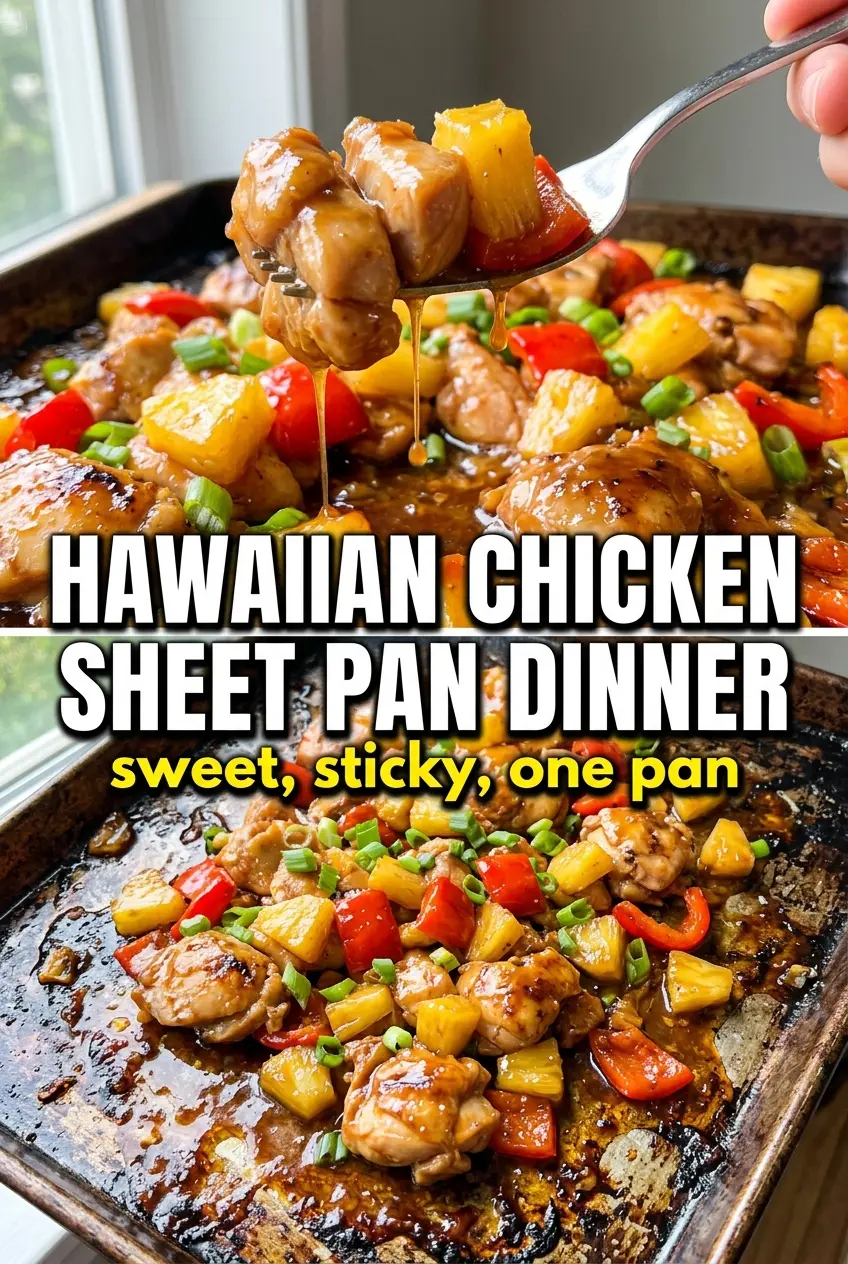
Hawaiian Chicken Sheet Pan
Ingredients
Equipment
Method
- Preheat the oven to 425°F and line a large sheet pan with parchment paper.
- Whisk together the olive oil, soy sauce, brown sugar, rice vinegar, garlic, and ginger until the sugar dissolves and the mixture looks smooth.
- Toss the chicken, pineapple, bell peppers, and red onion with the sauce until evenly coated and glossy.
- Spread everything in a single layer on the sheet pan so the pieces have space to caramelize.
- Roast for 25–30 minutes, stirring halfway through, until the chicken reaches 165°F and everything is caramelized.
- Garnish with green onions and sesame seeds, then serve immediately (especially over rice).