
Deep, mahogany broth and beef that falls apart at the touch of a spoon are what make a good crock pot beef stew worth keeping in the regular rotation. The long, slow simmer turns a handful of simple ingredients into something rich and filling, with tender potatoes, sweet carrots, and celery that holds just enough bite to keep each bowl interesting.
What makes this version work is the order of the ingredients and the way the broth gets built. The vegetables go in first so they can sit in the cooking liquid and soften without disappearing, while the beef stays on top long enough to braise instead of boiling. Tomato paste, Worcestershire, and red wine add depth that plain broth can’t give you on its own, and the cornstarch slurry goes in at the end so the stew thickens into a proper spoonable finish instead of reducing into mush.
Below, I’ve broken down the small choices that matter most — from how to layer the pot to how thick the broth should look before you stop cooking. If stew has ever come out bland, watery, or stringy, the fixes are all here.
The broth thickened up beautifully at the end, and the beef was so tender it broke apart with a spoon. I used the red wine, and it gave the stew this deep, rich taste that made it taste like it cooked all day in the best way.
Love the slow-cooked depth and fall-apart beef in this Crock Pot Beef Stew? Save it to Pinterest for the kind of dinner that tastes even better the next day.
The Secret to Keeping the Beef Tender Instead of Stringy
The mistake most people make with beef stew is rushing the heat. Tough cuts like chuck need time for the connective tissue to soften, and that only happens when the pot stays at a low, steady simmer for hours. If the stew boils hard, the beef tightens and the broth turns cloudy instead of rich.
Another thing that matters here is where the beef sits in the pot. Nestling it over the vegetables keeps it from sitting directly on the bottom of the slow cooker, where the heat is strongest. That helps the meat braise gently while the vegetables catch the seasoned broth below and slowly work their way tender.
The stew is done when the beef pulls apart with almost no resistance and the potatoes can be pierced cleanly without collapsing. If the meat still feels chewy, it needs more time, not more heat. Patience is what turns this from a pot of simmered ingredients into proper beef stew.
What Each Ingredient Is Actually Doing in This Stew
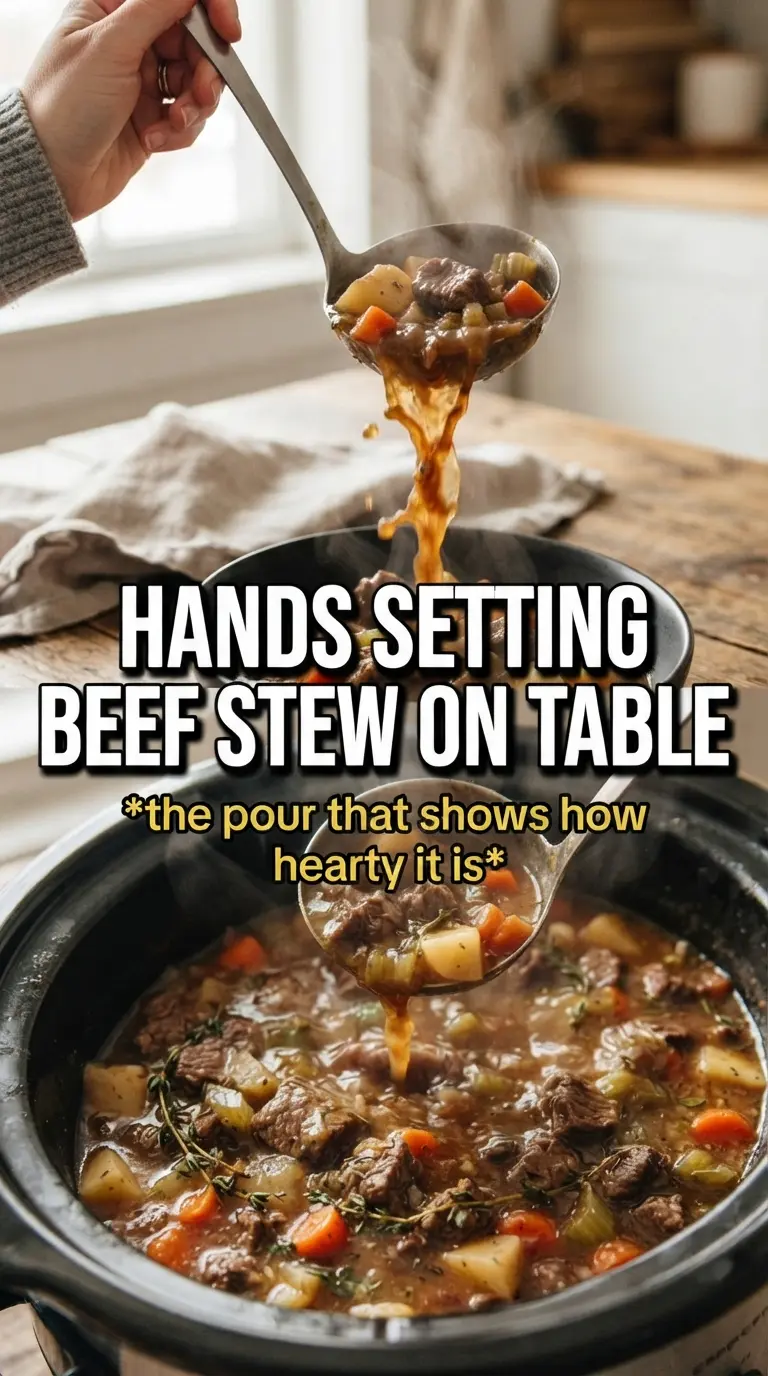
- Beef chuck — This is the cut that gives you that fall-apart texture after a long cook. Anything leaner will dry out before it turns tender, so chuck is worth using here.
- Baby potatoes — They hold their shape better than diced russets and give the stew that thick, hearty feel. Halving them lets them absorb the broth without turning to paste.
- Carrots, celery, and onion — These build the savory base and soften into the broth as they cook. Cutting the carrots thick keeps them from disappearing during the long simmer.
- Tomato paste, diced tomatoes, and Worcestershire sauce — These three ingredients give the broth depth, color, and a little acidity. Tomato paste is the one you don’t want to skip because it adds concentrated richness that canned tomatoes alone can’t match.
- Red wine or extra broth — Wine adds a darker, fuller note that makes the stew taste slow-cooked in a deeper way. If you don’t want to use wine, extra broth works fine, but the finished stew will be a little lighter in flavor.
- Cornstarch slurry — This is what thickens the broth at the end without making it gummy. Mix it with cold water first so it disperses cleanly instead of clumping in the hot stew.
How to Build the Stew So the Flavor Develops All Day
Layer the Pot With the Vegetables First
Start by spreading the potatoes, carrots, celery, and onion across the bottom of the slow cooker. They sit in the liquid and help create a sturdy base, while the beef braises above them instead of stewing in direct contact with the hottest surface. Season the beef well before it goes in, because that seasoning has to carry all the way through hours of cooking.
Pour in the Broth and Flavor Builders
Add the garlic, broth, wine, tomatoes, tomato paste, Worcestershire, thyme, rosemary, and bay leaves right over the beef. Stir the liquid only enough to distribute the tomato paste and seasonings; you don’t need to fully mix everything together. If the broth looks thin at this stage, that’s normal — the stew builds body as the beef breaks down and the slurry goes in later.
Cook Until the Beef Gives Up Cleanly
Set the slow cooker on Low for 8 to 10 hours, or High for 4 to 5 hours if you’re short on time. The real target is tenderness, not the clock. The beef should shred when you press it with a spoon, and the potatoes should be soft but still hold their shape. If the meat is still rubbery, it needs more time on Low, not a higher setting.
Thicken the Broth at the End
Pull out the bay leaves, then stir in the cornstarch slurry. Turn the slow cooker to High and let it cook for 20 to 30 minutes until the broth goes from thin and glossy to lightly thickened and spoon-coating. If you add the slurry too early, it can break down during the long cook, so keep this step for the end.
What to Change When You Need to Work With What’s in the Kitchen
Make It Without Wine
Use the full amount of extra beef broth in place of the wine. You’ll lose a little of the deep, rounded acidity wine brings, but the stew will still taste rich if you keep the tomato paste and Worcestershire in the mix.
Gluten-Free Stew
This recipe is naturally close to gluten-free, but you’ll want to check the broth and Worcestershire sauce labels. Use a certified gluten-free Worcestershire if needed, and the cornstarch slurry already gives you a safe way to thicken without flour.
Use a Different Vegetable Mix
Parsnips, turnips, or mushrooms all work well here if you want to change the vegetables. Keep the cut size similar so everything cooks at the same pace, and add delicate vegetables like peas near the end so they stay bright instead of turning dull.
Storage and Reheating
- Refrigerator: Store in an airtight container for up to 4 days. The broth will thicken as it chills, and the potatoes may soften a bit more overnight.
- Freezer: It freezes well for up to 3 months. Cool it completely first, then portion it into freezer containers, leaving a little room at the top for expansion.
- Reheating: Reheat gently on the stove over medium-low or in the microwave in short bursts, stirring between each one. Add a splash of broth if the stew has thickened too much, because reheating too fast can make the beef tough and the potatoes crumbly.
Answers to the Questions Worth Asking

Crock Pot Beef Stew
Ingredients
Equipment
Method
- Season the beef generously with salt and pepper, ensuring every side has visible seasoning (quick visual cue: speckled beef cubes).
- Add the potatoes, carrots, celery, and onion to the bottom of the slow cooker, then nestle the seasoned beef on top so it stays above the vegetables.
- Add the minced garlic, beef broth, red wine, diced tomatoes, tomato paste, Worcestershire sauce, dried thyme, dried rosemary, and bay leaves, distributing everything evenly.
- Cook on Low for 8-10 hours until the beef is fall-apart tender and the vegetables are soft (visual cue: beef shreds with a spoon when pressed).
- Alternatively, cook on High for 4-5 hours until the beef is fall-apart tender and the vegetables are soft (visual cue: beef breaks easily when nudged).
- Remove the bay leaves and discard them, then stir the stew thoroughly so the herbs are fully dispersed (visual cue: bay leaves are gone from the surface).
- Stir together the cornstarch and water to make a slurry, then pour it into the stew while stirring to prevent lumps (visual cue: slurry disappears and broth turns slightly cloudy).
- Cook on High for 20-30 minutes until the broth thickens and coats a spoon (visual cue: draw a line with a finger on the spoon and it holds briefly).
- Season with salt and pepper to taste right before serving, adjusting until the flavors pop (visual cue: broth tastes balanced rather than flat).