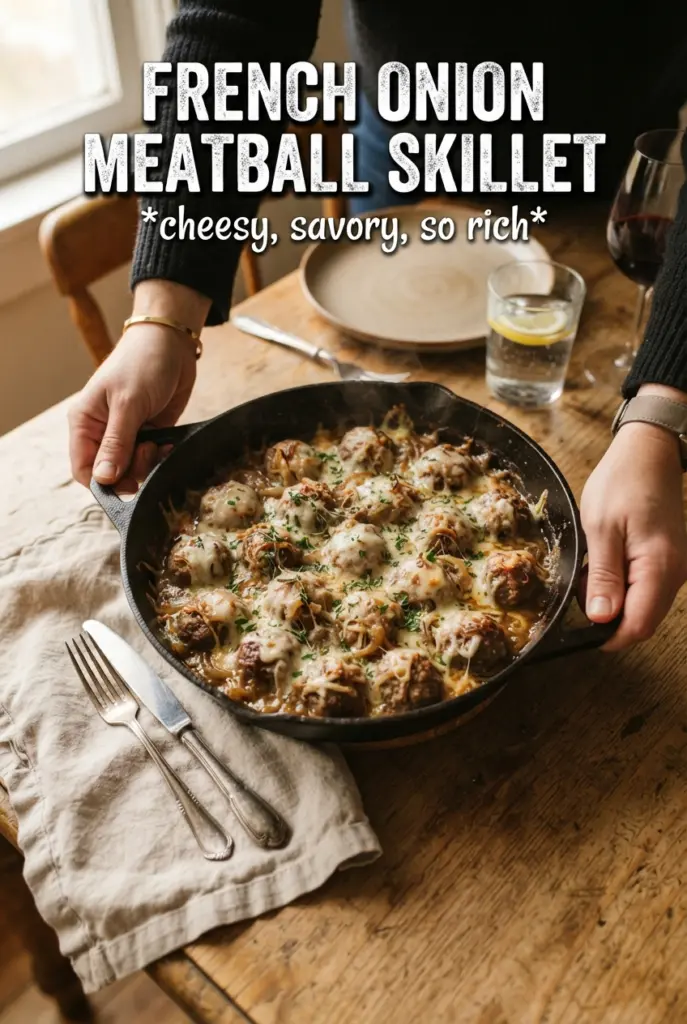
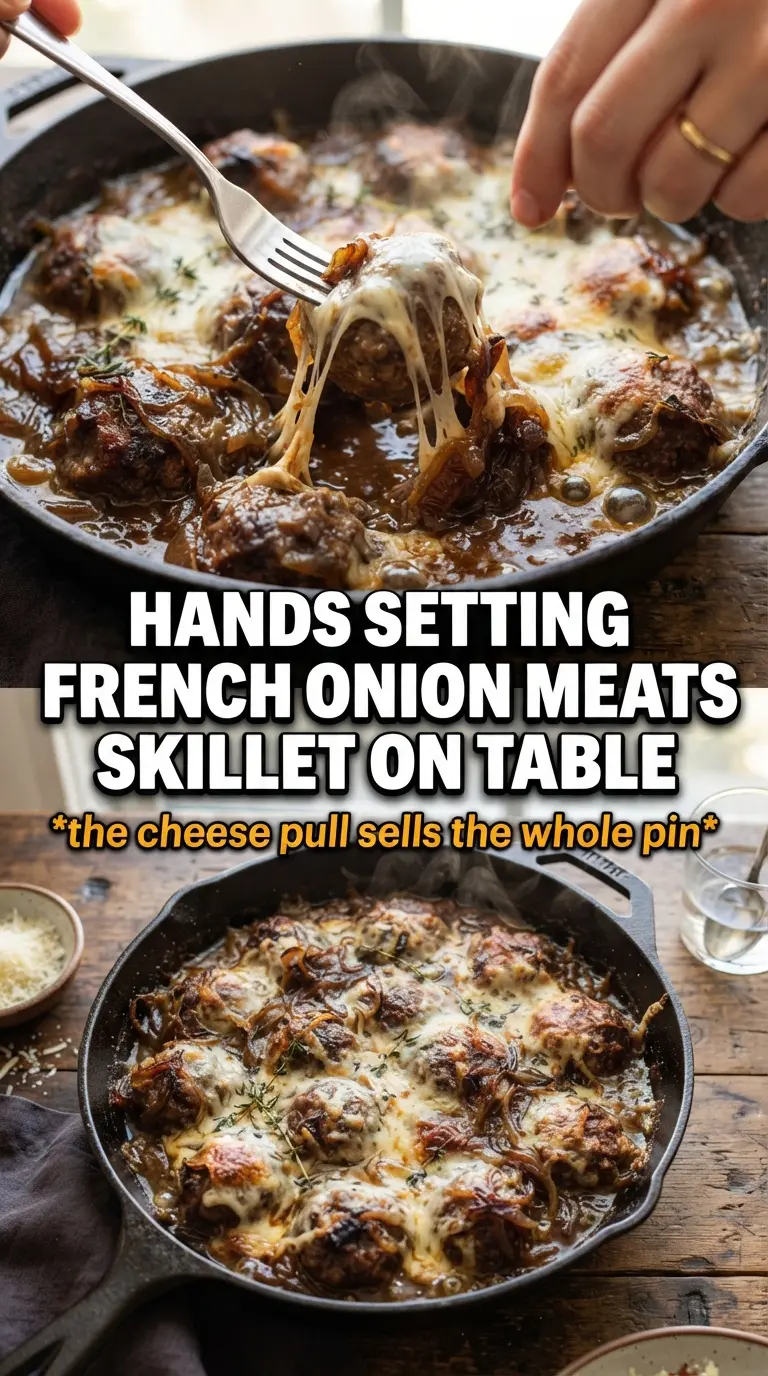
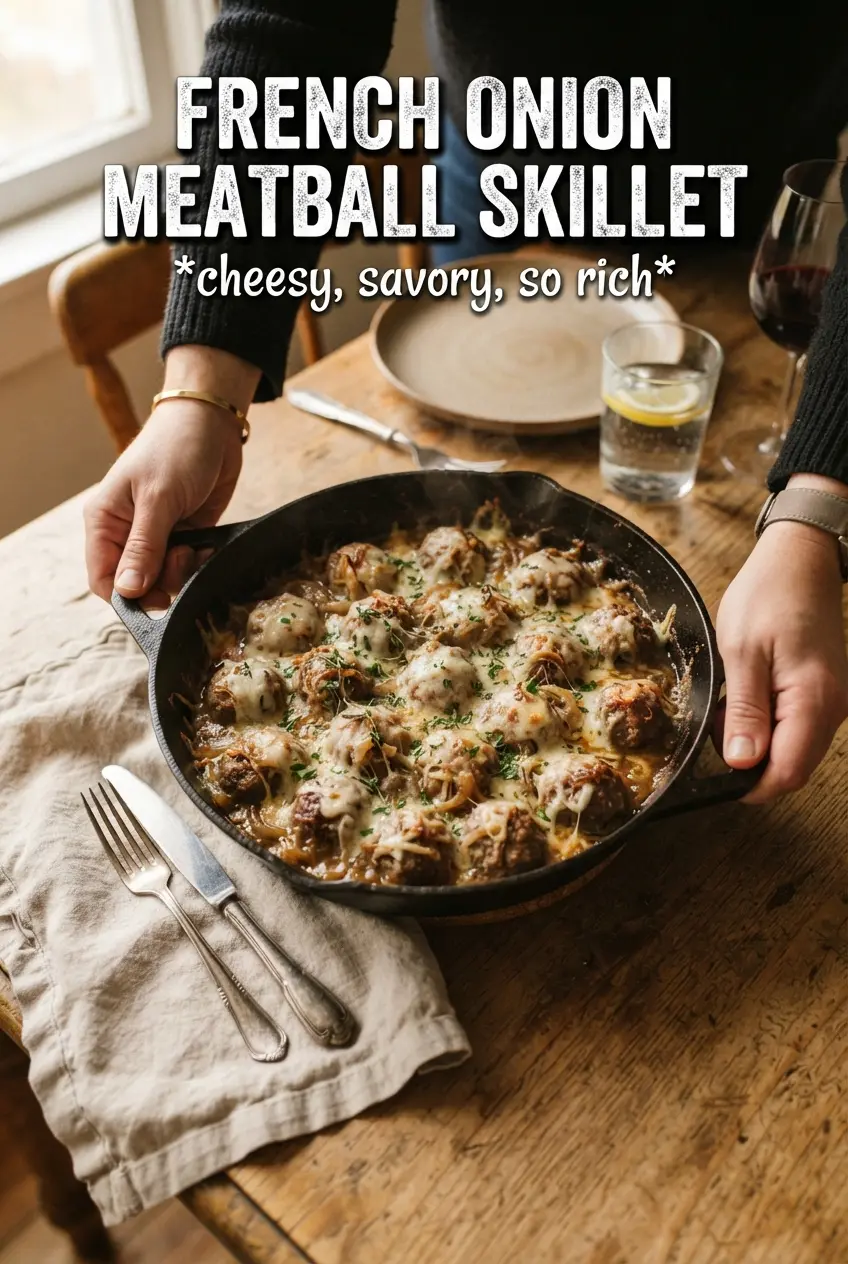
Deeply caramelized onions, savory meatballs, and a blanket of bubbly Gruyere turn this skillet into the kind of dinner that feels slow-cooked even though most of the work is straightforward. The onions bring that sweet, dark, almost jammy French onion flavor, while the meatballs hold their shape and soak up just enough broth to stay tender. By the time it comes out from under the broiler, you get crisp golden peaks on top and a spoonable onion gravy underneath.
What makes this version work is timing. The meatballs get browned first so they have some structure before they simmer in the sauce. Then the onions cook low and slow in the same pan until they give up their raw bite and turn deeply sweet. That fond from the skillet, plus a splash of wine and a little Worcestershire, gives the broth the kind of depth you usually only get after an hour longer than you planned to spend on dinner.
Below, I’ll show you how to keep the onions from scorching, how to know when the sauce is ready for the cheese, and what to do if you want to make this skillet a little lighter or more make-ahead friendly.
The onions turned that deep caramel color without burning, and the Gruyere melted into the broth exactly the way I wanted. I served it with crusty bread and my husband kept going back for “just one more spoonful.”
Save this French Onion Meatball Skillet for the night you want rich onion gravy, juicy meatballs, and melted Gruyere in one pan.
The Secret to French Onion Flavor That Doesn’t Taste Thin
The whole dish depends on the onions, and this is where most skillet versions come up short. If the onions are only softened, the sauce tastes flat and sweet in the wrong way. You want them cooked until they collapse, turn deep amber, and smell almost nutty at the edges. That long, slow sauté builds the base the broth can stand on.
The other mistake is rushing the deglaze. The wine should hit a hot pan and loosen every browned bit from the bottom, then the broth needs a little time to simmer with the onions before the meatballs go back in. If the liquid looks watery at that point, keep it at a steady simmer for a few minutes. The sauce thickens slightly as it reduces and picks up the onion body that makes this dish taste like more than meatballs in soup.
What Each Ingredient Is Actually Doing in This Skillet
- Ground beef — Use meat with enough fat to stay juicy after browning and simmering. Very lean beef can dry out before the broiler step finishes the cheese. An 80/20 blend is a good target here.
- Breadcrumbs and egg — These hold the meatballs together so they don’t break apart in the onion broth. The breadcrumbs also keep the texture tender instead of dense. If you need a gluten-free version, use gluten-free breadcrumbs in the same amount.
- Worcestershire — This does more than season. It adds savory depth that makes the onions and broth taste richer without needing more salt. Don’t skip it unless you have to, because it rounds out the whole skillet.
- Onions — Three large onions sound like a lot, but they cook way down and are the backbone of the dish. Yellow onions are the best choice because they caramelize well and taste balanced. Slice them thin and evenly so they soften at the same pace.
- Dry white wine — The wine brightens the sweetness of the onions and helps pull up the browned bits from the pan. If you don’t cook with wine, use extra beef broth plus a small splash of white wine vinegar or lemon juice at the end for lift.
- Gruyere — This is the cheese that gives you that French onion finish. It melts smoothly and browns nicely under the broiler. If you substitute it, pick a good melting cheese like Swiss or Fontina rather than something dry and salty.
Building the Skillet in the Right Order
Brown the Meatballs First
Roll the meat mixture into even balls so they cook at the same pace. Brown them in butter in an oven-safe skillet until they have a deep golden crust on a few sides, then pull them out before they cook through. They’ll finish later in the sauce, and that rest keeps them tender instead of overcooked. If the pan looks crowded, work in batches so the meatballs sear instead of steam.
Cook the Onions Until They Turn Jammy
Add the sliced onions to the same skillet and cook them over medium-low heat. Stir often at first, then let them sit long enough to take on color. The onions are done when they’re soft, deeply browned, and no longer smell sharp or raw. If they start sticking too hard, add a small splash of water and scrape the bottom; that keeps the fond from burning while still building flavor.
Deglaze, Simmer, and Nestle the Meatballs Back In
Pour in the wine and scrape the skillet clean, then add the broth, Worcestershire, and thyme. The liquid should look glossy and slightly thickened after a brief simmer. Return the meatballs and tuck them into the onions so they’re partly submerged. Let them cook gently for about 10 minutes, just until they’re cooked through and the sauce tastes cohesive instead of separate.
Broil Until the Cheese Bubbles
Scatter the Gruyere evenly over the top and slide the skillet under the broiler. Watch closely; the line between golden and burned is short. You want melted cheese with browned spots and a few crisp edges, not a full dark crust. Let the skillet sit for a couple of minutes before serving so the sauce thickens slightly and doesn’t run everywhere when you spoon it out.
Three Useful Ways to Adapt This Skillet
Gluten-Free Version
Swap the breadcrumbs for a gluten-free breadcrumb blend in the same amount. The meatballs will still hold together, though the texture may be a touch softer depending on the brand. Keep the rest of the method the same.
Dairy-Free Adjustment
Use olive oil instead of butter for browning the meatballs and onions, then skip the Gruyere and finish with toasted breadcrumbs or dairy-free melting cheese if you have one you trust. You’ll lose the classic French onion top, but the onion broth still carries the dish.
Make It a Bigger Meal
Serve the skillet over mashed potatoes, buttered noodles, or toasted bread to turn the onion sauce into a full dinner. Each one changes the feel of the dish a little: potatoes make it richer, noodles make it saucier, and bread gives you the most classic French onion-style bite.
Storage and Reheating
- Refrigerator: Store covered for up to 4 days. The onions will thicken into the broth as they sit, which actually helps the flavor.
- Freezer: It freezes well without the cheese topping. Freeze the meatballs and onion sauce in a sealed container for up to 2 months, then add fresh Gruyere after reheating.
- Reheating: Warm gently on the stove over low heat with a splash of broth to loosen the sauce. The biggest mistake is blasting it in the microwave, which can toughen the meatballs and make the cheese separate.
Answers to the Questions Worth Asking
French Onion Meatball Skillet
Ingredients
Equipment
Method
- In a mixing bowl, combine ground beef, breadcrumbs, egg, Worcestershire, garlic powder, salt, and pepper, then mix until just combined and roll into meatballs. Brown the meatballs in 2 tablespoons butter in the oven-safe skillet over medium-high heat until golden on all sides, then remove to a plate.
- Add 2 more tablespoons butter to the same skillet and return it to the heat. Keep the browned fond in the pan for maximum flavor transfer.
- Cook the thinly sliced onions in the skillet over medium-low heat for 30-35 minutes, stirring occasionally, until deeply caramelized. You should see dark golden-brown edges and a jammy texture.
- Stir in the minced garlic and fresh thyme and cook for 30-60 seconds until fragrant. Scrape any browned bits from the bottom as you stir.
- Pour in the dry white wine to deglaze, simmering 2-3 minutes to reduce slightly. The pan should smell sharper and the liquid should look slightly syrupy.
- Add beef broth and Worcestershire, bring to a gentle simmer, and simmer for 2-3 minutes to meld flavors. The sauce should look glossy and lightly thickened.
- Nestle the meatballs into the caramelized onion sauce, making sure they are partially submerged. Return to a gentle simmer and cook for 10 minutes, stirring the sauce around the meatballs once.
- Scatter Gruyère over the entire surface of the skillet. Broil for 3-5 minutes until the cheese is golden and bubbly, then let it stand 3 minutes so the sauce clings to the meatballs.