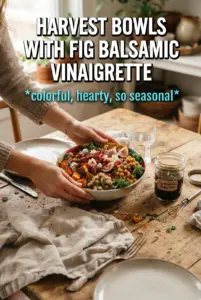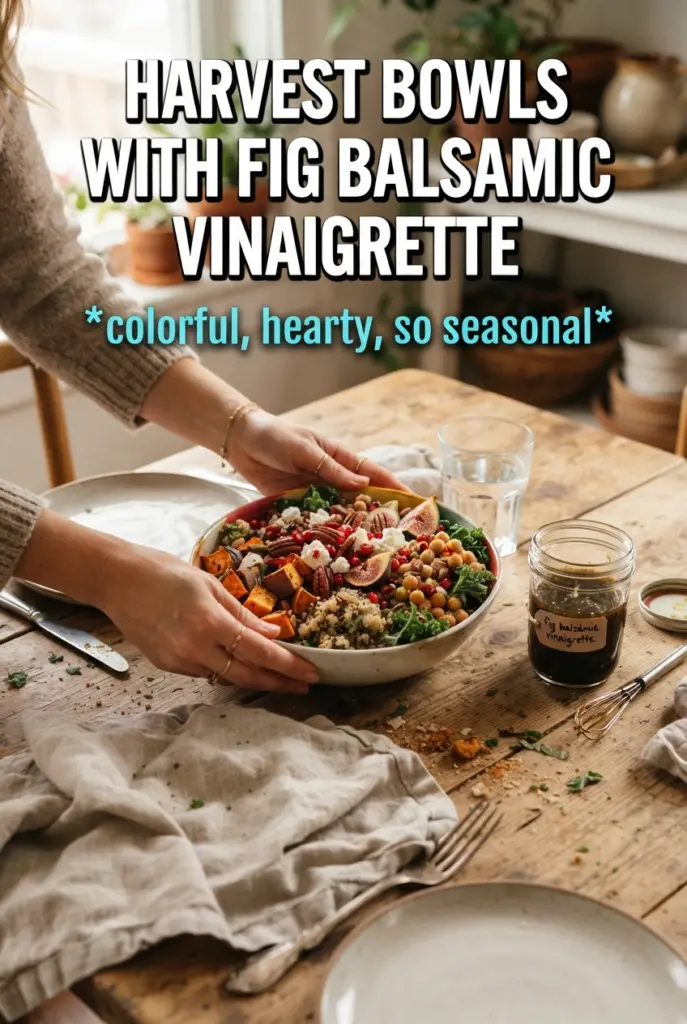
Roasted sweet potatoes, crispy chickpeas, and a glossy fig balsamic vinaigrette turn a simple grain bowl into something you actually look forward to eating. The mix of warm and cool, creamy and crunchy, sweet and tangy is what keeps this bowl from tasting like a pile of healthy ingredients and makes it feel like a real meal.
The key is treating each part like it matters. The sweet potatoes need enough space to caramelize, the chickpeas need to go in dry enough to crisp, and the vinaigrette needs the Dijon to hold the fig jam and balsamic together into a spoonable dressing instead of a broken one. Shaved Brussels sprouts stay raw here so they bring bite and freshness against the softer grains and vegetables.
Below, I’ll walk through the little details that make this bowl work, plus a few smart swaps if you want to lean it dairy-free, vegan, or just use what you already have in the kitchen.
The vinaigrette was the best part — it coated everything without drowning the bowl, and the chickpeas stayed crisp even after I packed leftovers for lunch the next day.
Save these harvest bowls for the nights when you want a colorful grain bowl with crisp chickpeas and fig balsamic in one easy meal.
The Part That Keeps This Bowl From Going Soft
The biggest mistake with grain bowls like this is letting everything sit together too long before serving. Warm grains and roasted vegetables are great, but if they rest on top of the sprouts, pecans, and goat cheese for ten minutes, the textures start collapsing into each other. The fix is simple: build the bowls with the sturdier ingredients first, then add the delicate ones at the end and dress right before eating.
Roasting the sweet potatoes and chickpeas separately matters too. Sweet potatoes release moisture as they cook, while chickpeas need dry heat to crisp up. If they share a pan, the chickpeas steam and the potatoes can go soft at the edges instead of taking on those browned, caramelized bits that give the bowl depth.
What Each Ingredient Is Actually Doing in This Dish
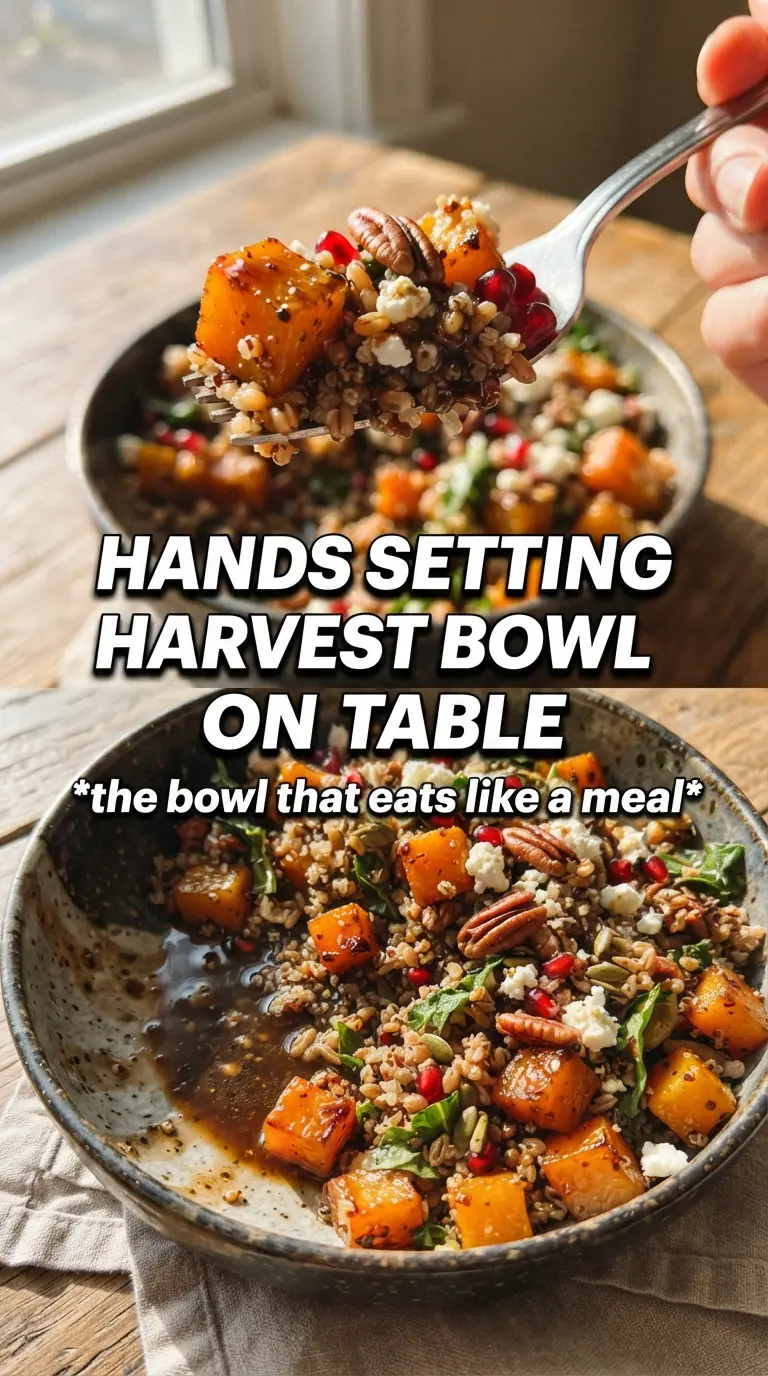
- Farro or quinoa — Farro gives you a chewy, nutty base that holds up well under the dressing. Quinoa is lighter and naturally gluten-free, and it works best if you fluff it after cooking so it doesn’t clump under the toppings.
- Sweet potatoes — These bring the soft, caramelized sweetness that balances the tang of the vinaigrette. Cut them into even cubes so they roast at the same rate; uneven pieces leave you with a mix of burnt edges and hard centers.
- Chickpeas — Roasted chickpeas add the crunch that keeps the bowl from feeling soft all the way through. Pat them dry before roasting, because extra moisture is what keeps them from crisping.
- Shaved Brussels sprouts — Raw sprouts give the bowl bite and a little bitterness, which keeps the sweet elements in check. If you want them less sharp, toss them with a pinch of salt and a few drops of vinaigrette while you prep the rest.
- Fig jam and balsamic vinegar — This is the heart of the dressing. The jam adds body and fruitiness, while the vinegar keeps it from tasting flat or syrupy.
- Dijon mustard — Dijon is what helps the vinaigrette hold together. Without it, the oil and vinegar separate fast, and the dressing loses that smooth, clingy texture.
- Goat cheese, pomegranate seeds, and candied pecans — These finish the bowl with creaminess, sharp pops of juice, and a sweet crunch. You can swap in feta for the goat cheese, but you’ll lose some of the soft tang that works so well with the fig dressing.
How to Build the Bowl So Every Bite Stays Interesting
Roasting for Two Different Textures
Spread the sweet potatoes and chickpeas on separate sheets or at least separate sections of the pan. Sweet potatoes need room for their surfaces to brown, while chickpeas need a bit of dry heat and space to crisp up. If they’re crowded, they steam instead of roast, and the whole bowl loses contrast. Pull the chickpeas when they’re crisp and the potatoes when the edges are browned and the centers are tender enough to pierce easily with a fork.
Whisking the Vinaigrette Until It Clings
Stir the fig jam, balsamic, olive oil, Dijon, and garlic together until the dressing looks smooth and slightly thickened. If it looks streaky or separated, keep whisking; the mustard needs a little time to emulsify everything. Taste it before using it. If it tastes too sharp, add a tiny bit more jam. If it tastes too sweet, add a splash more vinegar.
Assembling for Maximum Crunch
Start with the grain, then add the roasted vegetables, then the raw sprouts, pomegranate, pecans, and goat cheese. That order keeps the warm ingredients from wilting the fresh ones too quickly. Drizzle the vinaigrette over the top just before serving so the pecans stay crisp and the sprouts keep their bite. If you’re packing lunches, keep the dressing separate and add it right before eating.
How to Adapt This for the Pantry You Actually Have
Make it vegan without losing the rich finish
Swap the goat cheese for a dairy-free cheese crumble or leave it off and add extra pecans for richness. The bowl still tastes complete because the fig balsamic dressing carries plenty of body on its own.
Use quinoa when you want a gluten-free base
Quinoa makes the bowl lighter and keeps it fully gluten-free. Rinse it well before cooking so it doesn’t taste bitter, then fluff it with a fork so the grains stay separate under the toppings.
Swap the Brussels sprouts if you want a milder bite
Thinly sliced kale or arugula works if you don’t want the sharper flavor of raw Brussels sprouts. Kale holds up better for make-ahead bowls, while arugula gives you a peppery finish that softens fast once the dressing hits it.
Storage and Reheating
- Refrigerator: Store the components separately for up to 4 days. The grains and roasted vegetables hold well, but the sprouts and pecans stay much better when kept dry until serving.
- Freezer: Freeze the farro or quinoa, sweet potatoes, and chickpeas separately if needed, but don’t freeze the finished bowl. The fresh toppings and dressing don’t thaw well.
- Reheating: Warm the grains, sweet potatoes, and chickpeas in a skillet or oven until hot, then assemble with the cold toppings. Microwaving everything together makes the chickpeas soft and the sprouts limp.
Answers to the Questions Worth Asking
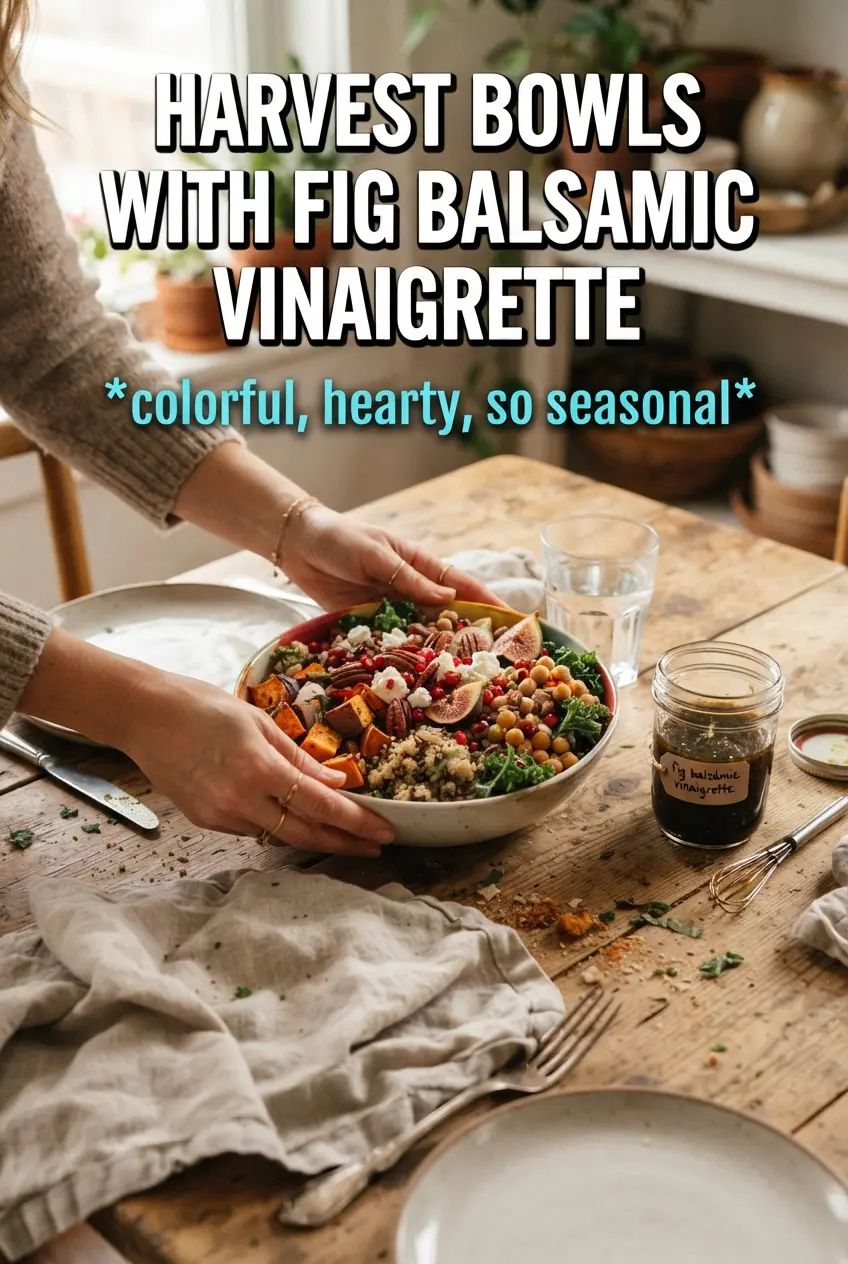
Harvest Bowls With Fig Balsamic Vinaigrette
Ingredients
Equipment
Method
- Preheat the oven to 425F and roast the sweet potato cubes on a sheet pan for 25 minutes, until browned and tender with crisp edges (spread into an even layer).
- On a second sheet pan (or the same sheet pan in a second batch), roast the drained chickpeas at 425F for 20-25 minutes, turning once if needed, until crispy and browned.
- In a bowl, whisk together fig jam, balsamic vinegar, olive oil, Dijon mustard, and minced garlic until smooth and glossy.
- Season with salt and pepper to taste, whisk again, and set aside while you assemble the bowls (it should look pourable with no streaks).
- Divide the cooked farro or quinoa into bowls as the base and spread it out so each serving gets a generous layer.
- Top each bowl with roasted sweet potatoes and crispy chickpeas, layering them so the crunch stays visible.
- Add the shaved Brussels sprouts over the warm toppings for a fresh, slightly crisp bite.
- Sprinkle pomegranate seeds and candied pecans across the top for bright bursts and a sweet crunch.
- Crumble goat cheese over each bowl so it melts slightly in spots while still holding its shape.
- Drizzle generously with fig balsamic vinaigrette right before serving, aiming for an even, glossy coating.