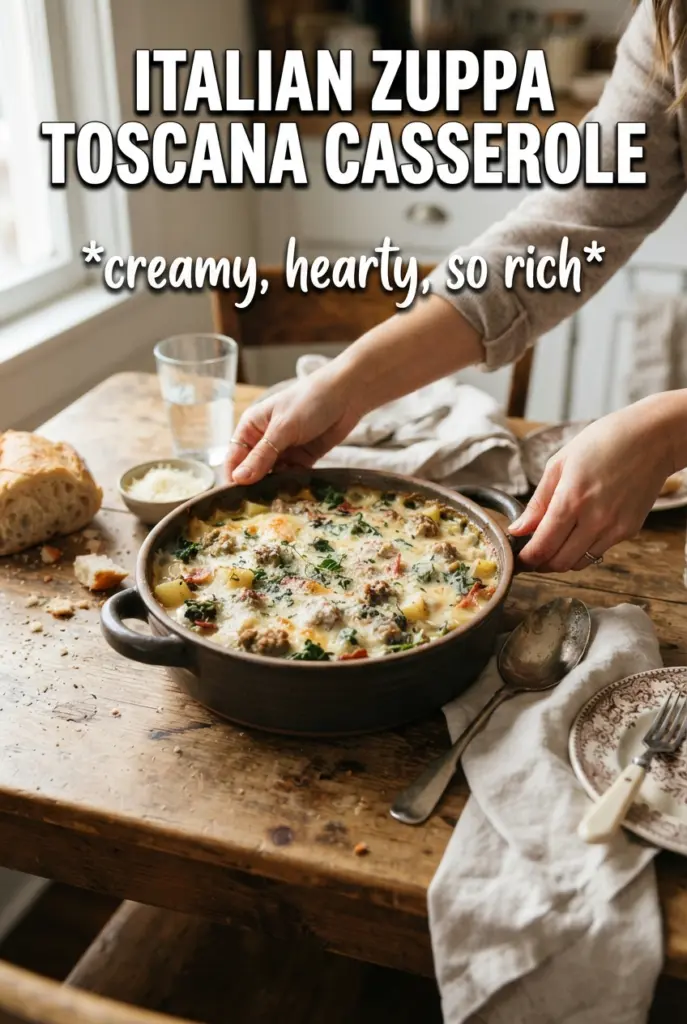
Italian Zuppa Toscana casserole turns the flavors of the classic soup into a bubbling, cheesy bake with tender potatoes, savory sausage, and just enough kale to keep every bite grounded. What you get out of the oven is rich and spoonable, with a browned top that gives way to a creamy base underneath. It eats like comfort food, but it still has the peppery, garlicky edge that makes zuppa toscana worth craving in the first place.
The trick is treating the potatoes like the backbone of the dish instead of a side note. They need time to simmer in the broth and cream until they’re just tender before they go into the oven, or the casserole ends up either undercooked or thickened too much on top before the center is ready. Browning the sausage first and using the bacon fat for the onion and garlic gives the whole dish a deeper, rounder flavor without needing extra steps.
Below, I’ll walk through the part that matters most: how to keep the cream base smooth, how to judge the potatoes before baking, and the easiest way to adapt this casserole if you want it a little lighter or easier to prep ahead.
The potatoes turned out perfectly tender and the cheese browned into that crusty top I was hoping for. My husband went back for seconds before I even sat down.
Save this Zuppa Toscana casserole for a night when you want creamy potatoes, sausage, kale, and a golden cheese top in one pan.
The Creamy Base Needs Gentle Heat, Not a Hard Boil
Most casseroles like this go wrong before they ever reach the oven. If the dairy gets boiled hard on the stove, it can turn grainy or split, and if the potatoes are still firm when you bake, the top can brown before the center is done. This version works because the broth, cream, and milk are brought together over a calm simmer, then the potatoes are cooked just until a knife slips in with a little resistance.
That small bit of resistance matters. The potatoes finish cooking in the oven, where they soak up flavor instead of turning to mush in the pot. The kale also goes in near the end so it stays green and tender instead of fading into the sauce. You’re building layers here, not rushing everything to the same endpoint.
What Each Ingredient Is Doing in This Dish
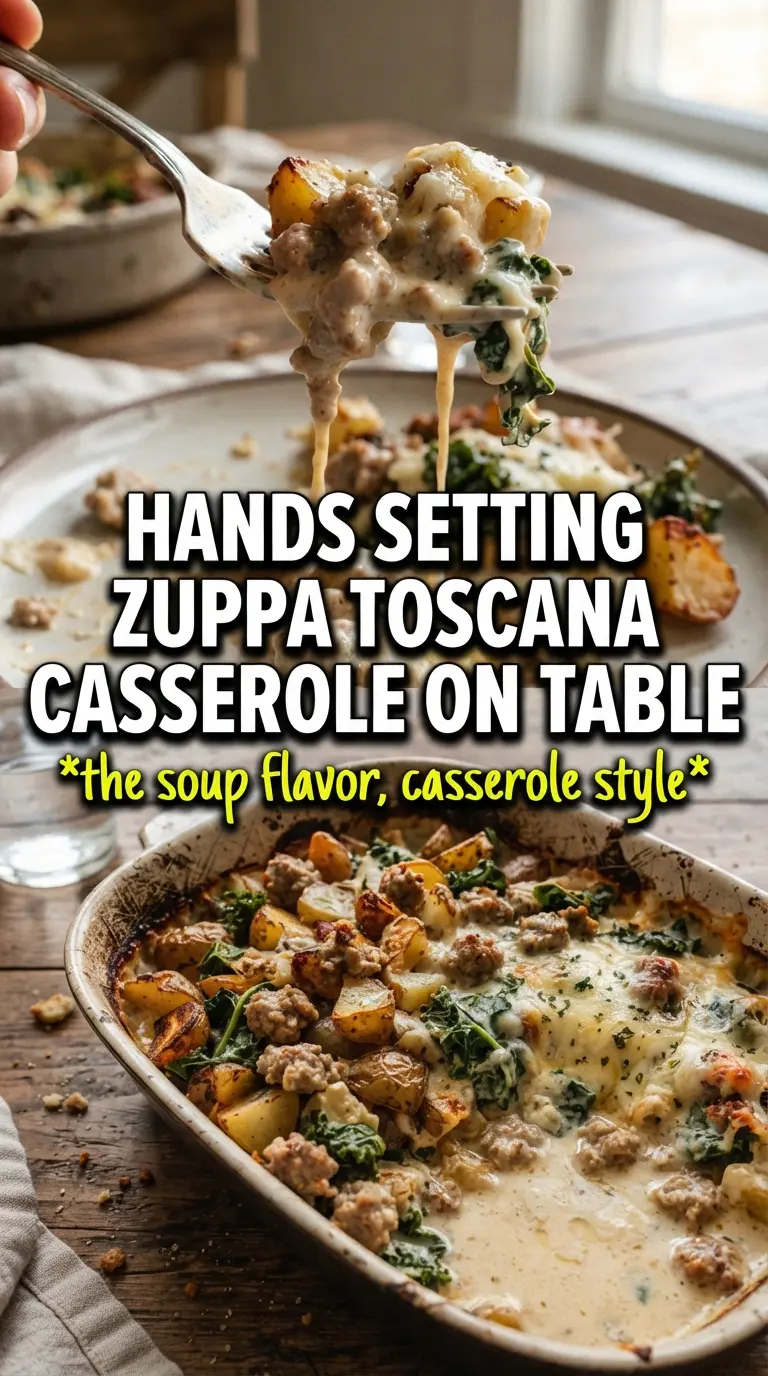
- Italian sausage — This is the main source of seasoning and richness. Hot or mild both work, but if you use mild sausage, the red pepper flakes matter more for balance.
- Bacon or pancetta — This gives the casserole its smoky, salty finish and adds fat for cooking the onion and garlic. Pancetta is a little cleaner and saltier; bacon is deeper and more familiar.
- Yukon gold potatoes — These hold their shape better than russets and give the casserole a creamy, buttery texture. Slice them thin and even so they cook at the same pace.
- Kale — Kale brings bite and color, and it stands up well to the creamy sauce. Remove the tough stems so the leaves fold in cleanly and don’t stay chewy.
- Heavy cream and whole milk — The cream gives body, while the milk keeps the casserole from feeling heavy. Don’t swap both for lower-fat dairy unless you’re ready for a thinner sauce.
- Mozzarella and parmesan — Mozzarella melts into that stretchy top layer, and parmesan sharpens the flavor so the dish doesn’t taste flat. Freshly grated parmesan melts and browns better than the shelf-stable kind.
Building the Casserole Without Curdling the Sauce
Brown the sausage and render the bacon first
Cook the sausage until it’s deeply browned, not just gray and cooked through. That browning gives the casserole more flavor than seasoning alone ever could. Set it aside after draining the excess fat, then cook the bacon until crisp. If you leave too much grease in the pan, the sauce can feel oily instead of creamy.
Sweat the onion and garlic in the drippings
The onion should soften and turn translucent before the garlic goes in. Garlic burns fast, and once it turns bitter, you’ll taste it all the way through the bake. Use the sausage and bacon drippings as your cooking fat, but don’t drown the pan in them. A thin slick is enough to carry the aromatics.
Simmer the potatoes until they’re nearly tender
Add the broth, cream, milk, and red pepper flakes, then bring everything to a gentle simmer before the potatoes go in. Once the potatoes are in, keep the heat low enough that the liquid barely bubbles around the edges. If it boils hard, the dairy can separate and the starch can break down too fast. Stop when the potatoes are nearly cooked but still hold their shape.
Finish with kale, sausage, and cheese
Fold the kale and sausage into the warm base and season with salt and pepper. Transfer it to the baking dish if you need to, then scatter the mozzarella and parmesan evenly over the top. The goal is a full blanket of cheese, not clumps, so the top browns in one even layer instead of patchy spots.
Bake until the top is bubbling and spotted gold
The casserole is ready when the edges are bubbling and the cheese has melted into a lightly blistered top with a few deeper golden patches. Pull it when the center is hot and the potatoes give easily with a fork. Add the crispy bacon after baking so it stays crisp instead of softening in the oven.
How to Adapt This for a Lighter, Easier, or Make-Ahead Version
Dairy-Light Without Losing the Creamy Texture
You can swap the whole milk for half-and-half or use all milk for a slightly lighter casserole, but I wouldn’t cut the heavy cream entirely unless you’re willing to accept a thinner sauce. The cream is what keeps the base silky after baking. If you go lighter, keep the simmer gentle so the sauce doesn’t look separated once it hits the oven.
Gluten-Free and Naturally Thick Enough
This casserole is already gluten-free as written, which is one reason it works so well for a crowd. The potatoes do the thickening instead of flour, so you don’t lose body or creaminess. Just check that your sausage and broth are labeled gluten-free, since those are the two places gluten can sneak in.
Make It Ahead for an Easier Dinner
You can cook the sausage, bacon, onion, garlic, and potato base earlier in the day, then assemble and bake right before serving. If you fully bake it ahead, the potatoes can soften too much on reheating. The best make-ahead move is to stop just before the final cheese topping, then bake until hot and bubbling when you’re ready.
Swap the Greens Based on What You Have
Kale holds up best, but chopped spinach can work if you stir it in at the very end and bake right away. Spinach wilts down more and gives you a softer texture, so the casserole will look less rustic and feel a bit more delicate. Swiss chard is another good option if you want something in between.
Storage and Reheating
- Refrigerator: Store covered for up to 4 days. The potatoes will absorb more sauce as it sits, so the casserole gets thicker by day two.
- Freezer: It freezes, but the dairy and potatoes can turn a little grainy after thawing. For best texture, freeze portions tightly wrapped and reheat only once.
- Reheating: Warm covered in a 325F oven until hot through, or use the microwave in short bursts. If it looks dry, stir in a splash of milk before reheating so the sauce loosens instead of tightening up.
Answers to the Questions Worth Asking
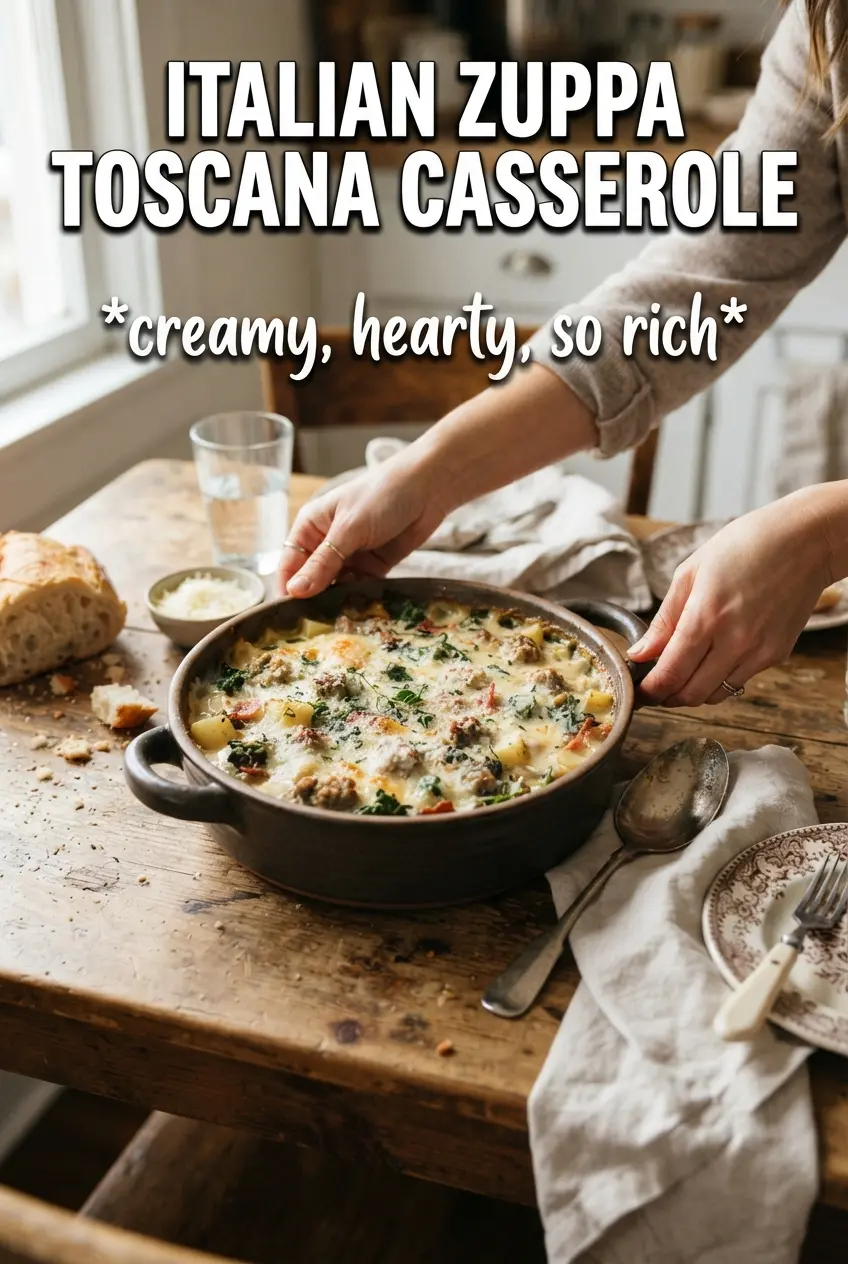
Italian Zuppa Toscana Casserole
Ingredients
Equipment
Method
- Preheat the oven to 375°F, and keep a large oven-safe skillet ready. This gets your casserole baking fast once the base is assembled.
- Brown the Italian sausage in the skillet over medium heat, then drain off the fat and set the sausage aside. Keep the drained fat in the pan for sautéing.
- Cook the bacon or pancetta until crispy, then remove and set aside. Leave the rendered bits in the dish as much as possible.
- Sauté the onion and garlic in the reserved fat for 4 minutes. Cook until fragrant and softened, not browned.
- Add the chicken broth, heavy cream, whole milk, and red pepper flakes, and stir to combine. Heat until steaming so the potatoes cook evenly.
- Add the Yukon gold potatoes and simmer for 12–15 minutes until just tender. Stir occasionally and keep the heat at a gentle simmer.
- Fold in the kale and sausage, then season with salt and pepper. Cook just until the kale wilts slightly from the hot base.
- Transfer the mixture to a 9x13 baking dish if needed, then scatter the shredded mozzarella and parmesan over the top. Make sure the cheese reaches the edges.
- Bake for 20–25 minutes at 375°F until golden and bubbling, then top with the crispy bacon or pancetta. Let it rest briefly before serving so the cheese sets.