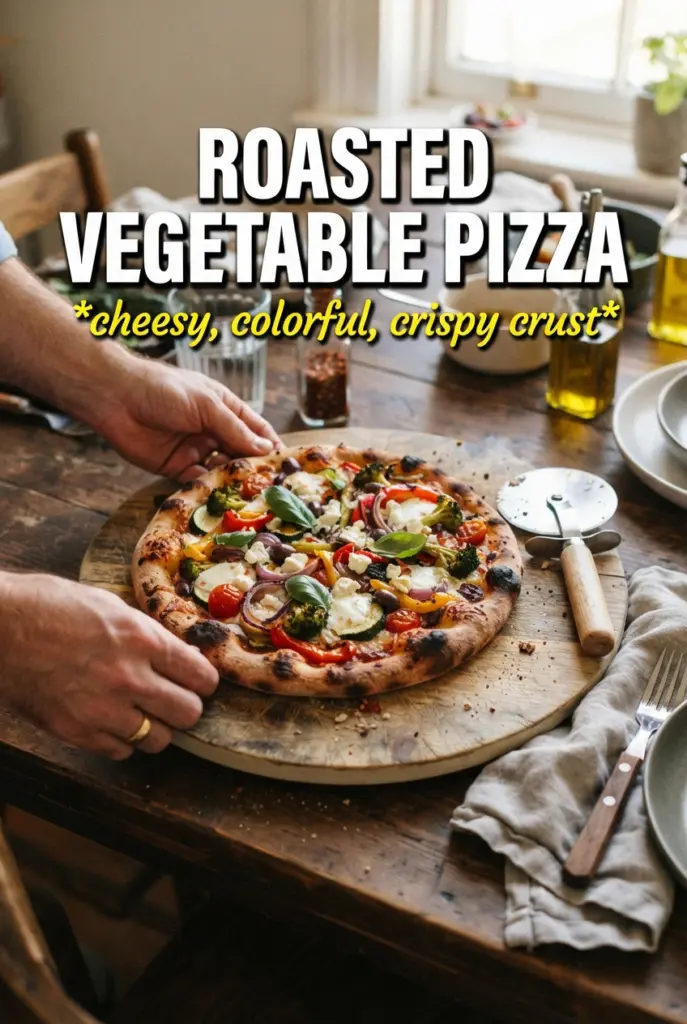
Roasted vegetable pizza earns its place when the crust comes out crisp on the bottom, the vegetables taste sweet and caramelized instead of watery, and the cheese melts into all those browned edges. The roasting step changes everything. Zucchini, peppers, onions, and tomatoes all soften at different rates, so giving them a head start in the oven keeps the pizza from turning soggy in the middle.
I like brushing the dough with olive oil before the sauce goes on. That thin layer helps the crust bake up with a little extra color and keeps the sauce from soaking straight through. A mix of mozzarella and parmesan gives you both melt and sharpness, while the balsamic glaze at the end pulls the whole thing together with just enough tang to cut through the cheese.
Below, I’ll show you the small details that keep the crust from going limp, which vegetables roast best together, and how to adapt the pizza when you want to swap the toppings without losing that deep, savory finish.
The vegetables roasted down beautifully and the crust stayed crisp even under all the toppings. I was worried about the zucchini making it soggy, but it came out perfect and the balsamic drizzle at the end made it taste like something from a nice pizza place.
Save this roasted vegetable pizza for the nights when you want caramelized vegetables, a crisp crust, and that final balsamic drizzle.
The reason the vegetables roast first instead of going straight on the dough
If you pile raw vegetables onto pizza, they steam while the crust tries to bake, and that’s how you end up with a soft center and pale toppings. Roasting first drives off excess moisture and concentrates the flavor. The edges of the zucchini and onion take on color, the tomatoes collapse a little, and the peppers pick up those browned spots that taste deeper than anything a quick bake can do.
The other thing that matters here is heat management. A 450°F oven gives the dough enough blast to brown without drying out the toppings, but the vegetables need their own pan and their own head start. If they’re crowded, they’ll soften before they caramelize. Spread them out so they roast, not sweat.
- Zucchini — Slice it thick enough to hold shape, but not so thick that it stays watery in the center. Thin slices turn limp fast.
- Red onion — The rings sweeten as they roast and add a little edge to the pizza. If you want a milder result, slice them a bit thicker so they don’t char before the rest of the vegetables finish.
- Cherry tomatoes — These give you bursts of acidity and juiciness. Halving them helps them collapse and concentrate instead of rolling around the pan.
- Mozzarella and parmesan — Mozzarella gives the melt, parmesan gives the savory finish. Skip the pre-shredded stuff if you can; it doesn’t melt as cleanly because of the anti-caking agents.
What each ingredient is doing in the pie

- Pizza dough — Homemade or store-bought both work, but the dough needs time to relax so it stretches without snapping back. If it keeps shrinking, let it rest for 10 minutes and try again.
- Olive oil — This does two jobs: it helps the vegetables caramelize and gives the dough a better browning surface. Don’t skip the brush of oil under the sauce or the crust can bake up dull and dry.
- Garlic — A little garlic in the vegetable toss or sauce base adds warmth, but it burns fast. If you’re using minced garlic with the roasted vegetables, keep it mixed in with the oil so it doesn’t scorch in isolated bits.
- Pizza sauce or marinara — Use a thick sauce. Thin sauce bleeds into the crust and undoes all that work roasting the vegetables first.
- Italian seasoning — This bridges the sauce, vegetables, and cheese. If yours is heavy on dried oregano, use a little less so the pizza doesn’t taste flat and dusty.
- Basil and balsamic glaze — These finish the pizza with freshness and acidity. Add them after baking; basil bruises and balsamic can turn bitter if they go in too early.
Building the crust without making the middle soggy
Roasting the vegetables until they collapse a little
Toss the sliced vegetables with olive oil, salt, and pepper, then spread them in a single layer on the baking sheet. They should look glossy and start to brown at the edges, not sit in a puddle of liquid. If the pan looks crowded, use two pans. Crowding traps steam, and steam is the fastest way to lose that roasted flavor.
Pre-baking the base with a light oil layer
Roll the dough onto parchment and brush it with the remaining olive oil before the sauce goes on. That oil gives the bottom a head start on crisping and acts like a barrier between the sauce and dough. If the dough tears, patch it before adding toppings; once the sauce is on, any weak spot turns into a soft leak point.
Finishing under high heat
Spread the sauce thinly, then top with the roasted vegetables and both cheeses. Bake until the crust is golden at the edges and the cheese is bubbling with a few browned spots. If the center still looks pale, give it another minute or two instead of pulling it early. The crust should feel set when you lift it with a spatula, not floppy in the middle.
How to adapt this pizza when you want a different result
Gluten-free crust that still gets crisp
Use a gluten-free pizza dough that’s designed for high heat and let it come to room temperature before shaping. Gluten-free dough is usually more delicate, so parchment is non-negotiable. The payoff is a crust with a little chew and a browned edge instead of a dense, gummy center.
Dairy-free version with the same roasted vegetable base
Swap in a good melting dairy-free mozzarella and skip the parmesan, then add a little extra salt and a drizzle of olive oil after baking. You’ll lose the sharp, savory edge of parmesan, so the balsamic glaze matters even more here to bring the whole pizza into balance.
Add protein without burying the vegetables
A little crumbled cooked sausage, shredded chicken, or prosciutto works well, but keep it light. The vegetables should still be the main event. Too much protein crowds the cheese and makes the pizza feel heavy instead of layered.
Storage and Reheating
- Refrigerator: Store leftovers in an airtight container for up to 4 days. The crust softens a little, but the flavor holds up well.
- Freezer: Freeze slices individually wrapped in parchment and sealed in a freezer bag for up to 2 months. The vegetables will be a touch softer after thawing, but it still works.
- Reheating: Warm slices in a 400°F oven or a dry skillet until the crust crisps back up. The microwave makes the crust rubbery and brings back the sogginess you worked to avoid.
The things that trip people up with this pizza
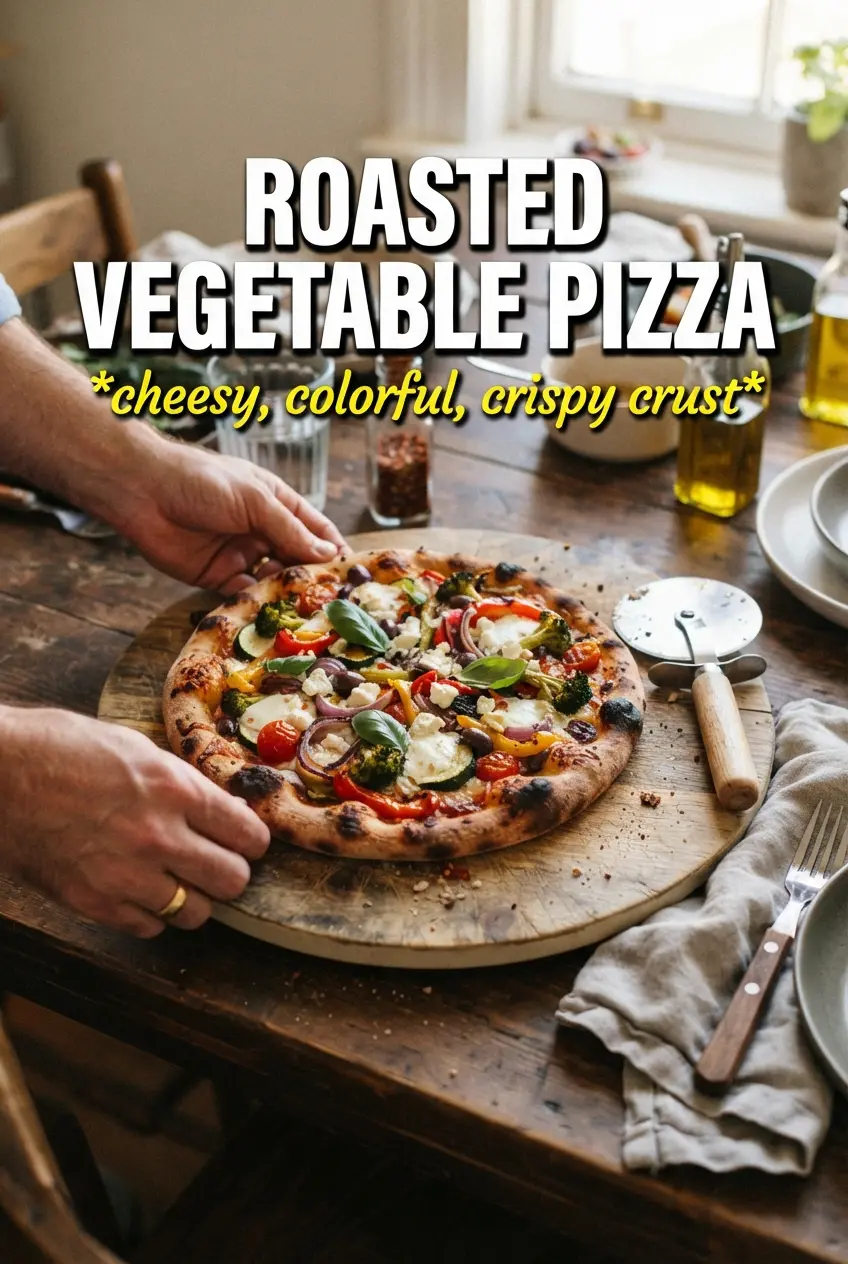
Roasted Vegetable Pizza
Ingredients
Equipment
Method
- Preheat the oven to 450F and toss zucchini, red bell pepper, red onion, and cherry tomatoes with 2 tablespoons olive oil, salt, and pepper. Make sure the vegetables are evenly coated so they caramelize at the edges.
- Spread the vegetables on a sheet pan and roast for 15-18 minutes until caramelized. Stir once halfway through so the slices brown evenly.
- Roll out the pizza dough on a parchment-lined sheet and brush with the remaining olive oil. Leave a slight rim so the crust bakes up crisp and blistered.
- Spread pizza sauce over the dough, then top with the roasted vegetables, shredded mozzarella, and grated parmesan. Distribute everything evenly so each slice gets melty cheese.
- Sprinkle Italian seasoning over the pizza and bake for 12-15 minutes until the crust is golden and the cheese is bubbly. Watch the edges for deep browning.
- Finish with fresh basil and drizzle with balsamic glaze. Serve hot for the best contrast between crisp crust and soft, roasted toppings.