
Silky butternut squash sauce clings to every ridge of the pasta, with savory sausage and just-wilted spinach giving each bite enough heft to feel like a full meal. The squash brings sweetness and body, but the real payoff is how it turns into a creamy sauce without tasting heavy or one-note. With the sausage browned first and the parmesan stirred in at the end, the whole dish lands rich, balanced, and straight-up comforting without getting cloying.
This version works because the sauce starts with real flavor in the pan, not just puree and cream. Browning the sausage leaves behind those browned bits that get folded into the onion and garlic, and the reserved pasta water helps the squash and cream emulsify into something that actually coats the pasta instead of pooling underneath it. A little nutmeg wakes up the squash, and red pepper flakes keep the richness from flattening out.
You’ll find the exact timing that keeps the spinach tender instead of soggy, plus a few swaps that let you adapt the dish without losing that creamy finish.
The sauce came together smoother than I expected, and the pasta water really helped it cling to the rigatoni. The sausage and squash balance was spot on, and even the leftovers reheated without getting greasy.
Creamy butternut squash pasta with sausage and spinach is the kind of skillet dinner that tastes like you worked harder than you did.
The Creamy Sauce Needs Pasta Water More Than More Cream
The biggest mistake with squash pasta is treating the puree like it can carry the whole sauce on its own. It can’t. Butternut squash gives body and sweetness, while the pasta water brings starch that helps the cream and parmesan turn glossy instead of heavy. That little splash is what makes the sauce hug rigatoni and penne instead of sliding off.
There’s another detail that matters: the sauce should simmer gently before the cheese goes in. If the heat is too high, the cream can separate and the parmesan can get grainy. Low heat gives you a smooth finish and lets the squash mellow into the sausage fat and aromatics.
What Each Ingredient Is Actually Doing In This Dish
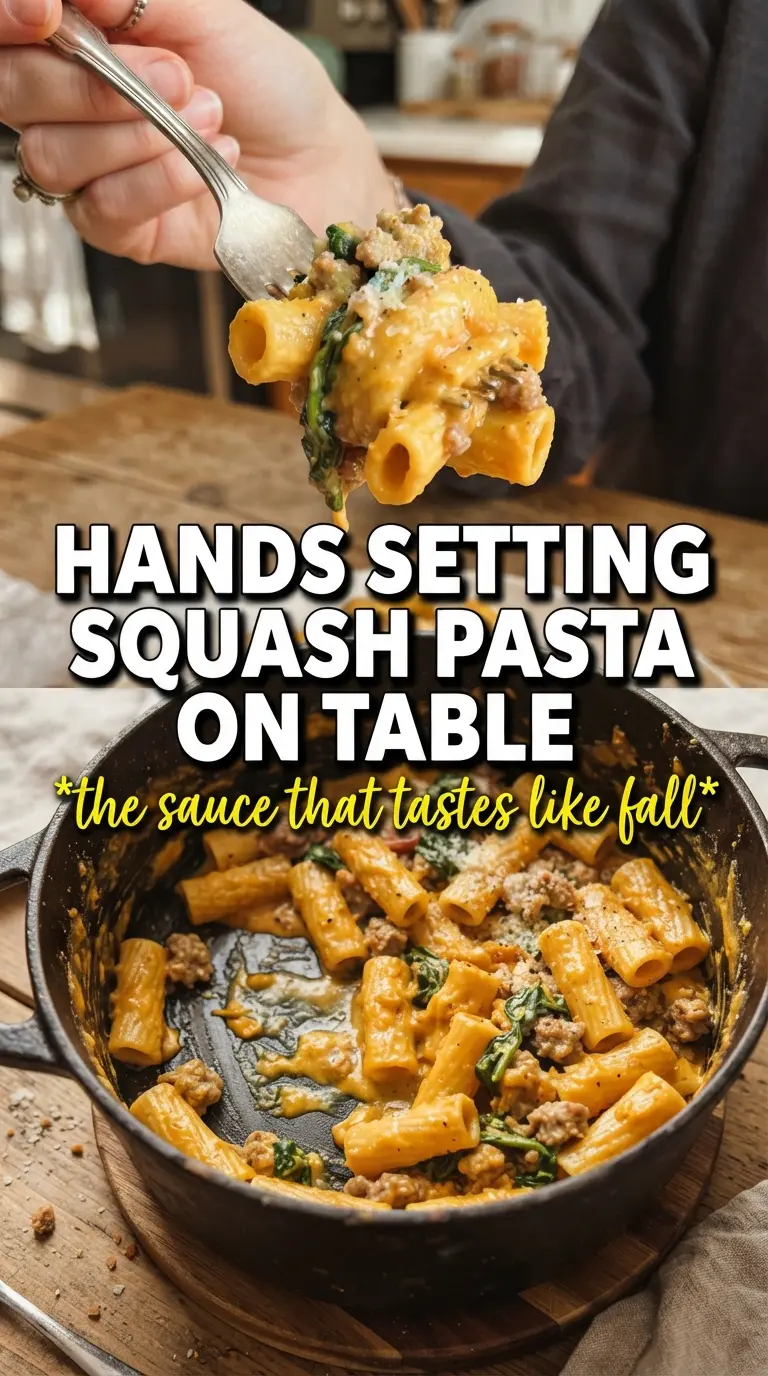
- Butternut squash puree — This is the backbone of the sauce. Use a smooth puree, not a chunky mash, so it blends cleanly with the cream. If you’re starting with fresh squash, roast it until very soft and blend it well; undercooked squash leaves the sauce stringy.
- Italian sausage — This brings the savory, salty base that keeps the dish from tasting like squash soup over pasta. Mild or hot both work. If you use turkey sausage, add a little extra olive oil and expect a slightly leaner finish.
- Heavy cream — Cream rounds out the puree and makes the sauce feel lush. Half-and-half will work in a pinch, but it won’t coat the pasta as deeply and it’s easier to break if you boil it hard.
- Parmesan — Freshly grated parmesan melts into the sauce much better than pre-shredded cheese, which often has anti-caking agents that can leave it grainy. Grate it fine so it disappears smoothly into the pan.
- Spinach — Baby spinach wilts fast and adds color without turning the dish watery. Add it at the very end so it softens in the heat of the pasta instead of collapsing into mush.
- Rigatoni or penne — You want a pasta with enough structure to catch the sauce inside and out. Long noodles don’t hold this sauce as well, and delicate shapes can get lost under the sausage.
Building The Sauce In The Pan, Not In A Pot
Browning The Sausage First
Cook the sausage until it’s deeply browned, not just no longer pink. Those crisped bits are where the flavor lives, and they stay in the skillet to season everything else. Drain off excess fat if the pan looks greasy, but leave enough behind to cook the onion without sticking. If you rush this part, the whole dish tastes flatter than it should.
Softening The Onion And Garlic
Let the onion cook until it turns translucent and sweet at the edges before the garlic goes in. Garlic only needs a short minute or two; if it browns hard, it turns bitter fast. Stir in the Italian seasoning while the onion is still sizzling so the herbs wake up in the fat. That small step makes the sauce taste layered instead of one-note.
Turning The Squash Into Sauce
Add the puree and cream over medium-low heat and stir until the mixture looks smooth and uniform. The sauce should steam gently, not bubble aggressively. Once the parmesan goes in, keep stirring until it melts completely and the sauce looks glossy. If it starts to look broken or grainy, pull the pan off the heat and stir in a splash of pasta water.
Finishing With Pasta And Spinach
Add the drained pasta first, then splash in the reserved cooking water a little at a time until the sauce loosens and coats every piece. Toss in the spinach last so it wilts from the residual heat without turning dull. Return the sausage to the pan and season at the very end, after the parmesan has had a chance to salt the dish. Taste it before you call it done; sausage and cheese can make it saltier than you expect.
Three Ways To Make This Pasta Fit What You’ve Got
Make It Dairy-Free Without Losing The Creamy Texture
Use full-fat coconut milk or an unsweetened oat-based cooking cream in place of the heavy cream, then keep the parmesan out or swap in a dairy-free parmesan-style topping. Coconut milk gives the most body, but it adds a faint sweetness that works well with squash. The sauce will be a little softer and less sharp than the original.
Use Turkey Sausage For A Lighter Version
Turkey sausage keeps the same seasoning profile but brings less fat to the pan, so add a drizzle of olive oil before sautéing the onion. The final dish will taste a touch leaner and less rich, but the squash still gives it plenty of body. Hot turkey sausage works especially well if you like a little heat against the sweetness of the squash.
Make It Gluten-Free With The Right Pasta Shape
Swap in a sturdy gluten-free rigatoni or penne and cook it just to al dente, since gluten-free pasta can go soft fast once it sits in the sauce. Keep a little extra pasta water nearby because it can help the sauce cling even more. The flavor stays the same; the only real difference is that you need to toss it a little more gently.
Add More Greens Without Diluting The Sauce
You can double the spinach or swap in baby kale if that’s what you have, but add it in batches so the pan doesn’t cool down too much. Kale needs an extra minute or two and won’t melt into the sauce the way spinach does, so expect a heartier bite. The sauce stays creamy as long as you keep the greens from flooding the skillet.
Storage and Reheating
- Refrigerator: Store leftovers in an airtight container for up to 4 days. The sauce thickens as it chills, so it may look tighter the next day.
- Freezer: It freezes, but the cream sauce can separate slightly when thawed. Freeze in portions for up to 2 months and expect a softer texture after reheating.
- Reheating: Warm it gently on the stove or in the microwave with a splash of water or milk to loosen the sauce. High heat is the fastest way to make the cream split and the pasta dry out.
Answers To The Questions Worth Asking

Creamy Butternut Squash Pasta With Sausage And Spinach
Ingredients
Equipment
Method
- Bring a large pot of salted water to a boil and cook rigatoni or penne until tender, then reserve 1/2 cup pasta cooking water before draining. Look for al dente pasta that still has a slight bite.
- In a large skillet, brown Italian sausage over medium-high heat until cooked through, then drain excess fat and set the sausage aside. You should see browned crumbles with no pink remaining.
- Sauté onion in the same skillet for 4 minutes over medium heat until softened. Add garlic and Italian seasoning and cook for 2 minutes, stirring until fragrant and slightly golden at the edges.
- Add butternut squash puree and heavy cream to the skillet and stir well. Season with nutmeg and red pepper flakes, then simmer for 5 minutes at a gentle bubble.
- Lower heat and stir in parmesan until smooth and creamy. The sauce should look glossy and thick enough to lightly coat a spoon.
- Add the cooked pasta and reserved pasta cooking water to the skillet and toss until everything is evenly coated. Stir in baby spinach and toss until wilted, about 1–2 minutes, with bright green leaves.
- Return the browned sausage to the pan and season with salt and pepper to taste. Toss until warmed through and the whole dish looks unified and saucy.