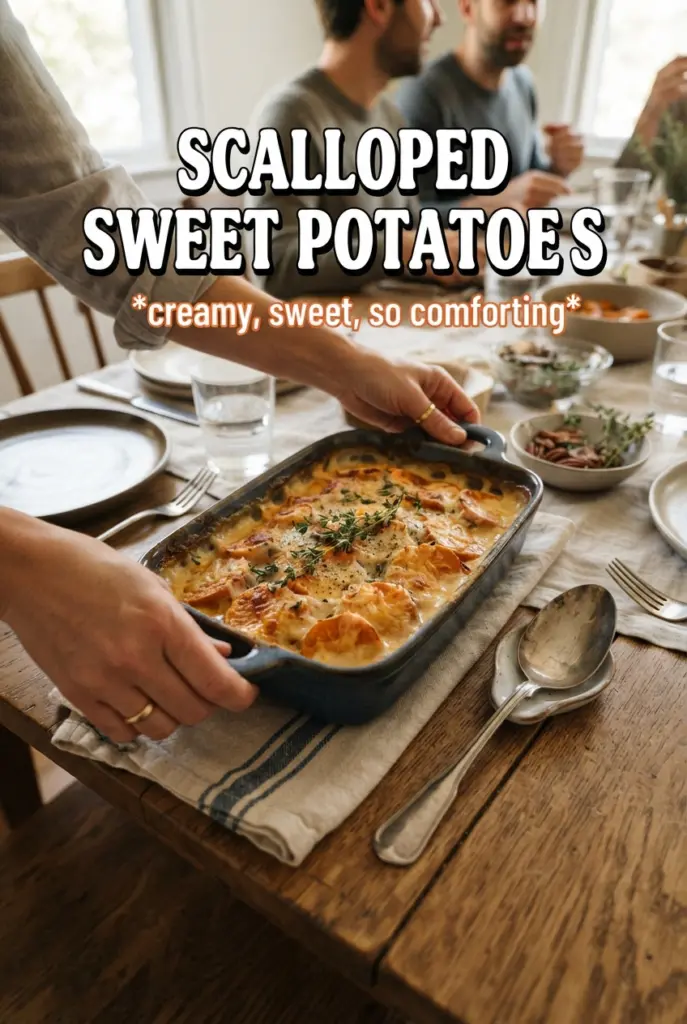
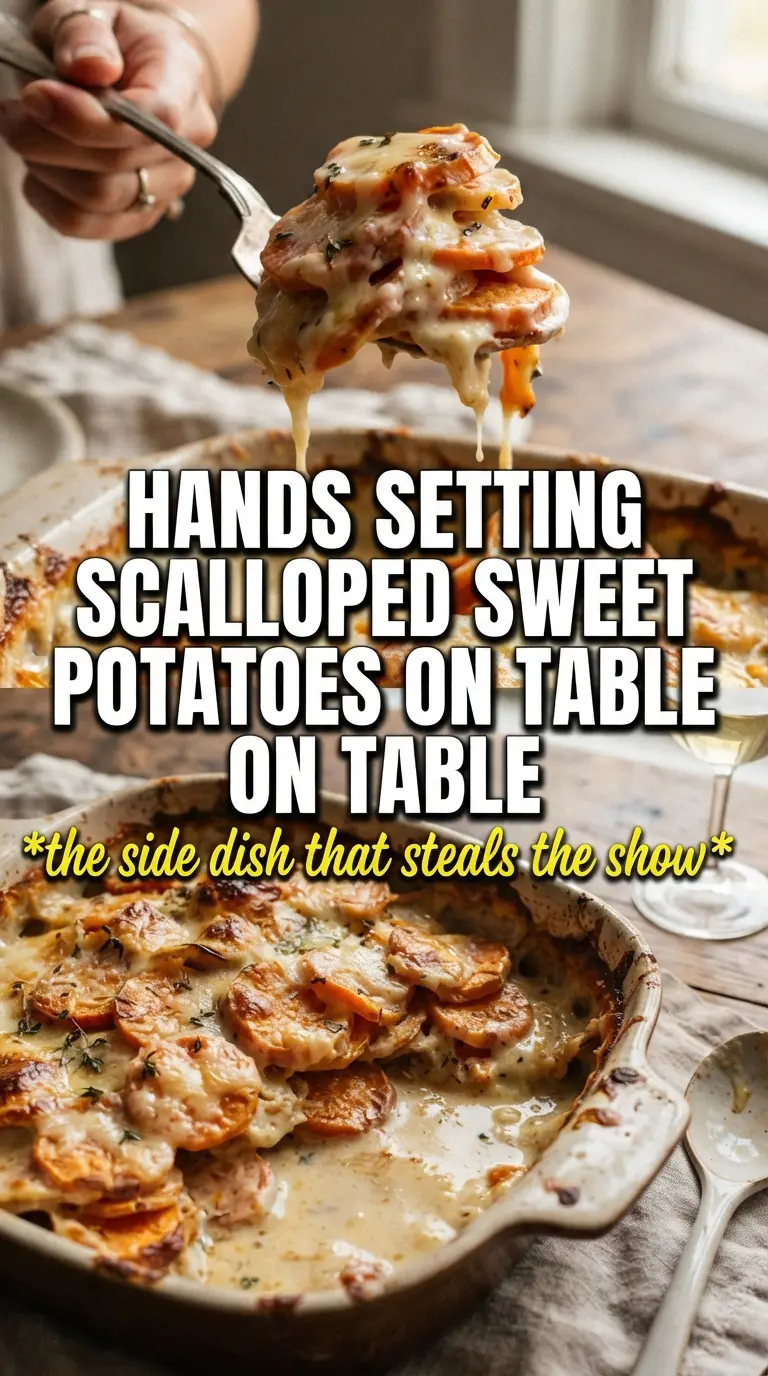
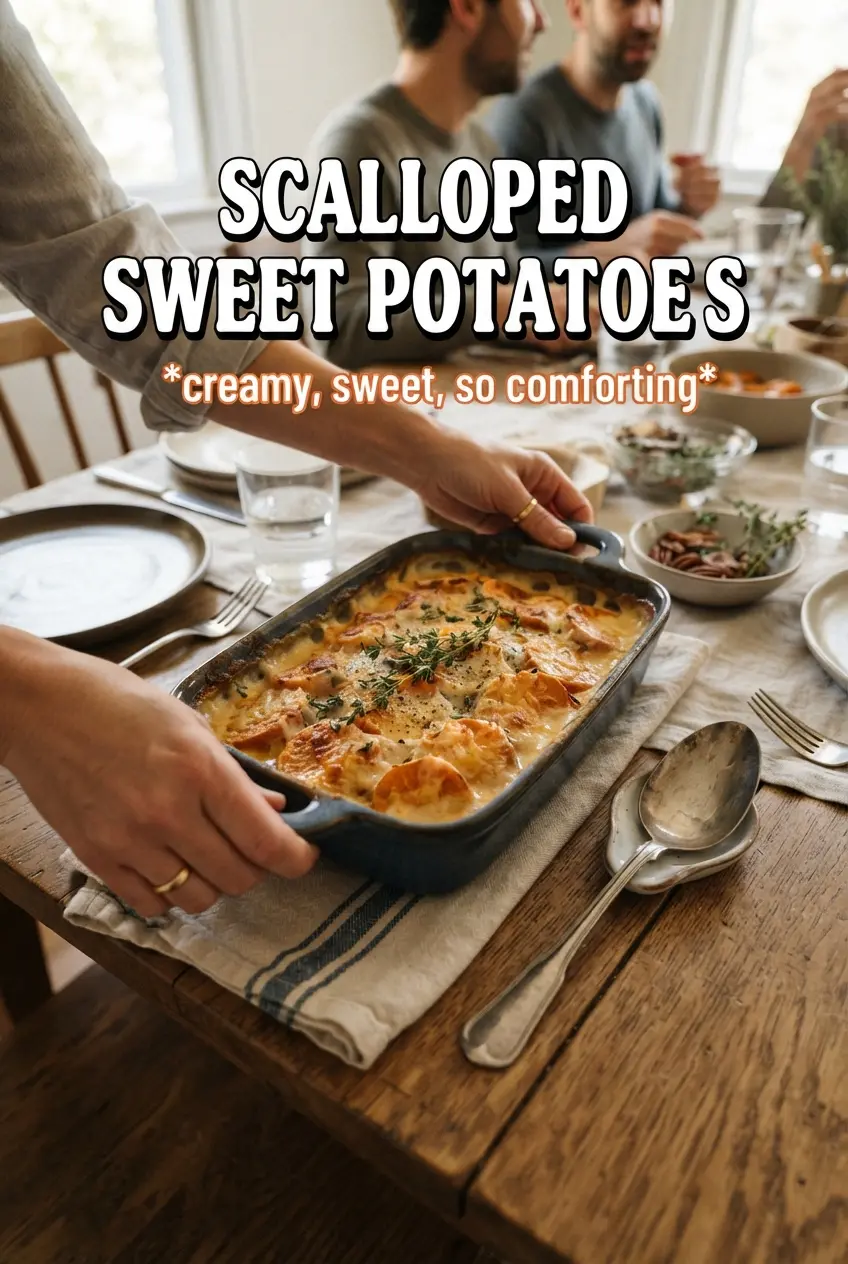
Scalloped sweet potatoes come out rich, tender, and just a little bit sweet, with thin layers that soak up the cream as they bake and a browned cheese top that cracks softly when you spoon through it. The maple and warm spice don’t turn it into dessert; they just round out the sweetness of the potatoes so the whole dish tastes deeper and more balanced. What you get is a side dish that feels special without asking for any complicated work.
The trick is slicing the potatoes thin enough that they soften at the same pace, then giving the cream mixture enough seasoning to reach all the way through the layers. Gruyere brings the nutty, savory melt, while parmesan sharpens the top and helps it brown instead of turning greasy. The rest time matters too — pull it too early and the layers slide apart before the sauce settles.
Below, I’ve included the one thing that keeps scalloped potatoes from turning watery, plus a few swaps that actually work if you need to adjust the cheese or dairy.
The sweet potatoes turned perfectly tender, and the Gruyere on top got that browned, bubbly edge without the sauce separating. I followed the rest time and it sliced up beautifully instead of running all over the dish.
Save these scalloped sweet potatoes for the dinner table when you want a creamy, golden side with a maple-kissed finish.
The Slice Thickness That Keeps the Dish Creamy, Not Crunchy
Scalloped sweet potatoes fail most often when the slices are uneven. Thick pieces stay firm in the middle while the thinner ones overcook and collapse, which leaves you with a dish that eats like two different casseroles. Aim for thin, overlapping rounds that are close to the same size so the cream can move through the pan at the same pace.
The other problem is under-seasoning the cream. Sweet potatoes need enough salt and enough contrast to keep the dish from tasting flat, and that’s where the garlic, parmesan, thyme, and a little cinnamon do their job. You’re not building a dessert filling here. You’re building a savory cream that happens to love sweet potatoes.
What Each Ingredient Is Actually Doing in This Dish
- Sweet potatoes — These need to be peeled and sliced thin so they soften evenly. A mandoline helps, but a sharp knife works if you keep the slices consistent.
- Heavy cream and whole milk — The cream gives body and the milk keeps the dish from feeling too heavy. Using all cream will make it richer, but the finished sauce can feel almost stiff once it cools.
- Gruyere — This is the cheese that gives the casserole its nutty, savory backbone. Swiss cheese can stand in, but it won’t have the same depth or melt as smoothly.
- Parmesan — Parmesan adds sharpness and helps the top brown into a crisp crust instead of a soft blanket. Grate it fresh if you can; pre-grated cheese often clumps and melts less cleanly.
- Maple syrup, cinnamon, and nutmeg — These work together in the background. They don’t make the dish sweet so much as they give the potatoes a warmer, rounder finish.
- Butter — Butter the dish well so the edges brown instead of sticking. Those caramelized corners are some of the best bites in the pan.
Layering the Potatoes So the Sauce Bakes Into the Dish
Building the Base
Butter the baking dish generously, then lay the first layer of sweet potatoes in overlapping rows. Keep the overlap even so the cream doesn’t pool in one spot and leave another patch dry. If the slices are stacked too tightly, the center steams unevenly and the top browns before the bottom turns tender.
Seasoning the Cream
Whisk the cream, milk, garlic, maple syrup, thyme, cinnamon, nutmeg, salt, and pepper until the mixture looks smooth and fragrant. This is where the dish gets its depth, so don’t treat the seasoning like an afterthought. If the mixture tastes flat before it goes in the oven, it’ll taste flat at the table too.
The Covered Bake
Cover the dish tightly with foil and bake it until the potatoes are starting to relax and the cream is bubbling at the edges. The foil traps steam, which is what finishes the centers without drying the top. If you skip this covered stage, the cheese will brown too early and the potatoes underneath can stay firm.
The Cheese Finish
Pull off the foil, scatter the Gruyere and parmesan over the top, and return the pan to the oven until the cheese is melted, browned, and bubbling around the edges. Watch for a deep golden top, not just pale melted cheese. A knife should slide through the center with no resistance before you call it done.
Dairy-Free Version With a Similar Creamy Finish
Use unsweetened oat cream or a rich dairy-free cream substitute plus unsweetened oat milk. The sauce won’t brown quite the same way, and the flavor will be a little less lush, but you’ll still get tender layers and a spoonable finish if you keep the bake covered until the potatoes are fully soft.
Skipping the Maple for a More Savory Dish
Leave out the maple syrup and add a pinch more salt plus an extra crack of black pepper. The dish will taste more like classic scalloped potatoes with sweet potato layers instead of a sweet-savory hybrid, which works well next to roast chicken or ham.
Making It Ahead for a Holiday Table
Assemble the dish up to the point of baking, cover it tightly, and refrigerate it for up to 24 hours. Let it sit at room temperature while the oven heats, then add a few extra minutes to the covered bake since it starts cold. The cheese topping goes on only after the potatoes are mostly tender.
Using Different Cheese Without Losing the Melt
Fontina, Swiss, or a mild white cheddar can stand in for Gruyere, but the flavor will change. Fontina melts beautifully and keeps the dish creamy; cheddar gives you more sharpness but can turn a little oily if it’s the only cheese, so blend it with something milder.
Storage and Reheating
- Refrigerator: Store covered for up to 4 days. The sauce thickens as it sits, so the leftovers will be a little more set than the fresh bake.
- Freezer: It freezes, but the cream can separate a bit when thawed. Freeze in portions, wrapped well, if you don’t mind a slightly less silky texture.
- Reheating: Reheat covered in a 350F oven until hot through, then uncover for the last few minutes so the top wakes back up. Microwaving works in a pinch, but it softens the edges and can make the cheese topping greasy.
Answers to the Questions Worth Asking
Scalloped Sweet Potatoes
Ingredients
Equipment
Method
- Preheat oven to 375F, then butter a 9x13 baking dish with the unsalted butter.
- Whisk together heavy cream, whole milk, garlic, maple syrup, fresh thyme, cinnamon, nutmeg, salt, and pepper until evenly combined.
- Layer sweet potato slices in overlapping rows in the baking dish.
- Pour the cream mixture over the sweet potatoes evenly so the layers look thoroughly coated.
- Cover tightly with foil and bake for 40 minutes at 375F, until the layers begin to soften.
- Uncover and scatter Gruyere and parmesan over the top in an even layer.
- Bake 20-25 more minutes at 375F until the sweet potatoes are completely tender and the topping is golden and bubbly.
- Rest for 10 minutes before serving so the custard sets and the slices hold their layers.