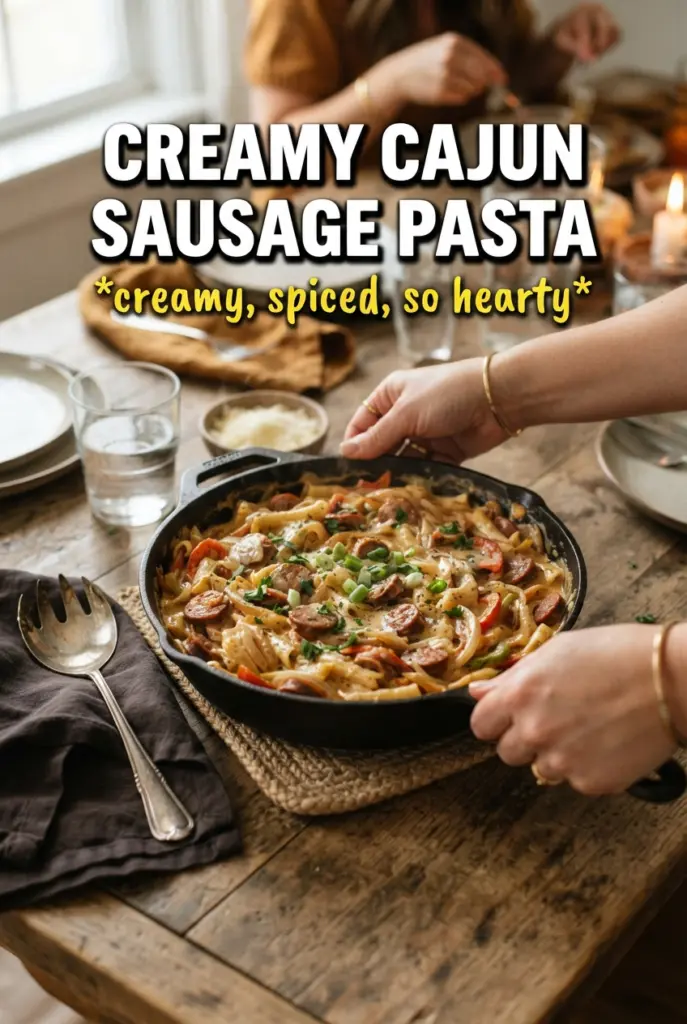
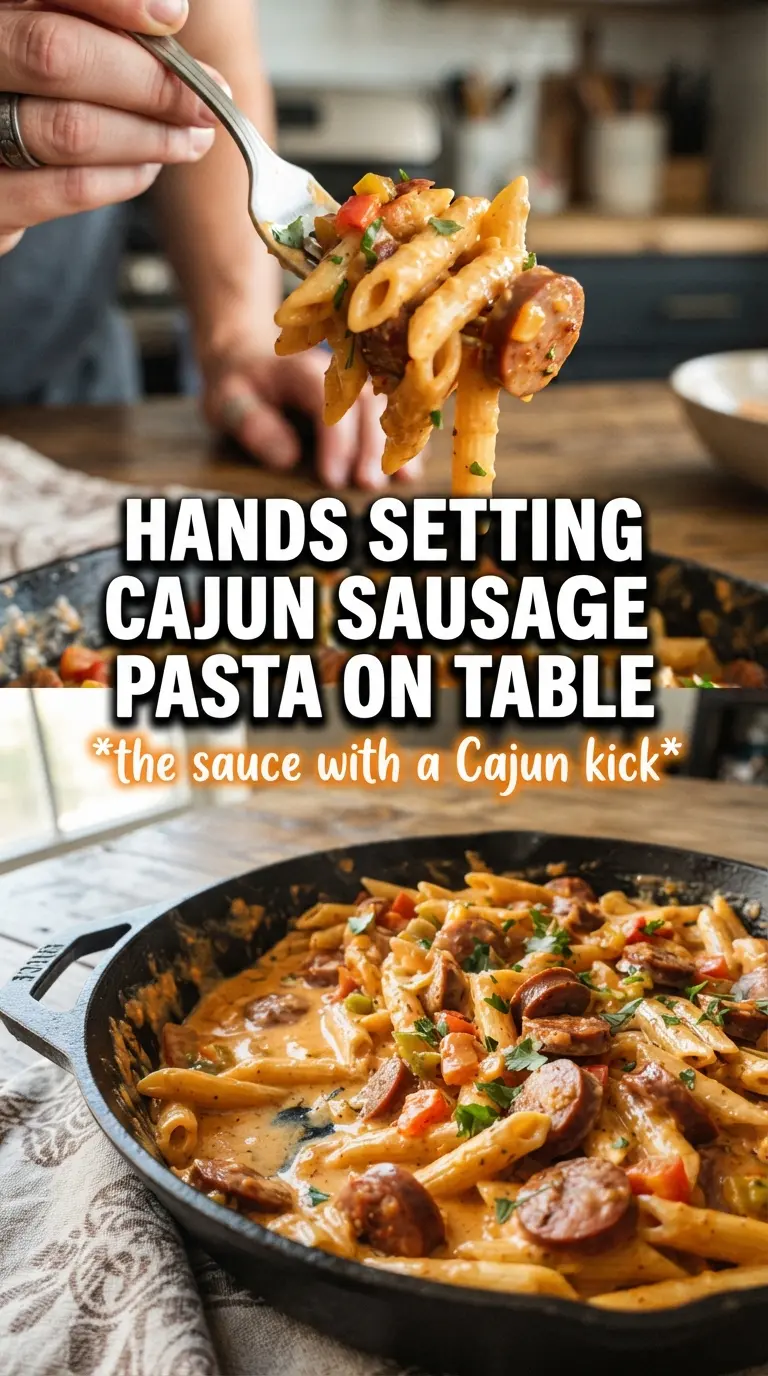
Smoky sausage, tender penne, and a Cajun cream sauce that clings to every ridge and curve are what make this pasta worth putting on repeat. It lands rich without feeling heavy, with just enough heat to wake everything up and enough sauce to keep each bite glossy and coated. The vegetables soften into the background while the sausage brings the salty, browned edge that gives the whole dish its backbone.
The part that makes this version work is the order. Browning the sausage first leaves flavor in the pan, and that fond gets pulled right into the sauce instead of being left behind. A little pasta water matters here too. It loosens the sauce just enough to help the parmesan melt smoothly and helps the cream cling to the penne instead of sitting in the bottom of the skillet.
Below, I’ve included the small details that keep the sauce silky, plus a few smart swaps if you need to adjust the heat or make this dairy-free.
The sauce coated every piece of pasta and never broke, even after I added the parmesan. My husband went back for seconds and asked me to keep this one in the regular dinner rotation.
Save this Cajun sausage pasta for the nights when you want a creamy, one-skillet dinner with smoky sausage and a sauce that clings to every bite.
The Trick to Keeping Cajun Cream Sauce Smooth Instead of Grainy
The sauce here is rich, but it only stays smooth if you respect the heat. Heavy cream can handle a gentle simmer, not a hard boil, and parmesan needs low heat to melt in without turning sandy. If the pan is too hot when the cheese goes in, the sauce can tighten up and look broken before you even get the pasta folded through.
That’s why the cream and broth simmer first until they thicken a little on their own. The pasta water then acts like a built-in emulsifier, helping the starch and fat come together so the sauce coats instead of separating. If it starts looking too thick before the pasta is fully coated, a splash of that reserved water brings it right back.
- Andouille or smoked sausage — This is where the smoky, salty backbone comes from. Andouille brings the most Cajun-style heat, while smoked sausage gives you a milder result. Turkey sausage works in a pinch, but you’ll lose some of the browned richness.
- Cajun seasoning — This drives both the color and the heat. Different brands vary a lot in salt level, so taste before adding extra salt at the end. If your blend is salt-heavy, use a little less and adjust after the parmesan goes in.
- Heavy cream — You need the fat here for a sauce that stays stable. Half-and-half can work, but the sauce will be thinner and a little more delicate. I don’t recommend milk unless you’re prepared for a much lighter, less plush result.
- Parmesan — Use finely grated parmesan, not big shreds, so it melts cleanly into the sauce. The powdery store-bought stuff won’t give the same flavor, but it does melt more smoothly than a coarse shred if that’s what you have.
- Pasta water — Don’t skip this. It helps the sauce cling to the penne and softens the edge if the pan starts looking tight. Save it before draining, because once it’s gone, you can’t get that starchy finish back.
What Each Ingredient Is Actually Doing in This Recipe
- Primary ingredient (the star) — Quality matters most. Choose the best you can find.
- Cooking medium (oil, butter, or broth) — This carries flavors and prevents dryness.
- Seasonings (salt, pepper, spices, herbs) — Layer flavors so nothing overpowers. Build depth gradually.
- Aromatics (garlic, onion, herbs) — Cook with fat to bloom flavors. Become the foundation.
- Supporting ingredients — Complement the main ingredient without overpowering it.
- Sauce or liquid (if applicable) — Brings flavors together. Balance richness with acid.
- Acid (lemon, vinegar, wine, or other) — Brightens and prevents flat-tasting results.
- Final finish (garnish, glaze, or sauce) — Prevents one-dimensional taste and adds visual appeal.
Building the Sauce in the Right Order
Brown the sausage first
Cook the sausage in butter until the edges are deeply browned and you can hear the sizzle quiet down as the moisture cooks off. That browning is what gives the sauce its savory base, so don’t rush it or overcrowd the pan. Pull the sausage out once it’s colored; if it stays in while the vegetables cook, it can turn dry and miss that crisp-edged texture.
Soften the vegetables, then wake up the spice
Add the onion and bell peppers to the same skillet and cook until they soften and pick up some of the browned bits from the pan. You want the onions translucent and the peppers tender with just a little bite left. Stir in the garlic and Cajun seasoning for a minute or two until it smells fragrant and a little toasted, but don’t let the garlic sit long enough to brown or it will turn bitter.
Let the cream reduce before the cheese goes in
Pour in the broth and cream and let everything simmer gently until the sauce looks slightly thicker and coats the back of a spoon. This is the stage people usually rush, and it matters because the sauce needs body before the pasta joins the party. If it’s still thin when the cheese goes in, it can stay loose instead of turning silky.
Finish with pasta water and parmesan
Toss in the cooked penne, a splash of pasta water, and the parmesan, then stir until the sauce turns glossy and hugs the pasta. The cheese should melt into the sauce, not sit in little strings or clumps, so keep the heat low while you work. Add the sausage back at the end, just long enough to warm through and coat in sauce without overcooking.
Ways to Adjust the Heat, the Richness, or the Protein
Make it less spicy without losing the Cajun character
Use a milder sausage and start with 1 tablespoon of Cajun seasoning instead of 2, then taste at the end. You’ll still get the smoky, seasoned flavor, but the heat will sit in the background instead of taking over the whole bowl.
Make it dairy-free
Swap the butter for olive oil, use a thick unsweetened coconut cream or a dairy-free cooking cream, and leave out the parmesan unless you have a good vegan version that melts well. The sauce will still coat the pasta, but it’ll be a little less tangy and a little more neutral in flavor.
Use a different pasta shape
Penne is ideal because the sauce gets into the tubes, but rigatoni, ziti, or rotini all work well. Long noodles won’t hold the sausage and peppers as nicely, so stick with a short shape if you want the best texture in every bite.
Storage and Reheating
- Refrigerator: Store in an airtight container for up to 4 days. The sauce will thicken as it chills, so it may look tighter the next day.
- Freezer: You can freeze it, but cream sauces change texture a bit after thawing. For the best result, freeze only if you need to, and thaw overnight in the fridge before reheating.
- Reheating: Warm it gently on the stove over low heat with a splash of broth or water. High heat is what makes cream sauces split, so go slow and stir often until the sauce loosens again.
Questions I Get Asked About This Recipe
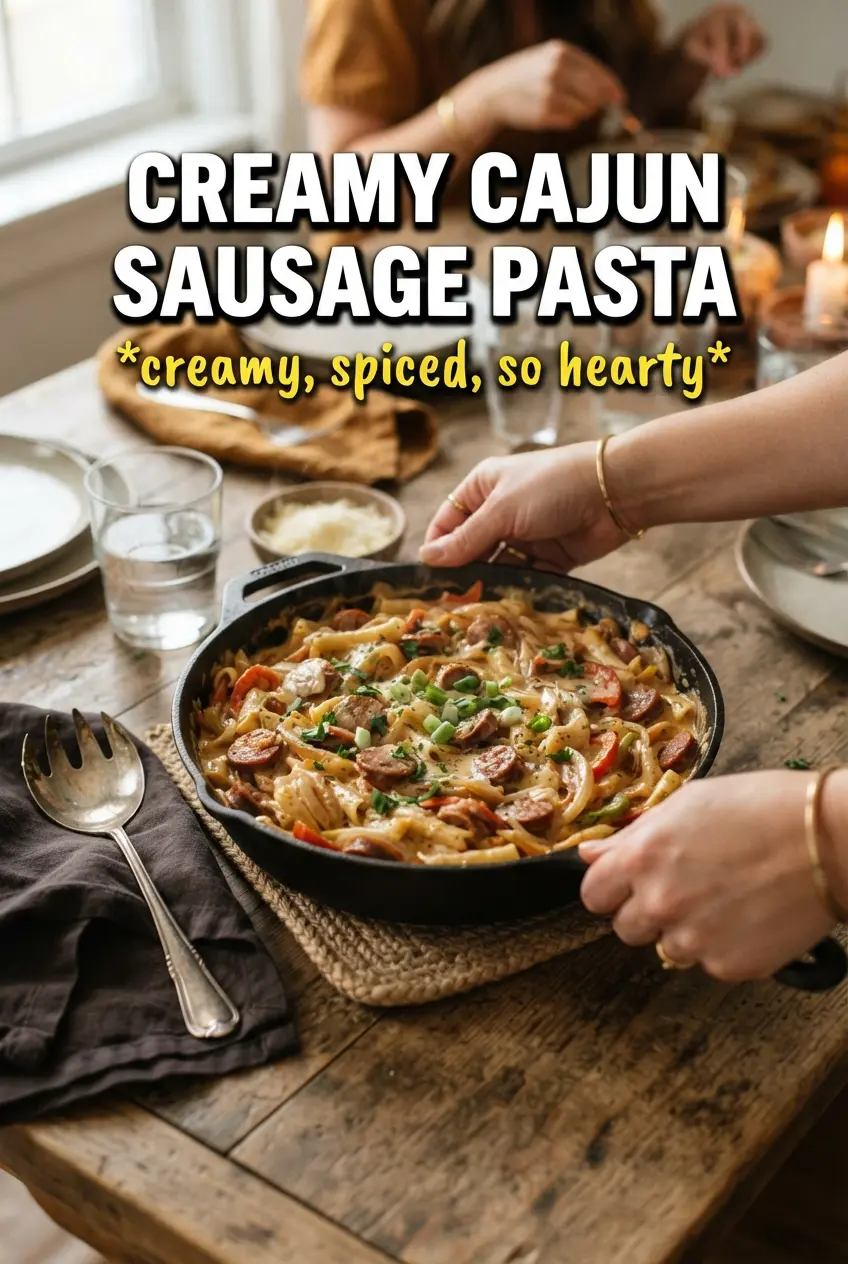
Creamy Cajun Sausage Pasta
Ingredients
Equipment
Method
- Bring a pot of salted water to a boil and cook the penne until al dente, then reserve 1/2 cup pasta water.
- Keep the pasta warm as you prepare the sausage and sauce.
- Melt the butter in a large skillet over medium-high heat, then brown the andouille or smoked sausage until lightly crisped, about 3-4 minutes.
- Remove the sausage to a plate or bowl and set aside.
- In the same skillet, sauté the onion and diced bell peppers for 4-5 minutes until softened.
- Add the minced garlic and Cajun seasoning, then cook for 2 minutes, stirring constantly until fragrant.
- Pour in the chicken broth and heavy cream, then simmer for 5 minutes until slightly thickened.
- Add the cooked penne to the skillet along with the reserved pasta water, then stir until the pasta is coated and the sauce clings.
- Stir in the grated parmesan until melted and smooth.
- Return the browned sausage to the skillet, toss to coat, and season with salt to taste.
- Top with green onions and parsley, then serve hot.