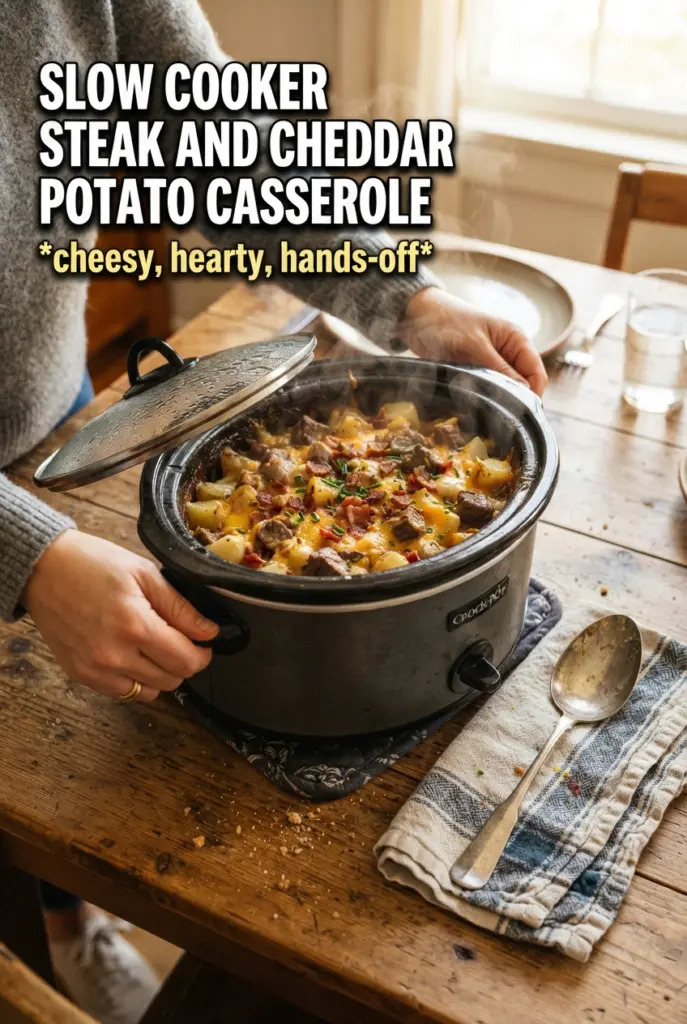
Tender steak, soft Yukon gold potatoes, and a blanket of melted cheddar turn into the kind of slow cooker dinner that disappears fast. The potatoes soak up the savory broth as they cook, the steak turns fork-tender without drying out, and the cheese on top pulls everything together in one rich, hearty spoonful.
What makes this version work is the layering. Thin-sliced potatoes go in with the onions first so they sit in the broth long enough to soften all the way through, while the steak cooks above and between them instead of clumping at the bottom. The cream of mushroom soup adds body without making the casserole heavy, and a little Worcestershire gives the whole dish that deep, beefy flavor that slow cooker meals need.
Below, I’ve included the timing detail that keeps the potatoes from staying firm, plus a few swaps that still give you a creamy, comforting casserole without losing the texture that makes it good.
The potatoes came out perfectly tender and the steak stayed juicy even after 7 hours on low. I loved that the cheddar melted into the top without turning greasy, and the leftovers reheated better than I expected.
Save this slow cooker steak and cheddar potato casserole for a night when you want tender beef, creamy potatoes, and a golden cheddar finish with almost no hands-on work.
The Layering Trick That Keeps the Potatoes Tender and the Steak Juicy
The biggest mistake with a casserole like this is treating the slow cooker like a dump-and-go pot where everything can go in any order. Thin potatoes need time to soften, and steak needs enough moisture to stay tender without disappearing into the broth. Layering gives each ingredient the right amount of contact with the liquid, which is what keeps the potatoes from staying chalky and the steak from drying out.
Another thing that matters here is thickness. If the potatoes are sliced too thick, they’ll outlast the cook time and stay firm in the center. If the steak is cut too thick, it can get chewy before the potatoes are done. Thin slices on both ingredients let the casserole cook evenly and give you that spoon-tender texture all the way through.
- Yukon gold potatoes — These hold their shape better than russets and turn creamy instead of mealy. Slice them thin, about 1/8-inch, so they cook through in the same window as the steak.
- Beef sirloin or chuck steak — Sirloin stays a little cleaner and leaner; chuck gives you a richer, softer bite after the long cook. Either one works, but it must be sliced thin across the grain.
- Cream of mushroom soup — This is the shortcut that gives the casserole body. If you want to swap it, use cream of celery or cream of chicken, but the mushroom version adds the best savory depth.
- Sharp cheddar — Sharp cheese matters because the slow cooker softens flavor as it cooks. Mild cheddar can get lost under the broth and cream soup.
What Each Ingredient Is Actually Doing in This Recipe
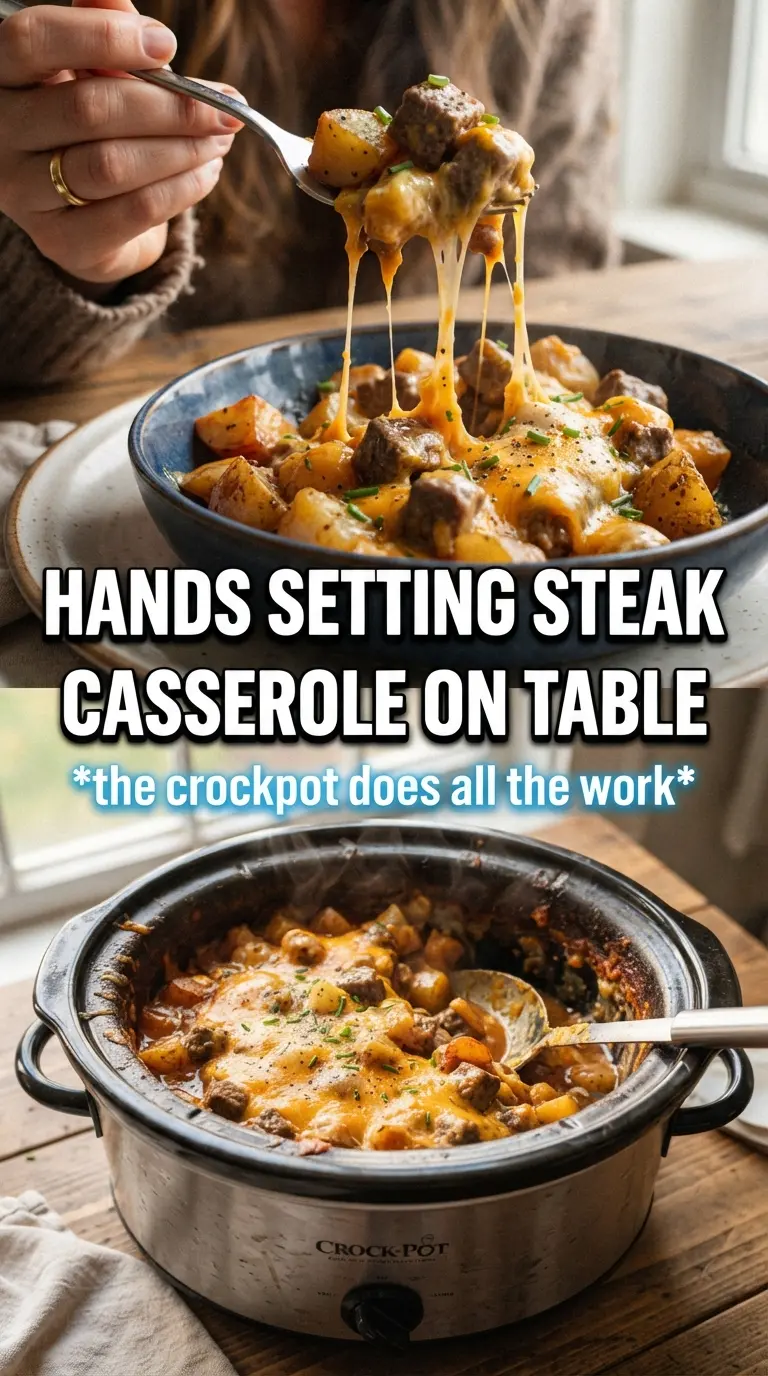
- Primary ingredient (the star) — Quality matters most. Choose the best you can find.
- Cooking medium (oil, butter, or broth) — This carries flavors and prevents dryness.
- Seasonings (salt, pepper, spices, herbs) — Layer flavors so nothing overpowers. Build depth gradually.
- Aromatics (garlic, onion, herbs) — Cook with fat to bloom flavors. Become the foundation.
- Supporting ingredients — Complement the main ingredient without overpowering it.
- Sauce or liquid (if applicable) — Brings flavors together. Balance richness with acid.
- Acid (lemon, vinegar, wine, or other) — Brightens and prevents flat-tasting results.
- Final finish (garnish, glaze, or sauce) — Prevents one-dimensional taste and adds visual appeal.
Building the Casserole So the Cheese Melts on Top Instead of Disappearing
Season the Steak Before It Goes in
Coat the steak slices with salt, pepper, garlic powder, and onion powder before they hit the slow cooker. That seasoning clings to the meat instead of floating in the broth, which gives every layer more flavor. If you skip this step, the finished casserole tastes flatter than it should, especially after a long cook.
Stack the Potatoes, Onion, and Steak in Thin Layers
Alternate the potatoes, onion, and steak instead of dumping everything in one pile. The onions soften into the broth and help season the potatoes, while the steak stays distributed through the casserole instead of collecting in one dense layer. Thin, even layers also help the liquid move through the dish so nothing at the bottom gets soggy while the top stays firm.
Pour the Broth Mixture Over Everything
Whisk the broth, soup, Worcestershire, and garlic together before pouring it in. You want that mixture smooth enough to seep between the layers instead of sitting in one thick pocket. If the soup is too cold and stiff to whisk easily, let it sit out for a few minutes first so it blends without clumps.
Finish With Cheese After the Potatoes Are Tender
Wait until the potatoes are fully tender before adding the cheddar. Cheese added too early can turn oily and dull because it spends too long in the heat. Scatter it over the top, close the lid, and give it about 15 minutes on High just until it melts into a glossy layer.
Make It with Chicken Instead of Beef
Use thin-sliced boneless chicken thighs if you want a lighter casserole with the same creamy, cheesy finish. Thighs hold up better than breast meat during the long cook, so the texture stays tender instead of stringy. The flavor is milder, so the Worcestershire and cheddar matter even more.
Dairy-Free Version That Still Tastes Rich
Swap in a dairy-free cream soup and use a good melting vegan cheddar-style shreds on top. The casserole will still be creamy from the broth and soup base, but the cheese won’t melt quite as smoothly as real cheddar. Add the dairy-free shreds at the end the same way so they stay on top instead of breaking down.
Gluten-Free Swap for the Cream Soup
Use a certified gluten-free cream soup or replace it with a homemade gluten-free white sauce. The texture stays the same as long as the replacement has enough body to coat the potatoes and steak. Check the Worcestershire label too, since some brands include gluten.
Storage and Reheating
- Refrigerator: Store leftovers for up to 4 days. The potatoes soften a bit more as they sit, but the flavor gets even better.
- Freezer: It freezes well in portions for up to 2 months. Cool it completely first, then pack it tightly so the potatoes don’t pick up extra ice crystals.
- Reheating: Reheat covered in the oven at 325°F until hot, or warm smaller portions in the microwave with a splash of broth. The biggest mistake is blasting it on high heat, which can dry out the steak and separate the cheese.
The Questions That Come Up Before You Start the Slow Cooker
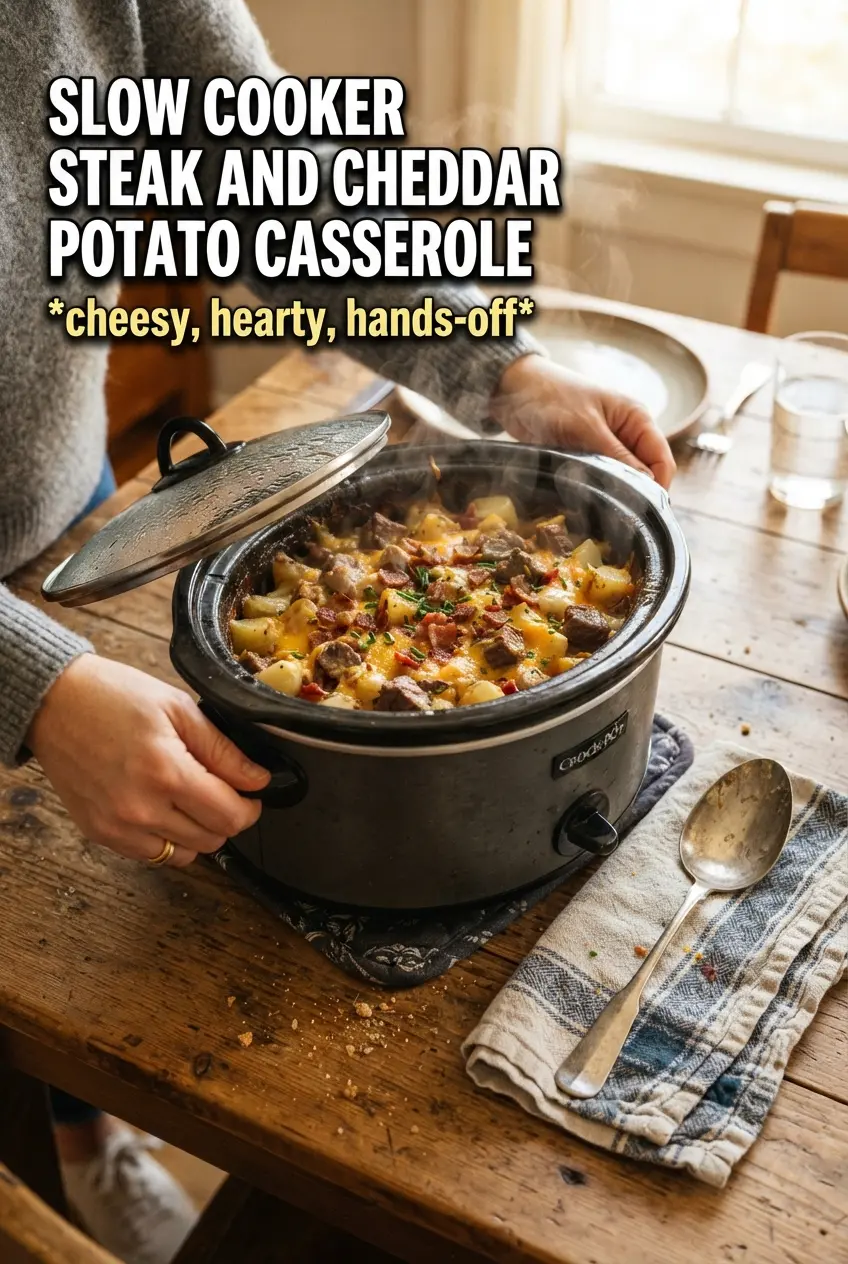
Slow Cooker Steak And Cheddar Potato Casserole
Ingredients
Equipment
Method
- Season the steak slices with salt, pepper, garlic powder, and onion powder to evenly coat each piece.
- Layer the potatoes, onion, and steak in the Crockpot in alternating layers so the ingredients cook through consistently.
- Whisk the beef broth, cream of mushroom soup, Worcestershire sauce, and minced garlic until smooth, then pour evenly over the layered ingredients.
- Cook on Low for 6-7 hours (or High for 3-4 hours) until the potatoes and steak are tender, checking once near the end for doneness.
- Scatter the shredded sharp cheddar over the top in an even layer.
- Cook on High for 15 minutes until the cheddar is fully melted and bubbly.
- Serve hot with green onions and sour cream on top.