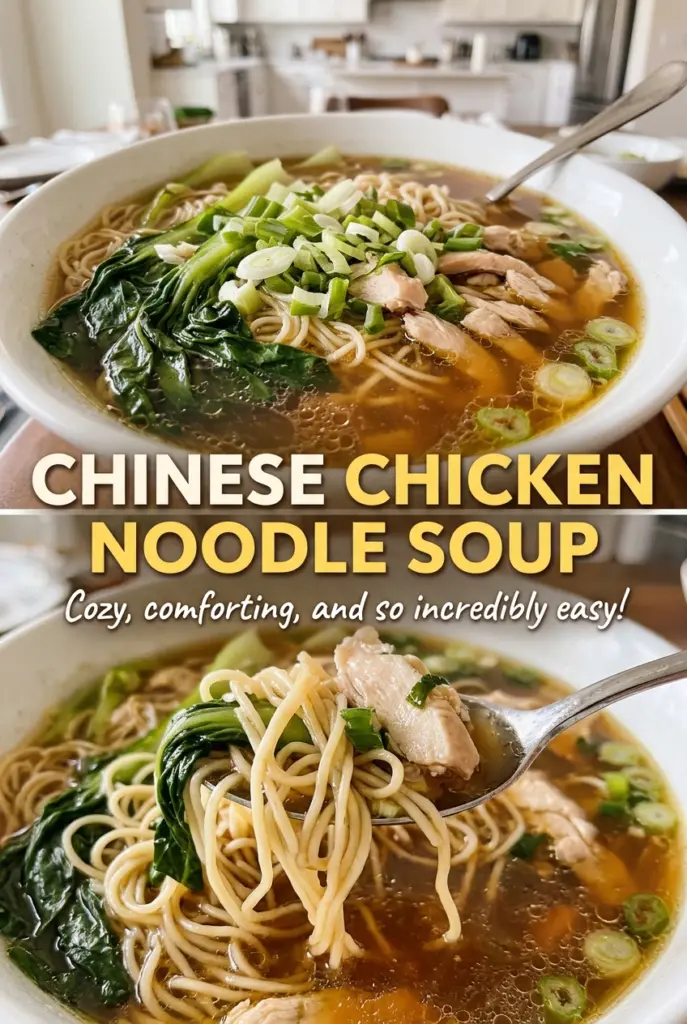
Clear broth, tender chicken, and springy noodles make this Chinese chicken noodle soup the kind of bowl you keep coming back to. It tastes light at first, then builds with ginger, garlic, sesame oil, and white pepper so every spoonful lands with a little more depth than you’d expect from such a simple pot.
The trick is keeping the broth clean and layered instead of muddy. Garlic and ginger simmer long enough to perfume the stock without turning sharp, while the soy sauce, rice vinegar, and sesame oil go in early enough to season the whole pot but not so early that the broth tastes flat. Cooking the noodles separately keeps them from soaking up too much liquid and turning gummy.
Below, I walk through the parts that matter most: how to keep the chicken tender, when to add the bok choy so it stays bright, and what to do if you want a little more heat or a little more tang in the finished bowl.
The broth stayed clear and the chicken was still tender, not stringy. I cooked the noodles separately like you suggested and they held up perfectly all the way through dinner.
Like this clear, ginger-scented chicken noodle soup? Save it to Pinterest for the nights when you want a fast bowl with tender chicken and noodles that don’t go soggy.
The Reason the Broth Stays Clean Instead of Cloudy
Most noodle soups go cloudy because the pot is boiled hard, the aromatics are scorched, or the noodles are cooked directly in the broth and release starch into everything. This version avoids all three problems. A gentle simmer keeps the chicken tender and the broth clear, while the noodles cook on their own so the soup stays light instead of turning starchy and heavy.
The timing matters too. Garlic and ginger need enough heat to open up, but not enough to brown. Once the soy sauce, sesame oil, and rice vinegar go in, the broth already has a base flavor, so the vegetables and chicken can finish the job without you chasing the seasoning at the end.
What Each Ingredient Is Actually Doing in This Bowl
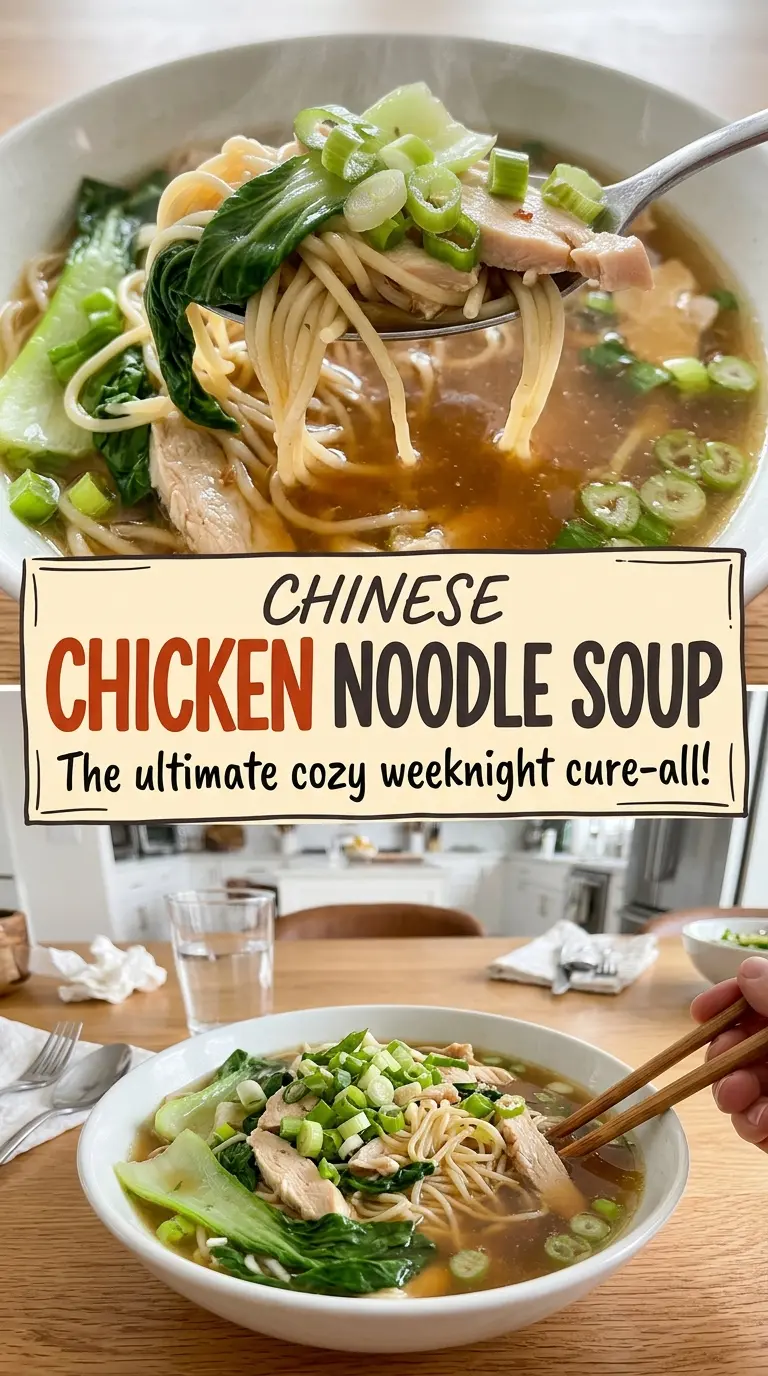
- Chicken breast — Thin slicing is what keeps it tender here. If you leave it in thick pieces, it takes longer to cook and is more likely to go dry before the broth is done. Chicken thigh works too if you want a richer bowl and don’t mind a little extra fat in the broth.
- Thin Chinese wheat noodles or rice noodles — These are the backbone of the soup, but they should stay separate from the broth until serving. Wheat noodles give a firmer, chewier bite; rice noodles turn softer and more delicate. Either works, but cooking them in the soup will make the broth cloudy and the noodles overcooked by the time you sit down.
- Shiitake mushrooms — These bring the deep, savory note that makes the broth taste fuller. Fresh shiitakes give the best texture, but sliced cremini mushrooms can stand in if that’s what you have. Dried shiitakes also work after soaking, though the flavor will be stronger and a little earthier.
- Ginger and garlic — These are not background aromatics here; they’re the whole personality of the soup. Fresh ginger matters more than bottled, and finely minced garlic disperses better in the broth. If the garlic browns, it turns bitter fast, so keep the simmer gentle from the start.
- White pepper — This is the finishing spice that makes the broth taste like Chinese-American takeout soup in the best way. Black pepper won’t give the same gentle heat or aroma. Add it at the end so you can taste how much the broth needs after the noodles and greens go in.
The 20 Minutes That Actually Matter
Infusing the Broth
Bring the broth to a steady simmer, then add the garlic and ginger and let them cook long enough to perfume the liquid, about 5 minutes. You want tiny bubbles around the edges, not a rolling boil, because hard boiling pushes the aromatics past fragrant and into harsh. If the garlic starts to brown, the heat is too high and the broth will taste bitter later.
Cooking the Chicken and Mushrooms
Stir in the soy sauce, sesame oil, and rice vinegar before the chicken goes in so the broth already tastes seasoned. Add the sliced chicken and mushrooms and keep the simmer gentle until the chicken is cooked through and no longer translucent at the center, 10 to 12 minutes. If the broth boils hard here, the chicken tightens up and the mushrooms lose their clean bite.
Separating the Noodles
Cook the noodles in their own pot according to the package directions, then drain them and divide them into bowls. This keeps the starch out of the broth and gives you better control over texture, especially if the soup sits for a few minutes before serving. If the noodles are rinsed, do it briefly and only if the package says so; otherwise, let them drain well so they don’t water down the bowl.
Finishing with Bok Choy and Garnishes
Slip the bok choy into the broth at the very end and cook just until the leaves wilt and the stems lose their raw crunch, about 3 minutes. Ladle the hot soup over the noodles, then finish with white pepper, salt, green onions, cilantro, and a drizzle of chili oil. If the broth tastes flat now, it usually needs salt, not more soy sauce — add a pinch at a time until the chicken and ginger pop.
How to Adjust the Bowl Without Losing the Balance
Make it gluten-free with rice noodles
Swap in rice noodles and use a gluten-free soy sauce or tamari. Rice noodles soften faster than wheat noodles, so keep them separate until the moment you serve the soup. The broth stays just as fragrant, but the bowl turns a little lighter and silkier.
Use chicken thighs for a richer broth
Boneless skinless thighs hold up well and give the soup a deeper, rounder taste. They stay juicier than breast meat if you plan to let the soup sit a bit before serving. The broth will look slightly fuller and more savory, which works well if you like a heartier bowl.
Add heat without changing the base flavor
Chili oil at the table gives everyone control over spice, which is better than heating the whole pot for all six servings. If you want heat built in, add a small pinch of red pepper flakes with the ginger and garlic. That gives the broth a slow burn without drowning out the sesame and white pepper.
Storage and Reheating
- Refrigerator: Store the broth, chicken, and vegetables for up to 3 days. Keep the noodles separate if you can, because they keep soaking up liquid and go soft fast.
- Freezer: The broth and chicken freeze well for up to 2 months, but the noodles and bok choy don’t. Freeze the base on its own, then cook fresh noodles when you’re ready to serve.
- Reheating: Warm the broth gently on the stove until just steaming, not boiling hard. Add the noodles only at the end or to each bowl, or they’ll go mushy and break apart in the hot liquid.
Questions I Get Asked About This Recipe
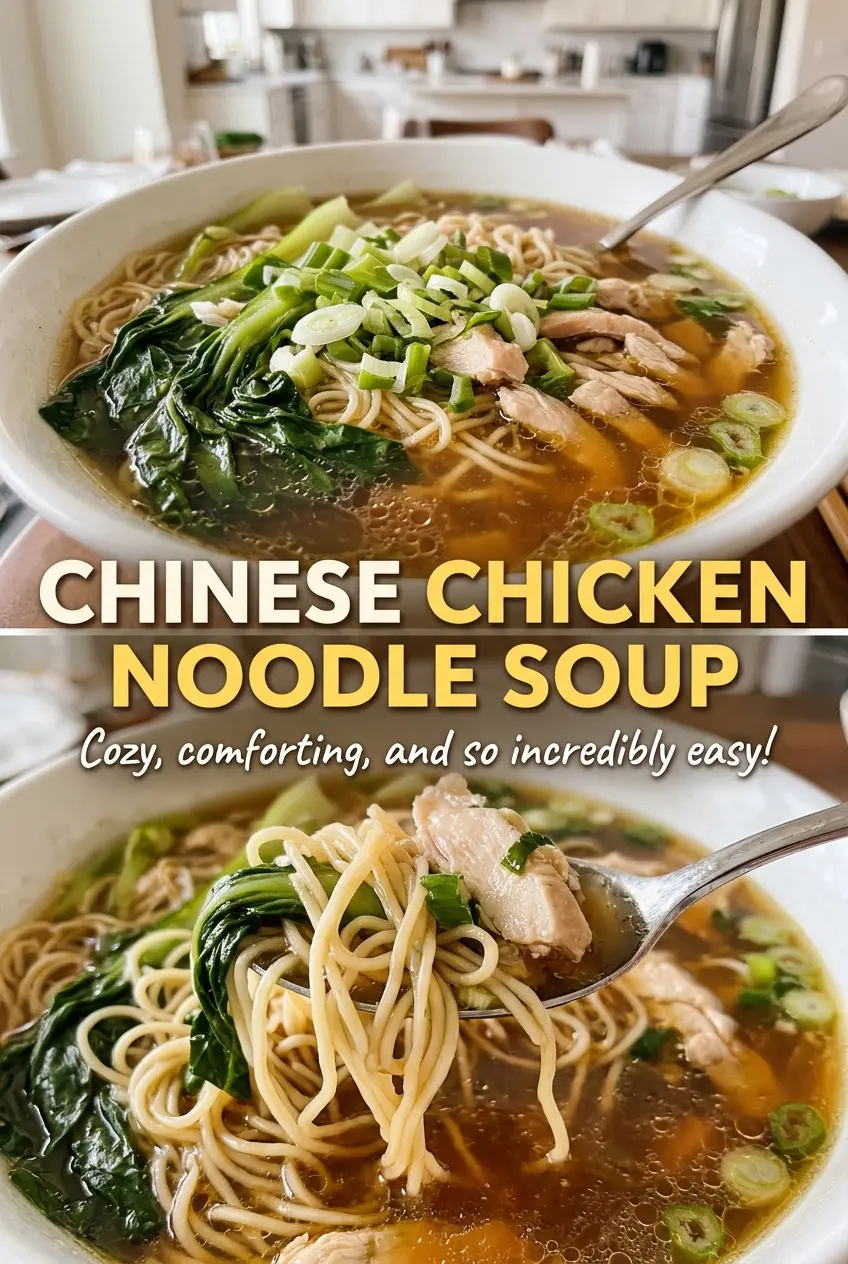
Chinese Chicken Noodle Soup
Ingredients
Equipment
Method
- Bring the chicken broth to a simmer in a large pot, then stir in the minced garlic and grated ginger. Maintain a gentle simmer for 5 minutes, with small bubbles around the edges and light steam rising.
- Add the soy sauce, sesame oil, and rice vinegar to the simmering broth. Stir to combine and adjust to taste, aiming for a balanced savory-ginger aroma.
- Add the thinly sliced chicken breast and the sliced shiitake mushrooms to the broth. Keep it at a simmer and cook for 10-12 minutes, until the chicken turns opaque and the mushrooms are tender.
- Cook the thin Chinese wheat noodles or rice noodles separately according to the package directions, then drain them. Divide the noodles into bowls so they stay springy and don’t over-soften.
- Add the chopped bok choy to the broth and cook for 3 minutes until wilted. Look for bright green leaves and slightly softened stems.
- Ladle the hot soup over the noodles in each bowl. Season with white pepper and salt to taste for a clear, well-balanced broth.
- Garnish each bowl with the sliced green onions, cilantro, and a drizzle of chili oil. Serve immediately while the broth is steaming hot.