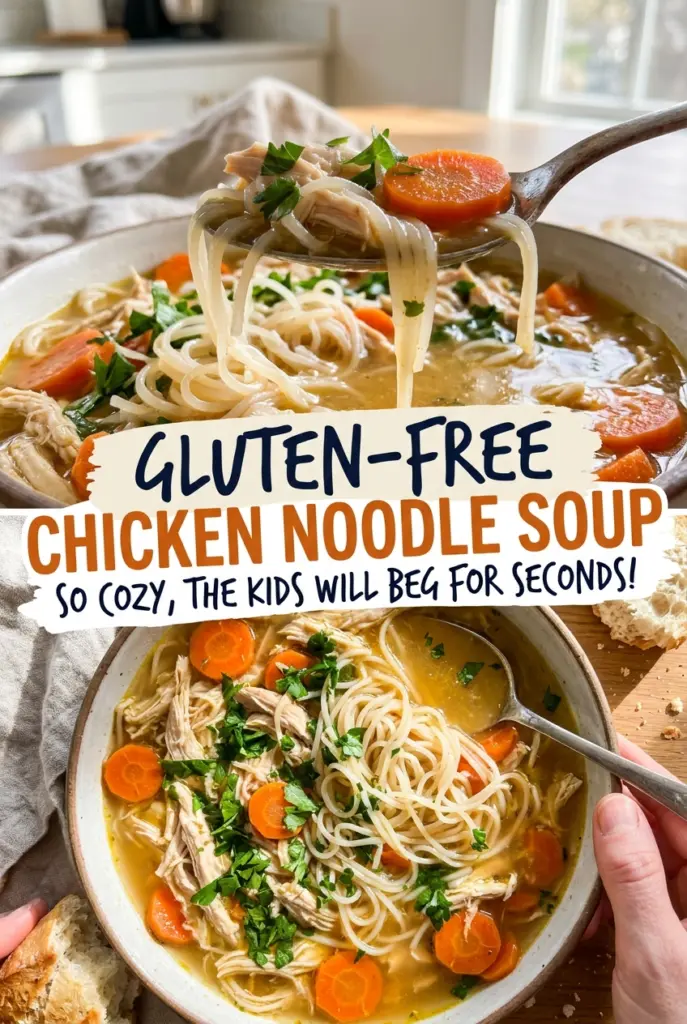
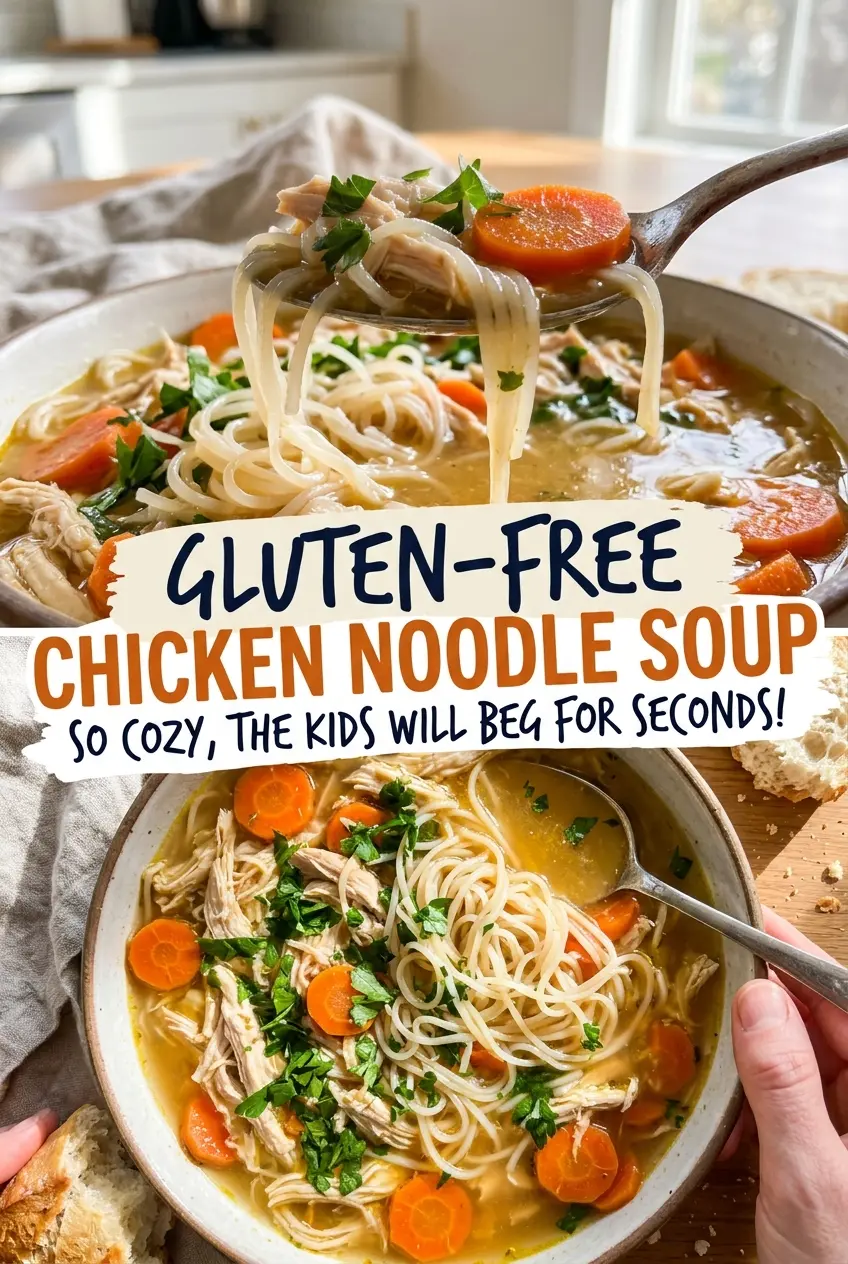
Golden broth, tender shredded chicken, soft carrots, and noodles that hold their shape make gluten-free chicken noodle soup worth keeping in regular rotation. When it’s done right, it tastes like the classic version people expect, with a broth that feels rich and comforting instead of thin or bland.
The trick is treating the gluten-free pasta like the fragile ingredient it is. Brown rice rotini, GF egg noodles, and rice noodles all behave a little differently, so the best result comes from cooking them until just tender and then stopping before they get mushy. Certified gluten-free broth matters here too, because it’s one of those ingredients that can quietly ruin a meal if you skip the label check.
Below, I’ll walk through the small choices that keep the noodles intact, the broth flavorful, and the chicken juicy. There’s also a storage note that matters more than usual with gluten-free pasta, since leftovers can change texture fast.
The broth tasted like classic chicken noodle soup, and the gluten-free noodles held up better than I expected. I checked them at the low end of the package time and they stayed tender instead of turning to mush.
Save this gluten-free chicken noodle soup for the nights when you want classic comfort without the pasta falling apart.
The Reason Gluten-Free Soup Goes Wrong in the Last 10 Minutes
The broth and chicken are the easy part. The noodles are where this soup can fall apart, because gluten-free pasta softens fast and keeps softening after the heat is off. If you simmer it too long, the soup still tastes good, but the texture turns grainy or broken instead of comforting.
That’s why the order matters here. Cook the vegetables and chicken first, then add the pasta only after the chicken is cooked through. The soup base can simmer longer without losing much, but the noodles need a shorter, more controlled finish. If you’re using rice noodles, expect them to soften faster than brown rice rotini or GF egg noodles.
- Chicken breast — Lean chicken breast stays tender in broth and shreds cleanly. Thighs work too, but they bring a richer, slightly more forgiving texture if you prefer dark meat.
- Certified gluten-free broth — This is not the place to assume a regular carton is safe. Use broth labeled certified gluten-free, since that’s what keeps the whole pot celiac-friendly.
- Gluten-free pasta — Brown rice rotini and GF egg noodles hold up better than delicate rice noodles if you expect leftovers. Cook it just until tender, then stop the heat soon after so it doesn’t swell in the pot.
- Fresh parsley — The garnish matters more than it looks like it should. It lifts the broth at the end and keeps the soup from tasting flat.
What Each Ingredient Is Doing in This Soup Pot

- Chicken breast — It simmers directly in the broth, which seasons the soup while keeping the meat moist. Slice it into large pieces if you want even cooking, then shred it once it’s no longer pink in the center.
- Carrots, celery, and onion — This is the base that gives the soup its familiar depth. Dice the onion small so it softens into the broth, and slice the carrots and celery evenly so they cook at the same pace.
- Garlic — One minute in the hot oil is enough. Any longer and it can turn sharp or bitter before the broth goes in.
- Dried thyme, dried parsley, and garlic powder — These give the soup that classic chicken-noodle flavor without needing a long simmer. Dried herbs work well here because they bloom in the broth and spread throughout the pot.
- Olive oil — Just enough to soften the vegetables and carry the aromatics at the start. You don’t need much richness from the oil because the broth and chicken do the heavy lifting.
Building the Soup So the Noodles Stay Intact
Softening the vegetables first
Heat the olive oil in a large pot and cook the onion, carrots, and celery until the onion turns translucent and the vegetables start to lose their raw edge. You’re not browning them here; you’re building the flavor base. If they sit too long without stirring, the onion can catch on the bottom, which gives the broth a scorched note instead of a clean one.
Cooking the chicken in the broth
Stir in the garlic for about a minute, then add the broth, herbs, garlic powder, and chicken. Bring the pot to a boil, then reduce it to a steady simmer so the chicken cooks through without turning stringy. The broth should be gently moving, not rolling hard, or the chicken can tighten up before the vegetables are fully tender.
Shredding and returning the meat
Pull the chicken out once it’s cooked through and shred it while it’s still warm enough to handle easily. It should fall apart in thick strands, not dry crumbles. Return it to the pot right away so the meat can soak up the broth again instead of drying on the cutting board.
Adding the pasta at the very end
Stir in the gluten-free pasta and cook it only until it’s just tender, checking a minute early if you’re using rice noodles. This is the part that needs attention, because GF pasta can go from done to bloated fast. Once the noodles are right, season generously with salt and pepper and take the pot off the heat.
Three Ways to Adjust This Soup Without Losing the Point
Make it dairy-free without changing a thing
This soup is already naturally dairy-free as written, so there’s nothing to swap. That’s one reason it works so well for a wide range of eaters — the broth stays clean and savory without needing cream or milk to carry the flavor.
Use chicken thighs for a richer broth
Boneless, skinless thighs give you a slightly deeper chicken flavor and stay a little juicier if the soup simmers longer than planned. The texture turns more forgiving, though the broth may look a touch richer from the extra fat.
Swap the pasta based on how you plan to serve leftovers
Brown rice rotini and GF egg noodles hold up best if the soup will sit overnight. Rice noodles are fine for a same-day bowl, but they soften more in storage and can turn slippery by the next day. If you know you want leftovers, choose the sturdier noodle and cook it just to al dente.
Add extra vegetables without dulling the broth
A handful of chopped spinach or peas can go in during the last few minutes of cooking. Add them at the end so they stay bright and don’t muddy the broth, which keeps the soup tasting fresh instead of overloaded.
Storage and Reheating
- Refrigerator: 3 to 4 days. The noodles will keep absorbing broth, so the soup thickens as it sits.
- Freezer: It freezes best without the pasta. If you want to freeze it, cook the soup base, cool it, and add fresh noodles after reheating.
- Reheating: Warm it gently on the stove over medium-low heat until steaming. If the soup is thick, add a splash of broth or water before reheating; high heat can make the noodles break apart and the chicken dry out.
Questions I Get Asked About This Soup
Gluten-Free Chicken Noodle Soup
Ingredients
Equipment
Method
- Heat olive oil in a large pot over medium heat and sauté onion, carrots, and celery for 5 minutes until slightly softened with a fragrant aroma.
- Add garlic and cook for 1 minute, stirring constantly so it turns fragrant without browning.
- Add chicken broth (certified GF), dried thyme, dried parsley, garlic powder, and chicken, then bring everything to a boil.
- Reduce to a simmer and cook for 18-20 minutes, until the chicken is cooked through and no longer pink in the center.
- Remove the chicken from the pot, shred it, and return the shredded chicken to the broth.
- Add gluten-free pasta and cook according to package instructions, checking frequently because GF pasta can overcook.
- Season generously with salt and pepper, then garnish with fresh parsley before serving.