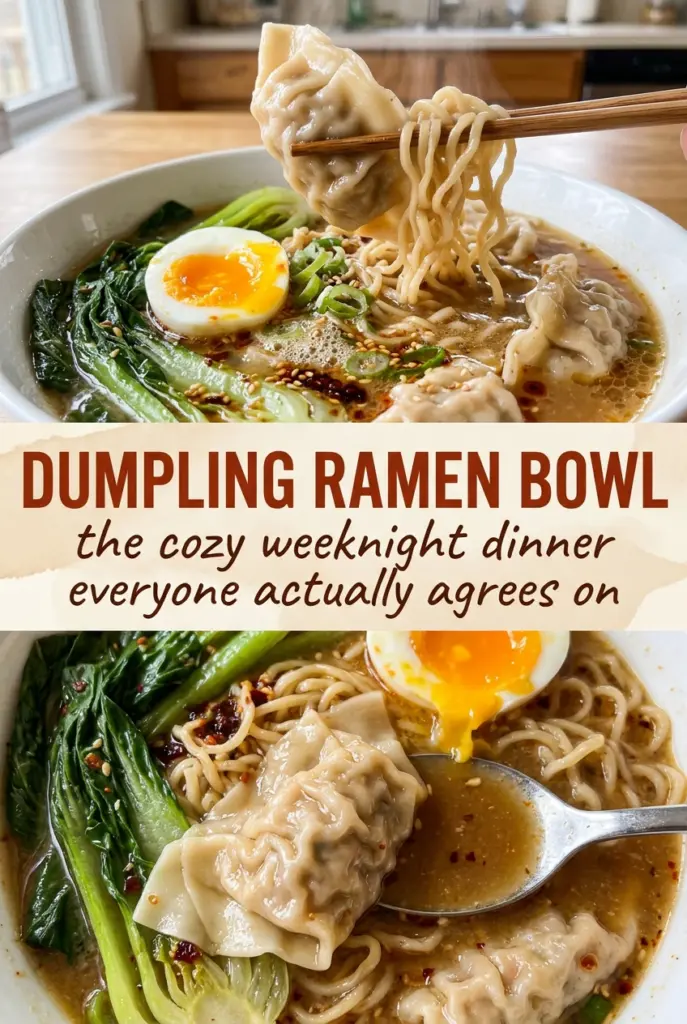
Steaming bowls of dumpling ramen have a way of tasting like far more effort than they actually take. The broth turns glossy and savory with miso, soy, and a little mirin, while the dumplings give you something substantial to bite into beside the noodles. What you end up with is part comfort food, part restaurant-style bowl, with enough texture in every spoonful to keep it interesting all the way to the bottom.
What makes this version work is the order. The broth gets seasoned first so the miso can dissolve smoothly before the dumplings go in, and the noodles are cooked separately so they stay springy instead of soaking up too much liquid and turning soft. A soft-boiled egg, crisp-tender bok choy, and sweet corn round out the bowl without crowding it. It’s a simple framework, but each part pulls its weight.
Below, I’m walking through the little details that keep the broth balanced and the dumplings tender. There’s also a note on swaps if you want to use different dumplings or build the bowl with what’s already in your kitchen.
The broth had that deep savory taste without being heavy, and the dumplings stayed tender instead of falling apart. I loved that the noodles were cooked on the side because the bowls were still perfect after sitting for a few minutes.
Save this dumpling ramen bowl for the nights when you want a brothy, noodle-packed dinner with a soft egg and plenty of toppings.
The Trick to Keeping the Broth Savory Instead of Flat
Miso broth can taste dull fast if it’s rushed. The biggest mistake is boiling it hard after the paste goes in, which can strip the broth of its rounded, fermented depth and leave it tasting muddy. A gentle simmer is all you need. That’s enough heat to dissolve the miso and warm the dumplings through without turning the whole bowl heavy or salty.
There’s also a balancing act with the soy sauce and mirin. Soy gives the bowl its backbone, but mirin softens the edges so the broth doesn’t taste sharp or one-note. If your broth tastes thin, the fix isn’t more salt right away. It’s usually a bit more miso whisked in off the heat, then a taste after the dumplings have finished cooking.
What Each Ingredient Is Doing in This Bowl
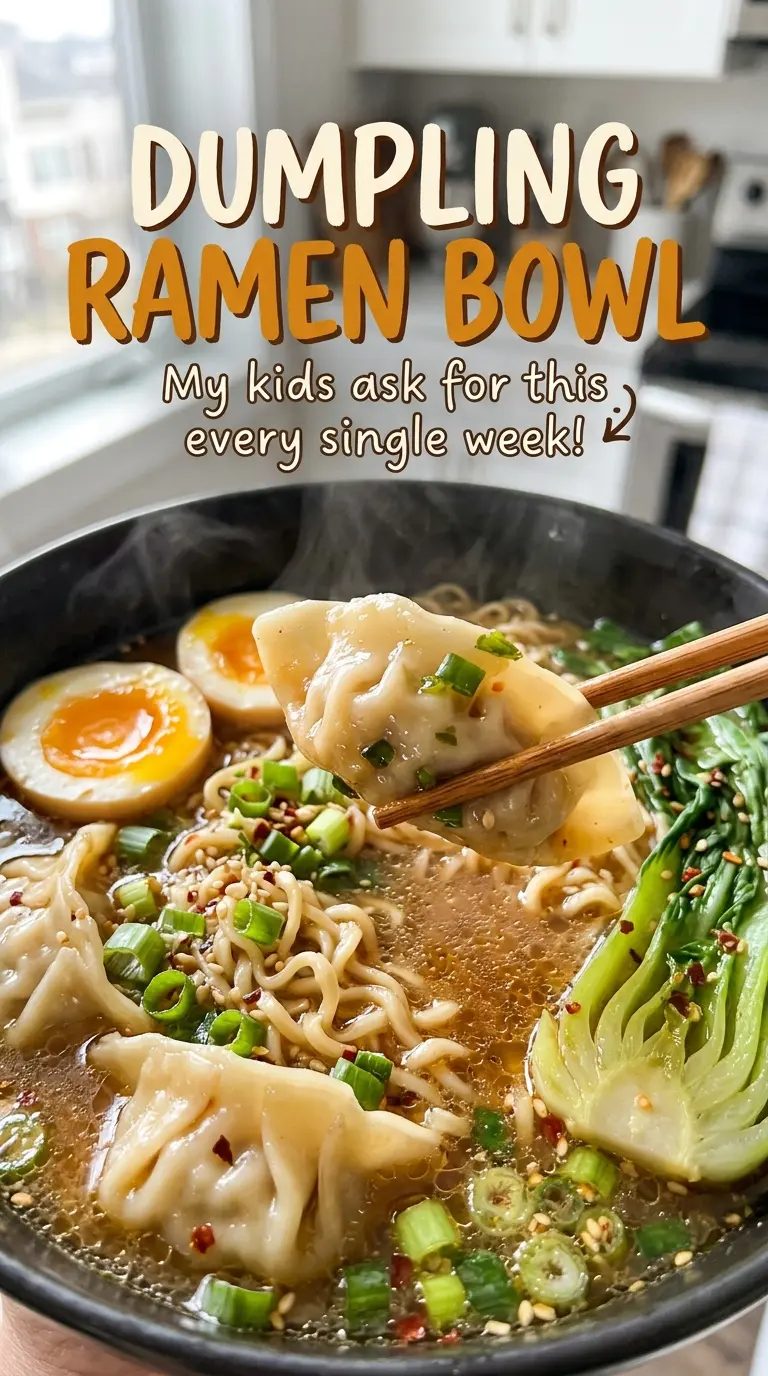
- Frozen dumplings — These are the heart of the bowl. Pork dumplings give you a little more richness, while chicken dumplings stay lighter. Use them straight from frozen; thawing can make the wrappers fragile and more likely to split in the broth.
- White miso paste — This adds depth that broth alone can’t give. White miso is milder and slightly sweeter than darker misos, which works better here because the bowl already has soy sauce and sesame oil. If you use red miso, start with less and taste carefully.
- Fresh ramen noodles — Fresh noodles keep the bowl springy and fast. Dried ramen works in a pinch, but it tends to soften a little more in the broth. Cooking them separately is the cleanest way to keep the texture right.
- Soft-boiled eggs — The runny yolk enriches the broth as you eat. Seven minutes is the sweet spot for a set white and a jammy center. Ice-bath them after cooking so they peel cleanly.
- Bok choy and corn — Bok choy gives the bowl a little bite and freshness, and corn brings sweetness that plays well with miso. Slice the bok choy in halves or quarters so it wilts evenly without disappearing.
- Nori, sesame seeds, and chili oil — These finish the bowl with salt, crunch, and heat. Nori softens quickly once it hits the broth, so add it right before serving if you want a bit of texture.
Building the Bowl So Every Component Lands at the Same Time
Season the Broth First
Set the broth over medium heat and whisk in the miso until it disappears completely. Stir in the soy sauce, mirin, and sesame oil, then let the liquid come to a gentle simmer, not a rolling boil. If the broth boils hard, the miso can turn flat and the sesame oil loses some of its aroma. Taste the broth now, because once the dumplings and greens go in, the seasoning needs to already be close.
Cook the Dumplings in the Broth
Add the frozen dumplings directly to the simmering broth and let them cook until they float and the filling is hot all the way through, usually 5 to 7 minutes. Keep the heat steady but not aggressive so the wrappers stay intact. If your dumplings start tearing, the broth is moving too hard or the pot is overcrowded. Give them a little space and stir gently only once or twice.
Wilt the Bok Choy Briefly
Once the dumplings are cooked, add the bok choy and let it soften just until the stems lose their raw crunch and the leaves turn bright and silky. Two to three minutes is enough. Longer than that and it loses its structure, which makes the bowl feel muddy instead of fresh. The greens should still have a little spring when they hit the spoon.
Finish with the Noodles and Toppings
Cook the ramen noodles separately according to the package directions, then drain them well before dividing them into bowls. Ladle the hot broth and dumplings over the top so the noodles warm through without turning gummy. Finish with the egg, corn, green onions, nori, sesame seeds, and a drizzle of chili oil. Add the chili oil at the end so its heat stays bright instead of fading into the broth.
Three Ways to Make This Bowl Fit What You Have
Make It Dairy-Free and Still Rich
This bowl is naturally dairy-free as written, which is part of why it works so well for a fast weeknight dinner. The richness comes from the sesame oil, egg yolk, and dumpling filling instead of cream. If you want it a touch more luxurious, add a few drops of toasted sesame oil at the end rather than trying to thicken the broth.
Use Vegetarian Dumplings
Vegetarian dumplings work well here if you swap the chicken broth for vegetable broth. The broth will taste a little lighter, so taste after simmering and add a touch more miso if needed. Mushroom or cabbage dumplings hold up especially well because they keep a firm bite in the hot broth.
Swap the Greens Based on What’s in the Fridge
Baby spinach, napa cabbage, or thinly sliced kale all fit here. Spinach needs only a minute, while kale needs a little more time to soften. The key is using a green that can sit in the hot broth without turning limp and brown within seconds.
Make It Gluten-Free
Use gluten-free dumplings if you have them, then check the labels on both the soy sauce and the ramen noodles. Tamari works in place of soy sauce, and rice noodles can stand in for ramen if needed. The bowl will still read as comforting and savory, just with a slightly different noodle texture.
Storage and Reheating
- Refrigerator: Store the broth, dumplings, and toppings separately for up to 3 days. The noodles soften as they sit, so keep them apart if you want better texture.
- Freezer: The broth and dumplings freeze well for up to 2 months. Don’t freeze the noodles or egg; they lose their texture after thawing.
- Reheating: Reheat the broth and dumplings gently on the stove until steaming hot, then add freshly cooked noodles to the bowls. Microwaving the assembled bowl tends to overcook the noodles and make the egg rubbery.
Answers to the Questions Worth Asking
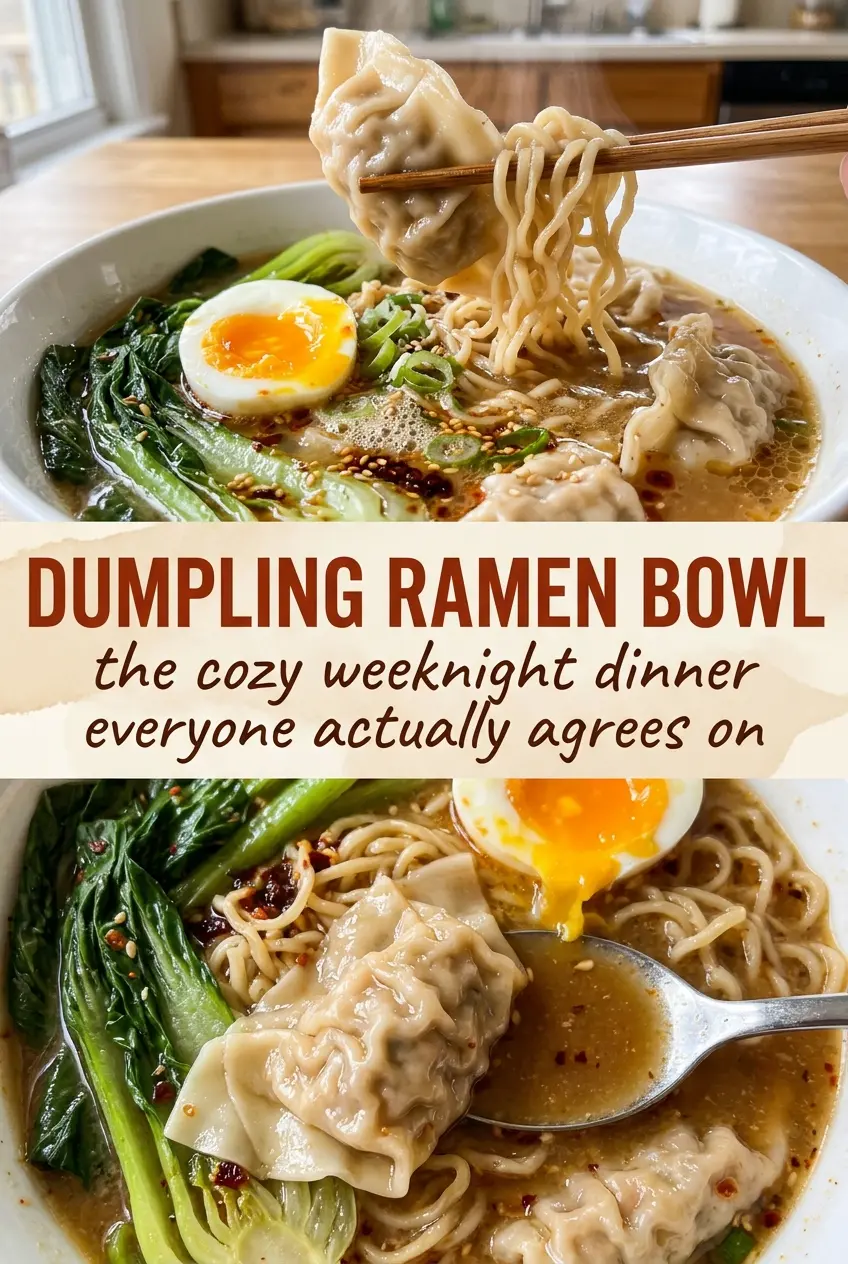
Dumpling Ramen Bowl
Ingredients
Equipment
Method
- Bring the chicken broth to a simmer in a Dutch oven, then whisk in the white miso paste, soy sauce, mirin, and sesame oil until smooth and fragrant. Keep the heat at a steady simmer for the next step (no hard boil).
- Add the frozen dumplings and cook for 5-7 minutes, stirring gently once halfway, until cooked through. Visual cue: dumplings look plump and feel hot in the center.
- Add the halved bok choy and cook for 2-3 minutes until wilted but still bright green. Visual cue: stems soften while leaves turn glossy.
- Cook the fresh ramen noodles separately according to package instructions, then drain well. Keep them warm so they don’t dry out before assembling.
- Divide the drained ramen noodles between 4 bowls and ladle the hot broth and dumplings over the top. Visual cue: noodles are coated and broth reaches the rim.
- Top each bowl with halved soft-boiled eggs, corn, sliced green onions, nori, sesame seeds, and chili oil. Taste and add salt if needed.