
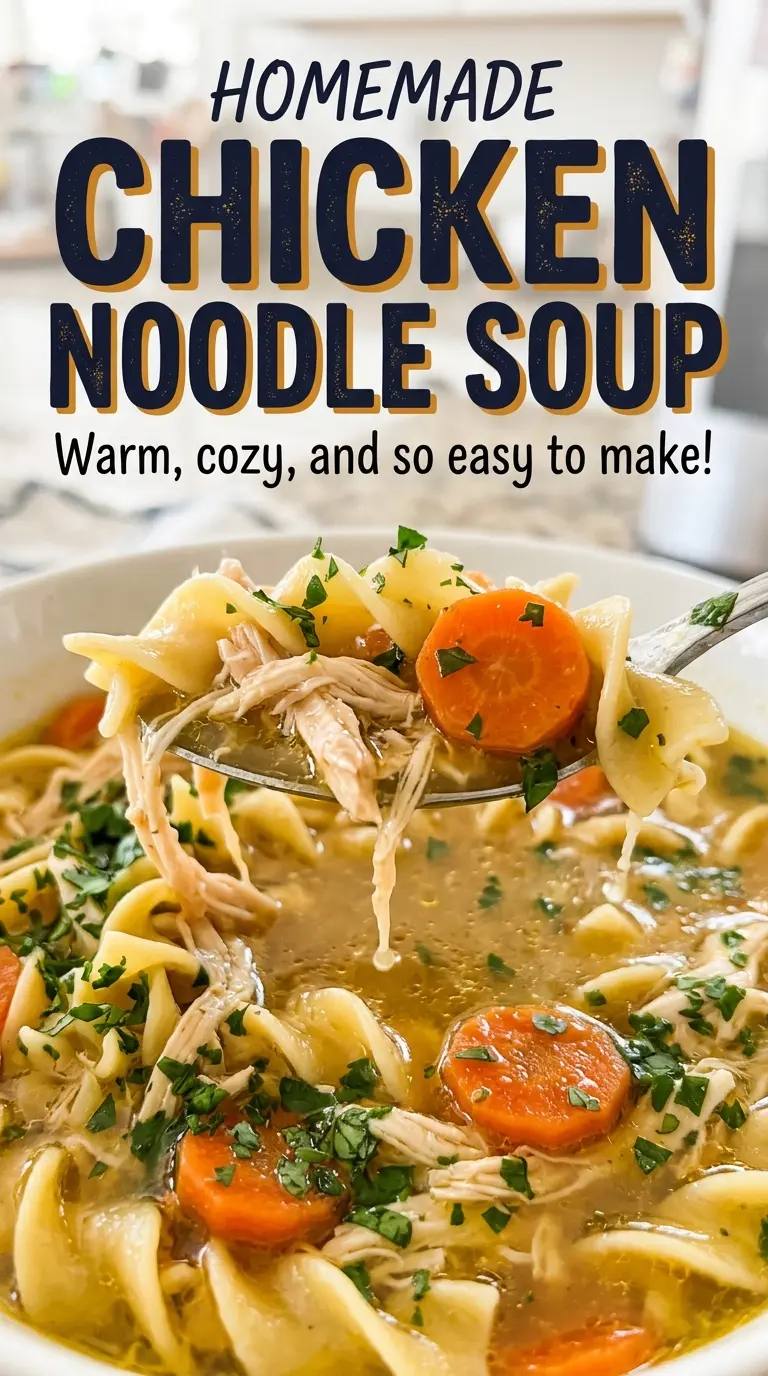
Golden broth, tender noodles, and shredded chicken make chicken noodle soup the kind of dinner that settles everything down without feeling heavy. The best versions taste clean and comforting at the same time, with enough depth in the broth to carry the vegetables and enough noodle bite to keep each spoonful interesting. When it’s done right, the pot smells like onions, herbs, and chicken that’s been simmering just long enough to turn the broth from plain to memorable.
This version leans on bone-in chicken, which gives the broth more body than boneless meat alone. The vegetables cook first, so they soften and sweeten before the liquid goes in, and the noodles are added at the end so they stay springy instead of turning soft and swollen. A pair of bay leaves and a little thyme do more than you’d think here; they give the soup that familiar homemade taste without drowning out the chicken.
The broth had great depth from the bone-in chicken, and the noodles stayed perfectly tender instead of getting mushy. I made it on a Sunday and it was even better the next day.
Creamy broth, tender noodles, and shredded chicken worth saving for the next cold night.
The Broth Gets Watery When the Noodles Go In Too Early
The biggest mistake in chicken noodle soup is letting the noodles sit in the pot for too long. They keep absorbing liquid after they’re cooked, which means the broth gets thicker, saltier, and less balanced the longer the soup stands. If you know you’ll have leftovers, cooking the noodles just until tender and then serving the soup soon after gives you the cleanest texture.
Bone-in chicken matters here because it pulls double duty: it cooks the meat and flavors the broth at the same time. If you use boneless chicken breasts, the soup will still work, but the broth won’t have the same depth. The vegetables need that first sauté too. Raw onion, carrot, and celery dumped into broth can taste flat; a few minutes in the pot wakes them up and gives the soup a more rounded base.
What Each Ingredient Is Doing in This Pot
- Bone-in chicken breasts or thighs — The bones give the broth more body and a fuller chicken flavor. Thighs stay a little juicier, while breasts shred cleanly and give you a lighter soup. Either works, but bone-in is what keeps this from tasting thin.
- Carrots, celery, and onion — This is the backbone of the soup. Cutting the carrots into coins and the celery into even slices helps them cook at the same pace, so you don’t end up with mushy onion and crunchy carrot.
- Chicken broth plus water — The broth brings the flavor; the water keeps the soup from turning overly salty or heavy. If your broth is low-sodium, you’ll have more room to season at the end. If it’s already salty, go lighter with the added salt until the chicken is shredded and back in the pot.
- Egg noodles — These are classic for a reason. They soften fast and give the soup that familiar, homey texture. Add them only after the chicken is cooked and shredded, or they’ll soak up too much liquid and go past tender.
- Thyme, parsley, and bay leaves — Thyme adds quiet depth, parsley keeps the soup fresh, and bay leaves add an almost hidden savoriness. Don’t skip the bay leaves if you want the broth to taste like it simmered longer than it actually did.
Building the Soup in the Right Order
Sweating the Vegetables First
Heat the olive oil over medium heat and cook the onion, carrots, and celery until the onion turns translucent and the edges of the vegetables start to soften. You’re not looking for color here, just a little sweetness and fragrance from the pan. If the heat is too high, the vegetables brown before they soften, and the broth can taste harsh instead of mellow.
Simmering the Chicken for Flavor
Add the garlic for just a minute, then pour in the broth, water, herbs, bay leaves, and chicken. Bring the pot to a boil first, then drop it to a gentle simmer so the broth stays clear and the chicken cooks evenly. A hard boil can make the meat stringy and cloud the broth more than you want.
Shredding and Returning the Meat
Pull the chicken out when it’s cooked through and shreds easily with two forks. Remove the bay leaves before the chicken goes back in so nobody bites into one later. Return the shredded chicken to the pot before the noodles; that way the meat picks up the flavor of the broth instead of tasting separate from it.
Cooking the Noodles at the End
Add the egg noodles last and cook them just until tender, usually 6 to 8 minutes depending on the brand. Stir a few times so they don’t clump together on the bottom of the pot. The soup is ready when the noodles are soft but still have a little bite and the broth tastes balanced after the final seasoning.
Three Ways to Adjust This Soup Without Losing What Makes It Work
Use chicken thighs for a richer broth
Thighs bring a deeper, slightly richer chicken flavor and stay tender even if the soup simmers a few minutes longer than planned. They’re the better choice if you want a fuller-tasting broth and don’t mind a little extra richness in the finished soup.
Make it gluten-free with the right noodle swap
Use a gluten-free egg noodle or another gluten-free pasta that holds its shape in broth. Cook it just to tender and expect it to soften a little more as it sits, so don’t take it too far in the pot.
Skip the noodles if you want a lighter bowl
Leave out the egg noodles and serve the soup as a chicken and vegetable broth instead. The flavor stays the same, but the texture turns brothy and light, which works well if you want something less filling or plan to serve it with bread on the side.
Storage and Reheating
- Refrigerator: Store in an airtight container for up to 4 days. The noodles will keep soaking up broth, so the soup gets thicker as it sits.
- Freezer: This freezes well if you freeze the soup without the noodles. Add fresh cooked noodles when you reheat for the best texture.
- Reheating: Warm gently on the stove over medium-low heat until steaming. If the soup has thickened, add a splash of broth or water before heating. Boiling it hard can turn the noodles soft and break up the chicken.
Answers to the Questions Worth Asking

Chicken Noodle Soup
Ingredients
Equipment
Method
- Heat the olive oil in a large pot over medium heat, then sauté the onion, carrots, and celery for 5 minutes until they start to soften and look glossy.
- Add the garlic and cook for 1 minute, stirring constantly, until fragrant.
- Add the chicken broth, water, dried thyme, dried parsley, bay leaves, and the bone-in chicken to the pot.
- Bring to a boil over high heat, then reduce to a steady simmer and cook for 20-25 minutes until the chicken is cooked through.
- Transfer the chicken to a plate and shred with two forks, then discard the bay leaves.
- Return the shredded chicken to the pot and bring the soup back to a simmer.
- Add the egg noodles and simmer for 6-8 minutes until tender.
- Season generously with salt and pepper to taste, then garnish with fresh parsley before serving.