
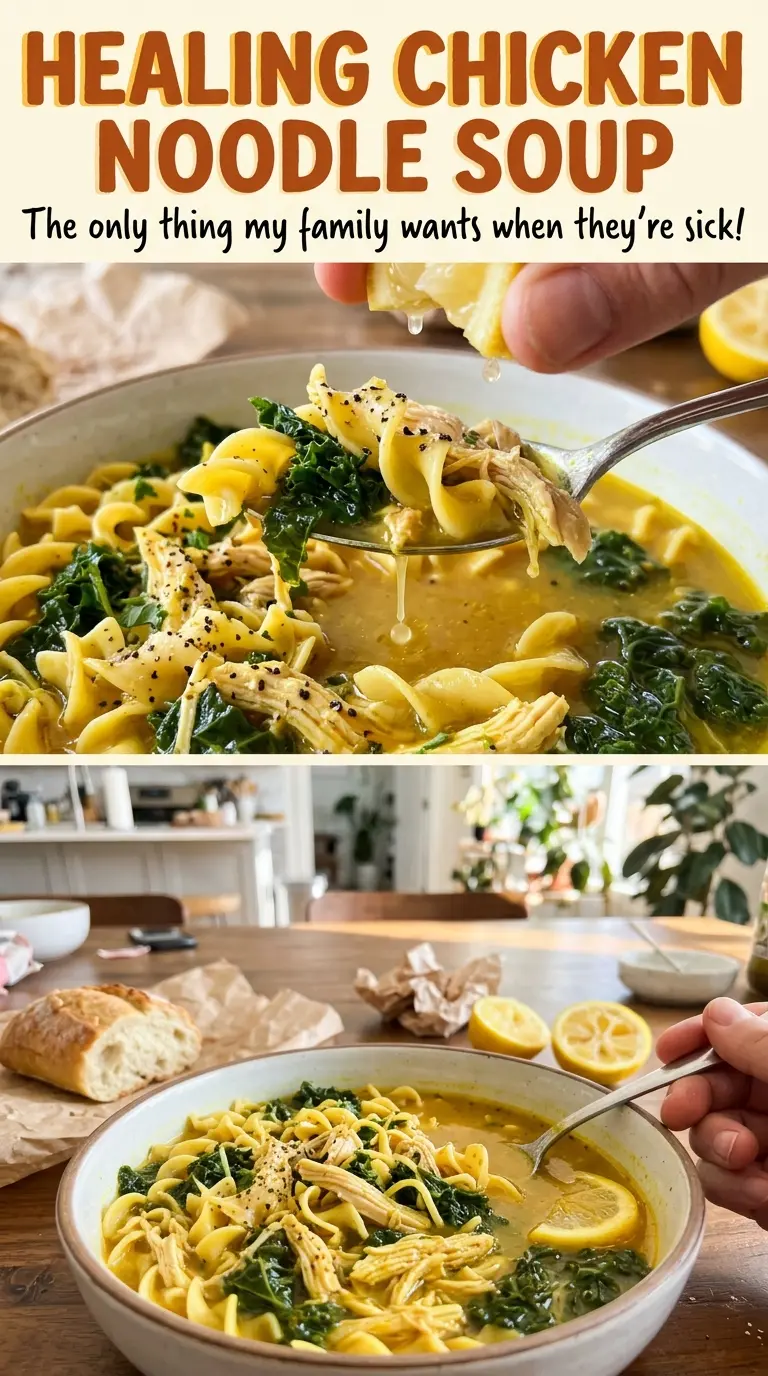
Golden broth, tender shredded chicken, and noodles that soak up every bit of the ginger-garlic base make this chicken noodle soup the kind of bowl people ask for when they want to feel better fast. The turmeric gives the broth a warm color and a gentle earthy note, while lemon, vinegar, and honey round everything out so it tastes bright instead of flat. It’s the kind of soup that feels nourishing without tasting like a compromise.
Bone-in chicken thighs do most of the work here. They stay juicy through the simmer and give the broth more body than boneless chicken ever will. The other trick is adding the acid at the end, after the noodles and greens are cooked. If it goes in too early, the flavor dulls and the broth can taste sharper than you want. When it’s finished right, the soup tastes layered, clean, and deeply savory.
Below, I’ll walk you through the little details that keep the chicken tender, the noodles from turning mushy, and the broth balanced enough to keep coming back for another ladle.
The broth had that cozy golden color and the ginger came through without overpowering anything. My chicken shredded beautifully after 30 minutes, and the lemon at the end made it taste fresh instead of heavy.
Save this golden ginger chicken noodle soup for the nights when you want a brothy bowl that tastes bright, cozy, and deeply soothing.
The Secret to Broth That Tastes Rich Instead of Thin
The broth in chicken noodle soup can go bland fast if everything is boiled hard from the start. A hard boil muddies the broth and tightens the chicken before it has time to give up flavor. A gentle simmer keeps the meat tender and gives the vegetables time to soften without turning to paste.
The second thing that matters is layering the seasoning. Turmeric, thyme, black pepper, and cayenne go in early so they have time to bloom in the hot broth. Lemon juice, apple cider vinegar, and honey wait until the end because they’re there to sharpen and balance, not cook off. That final adjustment is what turns a decent soup into one that tastes finished.
What Each Ingredient Is Actually Doing in This Bowl
- Bone-in chicken thighs — These give you the best broth and stay moist through the simmer. Boneless thighs work in a pinch, but the broth will be lighter and the meat won’t have quite the same depth.
- Ginger and garlic — This is the backbone of the soup’s aroma. Fresh ginger matters here because powdered ginger won’t give the same bright, warming finish.
- Turmeric — It adds that golden color and a subtle earthy note. Use it sparingly; too much and the soup starts to taste dusty instead of soothing.
- Egg noodles — They thicken the broth just enough without making it heavy. Add them late so they stay tender instead of bloated and soft.
- Kale or spinach — Kale holds up better if you expect leftovers, while spinach melts into the broth faster. Either one works, but spinach will disappear more quickly once the soup sits.
- Lemon juice, apple cider vinegar, and honey — These three finish the soup. The acid brightens the broth, and the honey rounds off the sharp edges so it tastes balanced instead of sour.
Building the Soup So the Chicken Stays Tender
Starting With the Longest-Cooking Ingredients
Put the chicken, carrots, celery, onion, garlic, ginger, broth, and spices in the pot together from the start. That gives the chicken time to become tender while the vegetables soften into the broth. Bring it to a boil only to get everything moving, then lower it to a steady simmer. If the pot is roaring, the thighs tighten up and the broth turns cloudy.
Shredding at the Right Moment
After about 30 minutes, the chicken should pull apart easily with two forks and look opaque all the way through. Remove it before it starts to dry out in the pot, then shred it into bite-size pieces and discard the bones and skin. If it resists shredding, it needs a few more minutes; if it falls apart into threads, you’ve gone just far enough. Add it back after shredding so it finishes gently in the broth instead of overcooking.
Cooking the Noodles Without Losing the Broth
Add the egg noodles only after the chicken is shredded and returned to the pot. They cook fast, and if they sit too long they’ll soak up too much broth and get swollen and soft. Keep the soup at a simmer and taste a noodle before you stop cooking; it should be tender with a little spring left in the center. Once they’re done, stir in the kale and let it wilt for a few minutes, not long enough to lose its color.
Finishing With Brightness
Stir in the lemon juice, apple cider vinegar, and honey last, then taste for salt. This is the point where the soup goes from good to complete. If the broth tastes flat, it usually needs salt more than more lemon. The final seasoning should feel clean, warm, and balanced, with the ginger and garlic still leading.
Three Ways to Adjust This Soup Without Losing What Makes It Good
Make It Dairy-Free and Naturally Gluten-Free
This soup already fits both of those needs as written, as long as your broth is gluten-free and your noodles are made from wheat or a gluten-free substitute you trust. Rice noodles or gluten-free egg noodles work, but they soften faster, so add them carefully and stop cooking as soon as they’re tender. The broth stays the same: savory, bright, and comforting.
Use Chicken Breasts Instead of Thighs
Chicken breasts will work, but they’re less forgiving. Add them whole and watch the clock closely, because they dry out faster than thighs and don’t enrich the broth as much. Pull them as soon as they’re cooked through, shred them, and return them briefly at the end so they stay tender.
Swap the Greens Based on What You Have
Kale gives the soup a little bite and stands up better in leftovers, while spinach turns softer and more delicate. Swiss chard works too, especially if you want a milder green, but strip the stems if they’re thick because they stay chewy. The choice changes texture more than flavor, so pick based on what kind of bowl you want the next day.
Storage and Reheating
- Refrigerator: 4 days. The noodles will keep soaking up broth, so the soup thickens as it sits.
- Freezer: It freezes well if you freeze the broth, chicken, and vegetables without the noodles. Cook fresh noodles when you reheat for the best texture.
- Reheating: Warm it slowly over medium-low heat until hot but not boiling. If the noodles are already in the soup, add a splash of broth or water because they’ll have absorbed a lot of liquid.
Questions I Get Asked About This Recipe

Healing Chicken Noodle Soup
Ingredients
Equipment
Method
- Combine chicken thighs, sliced carrots, sliced celery, diced onion, minced garlic, grated ginger, chicken broth, turmeric, dried thyme, black pepper, and cayenne in a large pot. Heat over high until boiling, stirring to ensure the spices are dispersed.
- Reduce to a simmer and cook for 30 minutes until the chicken is very tender. Maintain a gentle simmer with small bubbles around the pot edges.
- Remove the chicken from the pot, then shred the meat and discard bones and skin. Return the shredded chicken to the broth and keep it simmering lightly.
- Add egg noodles to the pot and cook 6-8 minutes until tender. Stir occasionally so the noodles don’t stick and adjust heat to keep a steady simmer.
- Stir in chopped kale or spinach and cook for 3 minutes until wilted. Keep the broth at a simmer until the greens turn bright and tender.
- Add lemon juice, apple cider vinegar, and honey, then season with salt to taste. Stir until smooth and taste for balance, especially for lemon brightness.
- Ladle the soup into bowls and top with extra lemon wedges and fresh parsley. Serve hot so the broth stays warmly golden and the noodles are springy.