
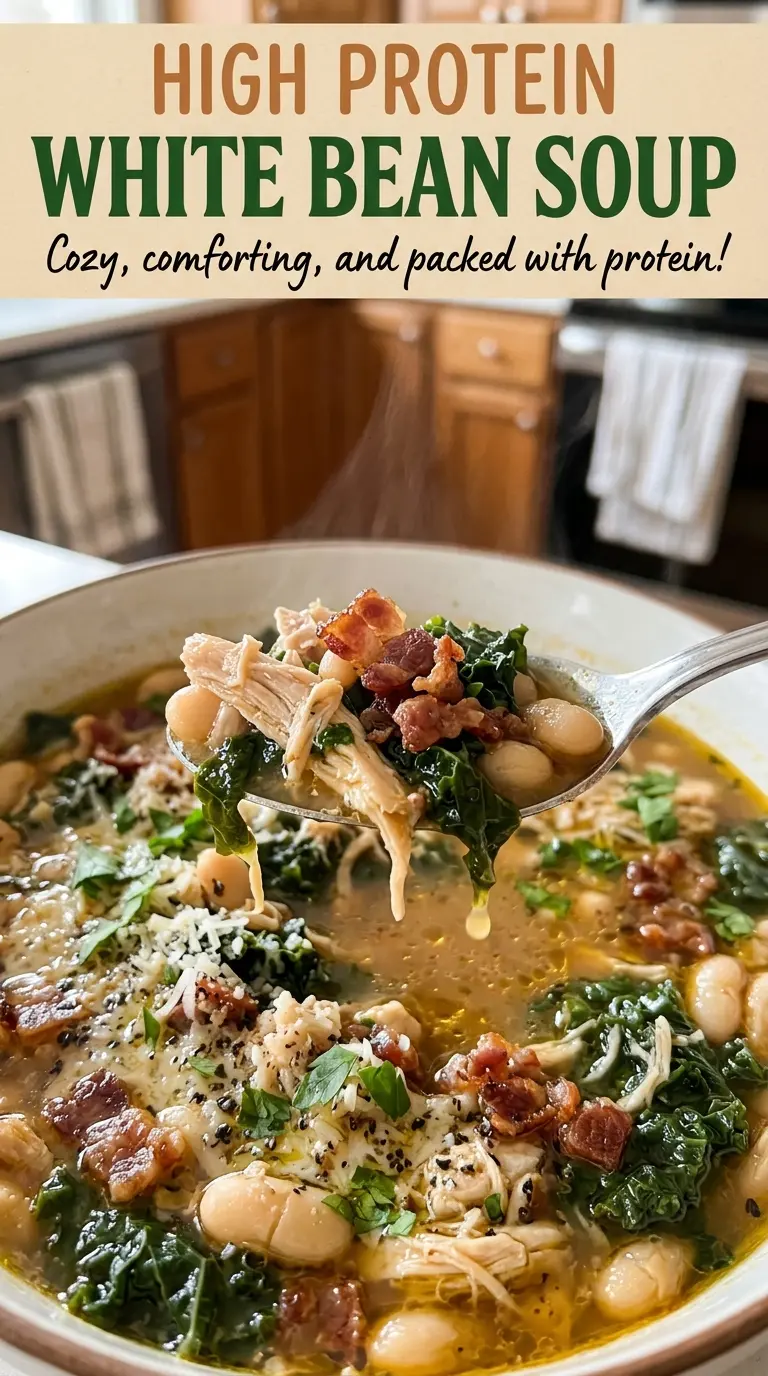
Hearty white bean soup lands in the bowl with a thick, brothy base, tender beans, and enough chicken to make it eat like a meal instead of a starter. The pancetta gives the broth a savory edge, the parmesan rind pulls in a deep, salty richness, and the mashed beans quietly give the soup body without cream. It’s the kind of bowl that tastes like it simmered all afternoon, even though the active work is short and straightforward.
What makes this version work is the layering. Browning the pancetta first leaves behind fat that carries the onion and garlic, and that little bit of red pepper wakes up the whole pot without turning it spicy. Mashing some of the beans near the end is the move that thickens the soup naturally, so you get a satisfying spoonful without losing the clean, tomato-y broth.
Below, you’ll find the small details that matter most here: how much to mash, when to add the kale so it stays green instead of limp, and the best way to finish each bowl so the lemon and parmesan actually show up.
The beans broke down just enough to thicken the broth, and the lemon at the end made the whole pot taste brighter. I used turkey bacon and it still had plenty of savory flavor.
Save this high protein white bean soup for a hearty chicken-and-bean dinner with a silky broth and a bright lemon finish.
The Secret to a Soup That Tastes Deeper Than the Ingredients List
Most bean soups come out flat because everything goes into the pot at once and the broth never gets a chance to build a backbone. This one starts with pancetta, which gives you fat and browned bits before the onions even hit the pan. That matters. The onion softens in that savory base, the garlic blooms briefly without burning, and the broth picks up flavor from the bottom of the pot before the beans ever go in.
The other thing that changes the whole bowl is the parmesan rind. It doesn’t make the soup cheesy in a heavy way. It adds a slow, rounded savoriness that you can’t fake with a shaker of parmesan at the end. If you’ve ever had white bean soup that tasted thin even after a long simmer, this is usually the missing piece.
- Cannellini beans — Their creamy texture is what makes this soup taste substantial. Navy beans work in a pinch, but cannellini hold their shape and still mash smoothly when you want the broth to thicken.
- Pancetta or turkey bacon — Pancetta gives the richest flavor and leaves behind a better cooking fat for the onions. Turkey bacon works if that’s what you have, but it’s leaner, so don’t expect quite the same depth unless you add a small drizzle of olive oil with the onions.
- Parmesan rind — This is one of the few ingredients here that has no real stand-in. If you don’t have one, add a small parmesan wedge during the simmer and pull it out before serving. It won’t be identical, but it still gives the broth more body.
- Kale — Add it near the end so it turns tender and dark green instead of dull and overcooked. Lacinato kale is my first choice because it softens well without disappearing.
What Each Ingredient Is Actually Doing in This Recipe
- Primary ingredient (the star) — Quality matters most. Choose the best you can find.
- Cooking medium (oil, butter, or broth) — This carries flavors and prevents dryness.
- Seasonings (salt, pepper, spices, herbs) — Layer flavors so nothing overpowers. Build depth gradually.
- Aromatics (garlic, onion, herbs) — Cook with fat to bloom flavors. Become the foundation.
- Supporting ingredients — Complement the main ingredient without overpowering it.
- Sauce or liquid (if applicable) — Brings flavors together. Balance richness with acid.
- Acid (lemon, vinegar, wine, or other) — Brightens and prevents flat-tasting results.
- Final finish (garnish, glaze, or sauce) — Prevents one-dimensional taste and adds visual appeal.
How to Build the Bowl So the Broth Stays Thick and the Greens Stay Fresh
Rendering the Pancetta
Cook the pancetta over medium heat until the pieces are crisp and the fat has rendered out. You’re looking for browned edges and a pan bottom that’s glossy, not dry. If the heat is too high, the pancetta will scorch before it gives up much fat, and that takes flavor away from the soup instead of building it.
Sweetening the Base
Add the onion to the hot fat and cook until it turns translucent and a little soft at the edges. Then stir in the garlic and red pepper flakes for just a minute. Garlic burns fast, and once it does, the bitterness carries through the whole pot, so this is the point where a short, attentive stir matters.
Simmering the Beans and Broth
Pour in the broth, tomatoes, beans, Italian seasoning, and parmesan rind, then bring everything to a steady simmer. Let it go for about 20 minutes so the beans start to soften and the broth picks up that savory parmesan note. Keep the simmer gentle; a hard boil breaks the beans down too aggressively and gives you a muddy texture instead of a balanced soup.
Thickening Without Cream
Remove the parmesan rind, then mash some of the beans against the side of the pot with a spoon or potato masher. You don’t want a puree. Just enough smashed beans to thicken the broth and give it a silky, spoon-coating texture. If the soup still looks thin after a minute or two, mash a little more before adding the chicken and kale.
Finishing With Chicken and Kale
Stir in the shredded chicken and kale and let the soup simmer until the kale is wilted and the chicken is hot. This usually takes 5 to 7 minutes. Add the kale too early and it loses its color and clean bite; add it now and it keeps enough structure to stand up in the bowl.
Three Ways to Adjust This Soup Without Losing What Makes It Good
Make It Dairy-Free
Skip the parmesan rind and finish each bowl with lemon, olive oil, and a little extra salt. You lose some of the rounded savoriness that the rind adds, but the soup still tastes full because the pancetta, tomatoes, and beans carry plenty of weight on their own.
Make It Vegetarian
Leave out the pancetta and use olive oil to cook the onion, then swap in vegetable broth. A small spoonful of tomato paste browned with the onion helps replace some of the lost depth, and the parmesan rind can stay if you’re okay with dairy.
Use Leftover Rotisserie Chicken
This is the easiest version to pull off on a weeknight. Add the chicken only at the end so it warms through without drying out. If it’s already well seasoned, wait until the final tasting before adding much extra salt.
Make It Heartier for a Bigger Appetite
Stir in an extra can of beans or a handful of small pasta near the end if you want a thicker, more filling bowl. The soup will still taste balanced, but the broth will need a few extra minutes to come back to a simmer after the pasta goes in.
Storage and Reheating
- Refrigerator: 4 days. The beans will thicken the broth as it sits, so expect a more stew-like texture on day two.
- Freezer: Yes, it freezes well for up to 3 months. Cool it fully first, then freeze in portions. The kale softens a little after thawing, but the soup still holds up.
- Reheating: Reheat gently on the stovetop over medium-low heat with a splash of broth or water to loosen it. Don’t boil it hard, or the chicken can dry out and the beans can turn pasty.
Questions I Get Asked About This Recipe

High Protein White Bean Soup
Ingredients
Equipment
Method
- In a Dutch oven over medium heat, cook the diced pancetta (or turkey bacon) until crispy, then remove and set aside.
- In the same pot, sauté the diced onion in the rendered fat for 4 minutes until softened, stirring as needed.
- Add the minced garlic and red pepper flakes and cook for 1 minute, just until fragrant and sizzling.
- Add the chicken broth, diced tomatoes, drained cannellini beans, Italian seasoning, and parmesan rind, then bring to a simmer and cook for 20 minutes.
- Remove the parmesan rind and mash some of the beans to thicken the broth.
- Stir in the shredded chicken and chopped kale, then simmer for 5-7 minutes until the kale is wilted and tender.
- Season with salt and black pepper to taste, then top each bowl with pancetta, parmesan, a drizzle of olive oil, and a squeeze of lemon.