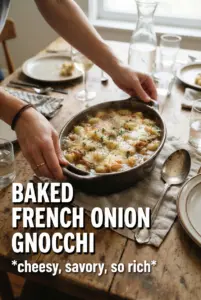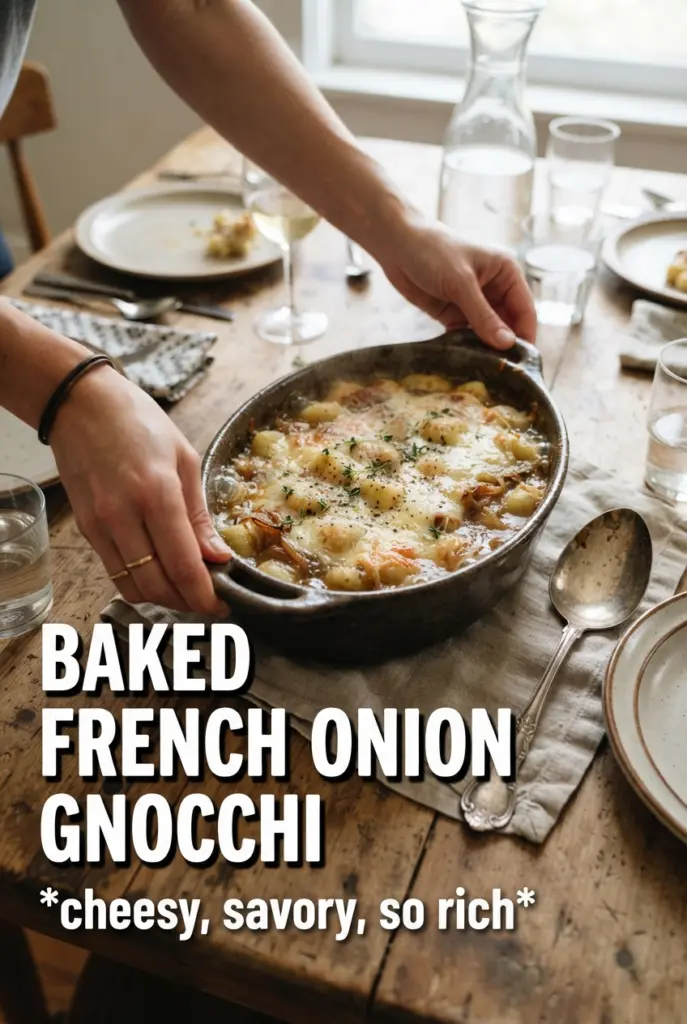
Pillowy gnocchi tucked into a deeply caramelized onion broth and finished under a blanket of Gruyère make this baked French onion gnocchi feel far more luxurious than the effort it takes to pull it off. The onions do most of the work here. Once they turn soft, jammy, and bronze at the edges, the whole dish picks up that classic French onion soup depth, but the gnocchi turns it into a full meal instead of a starter.
The trick is patience with the onions and restraint with the heat. If you rush them, you get pale sweetness instead of the savory, almost sticky base that gives this dish its backbone. A splash of wine lifts the browned bits from the pan, then broth, Worcestershire, and cream build a sauce that stays rich without turning heavy. The gnocchi goes in uncooked, so it absorbs flavor as it bakes instead of tasting like a separate add-in.
Below, I’ll walk through the part that matters most: how to get the onions properly caramelized without scorching them, how to know when the sauce is ready for the oven, and what to change if you want to adapt this into a meatless version.
The onions took a little time, but they turned into that deep sweet-savory base I was hoping for, and the gnocchi baked up tender without getting mushy. The Gruyère browned beautifully and my husband went back for seconds before I even sat down.
Save this baked French onion gnocchi for a night when you want caramelized onions, melted Gruyère, and a full dinner in one pan.
The Difference Between Deep Caramelization and Burnt Onions
The onions are the whole personality of this dish, and they need time to cross from sharp and raw into sweet, brown, and almost marmalade-soft. If you crank the heat to hurry things along, the outside scorches before the moisture cooks off, and you end up with bitter spots instead of a rounded, savory base. Medium-low heat gives the onions time to lose volume, concentrate, and pick up that dark color without sticking and burning.
That long cook also matters because it changes the sauce later. Once the onions are deeply caramelized, the wine pulls up all the browned residue from the skillet, and that’s where the flavor lives. If the pan looks dry before the onions are ready, add just a splash more butter or a drizzle of oil instead of turning up the heat.
What Each Ingredient Is Actually Doing in This Dish
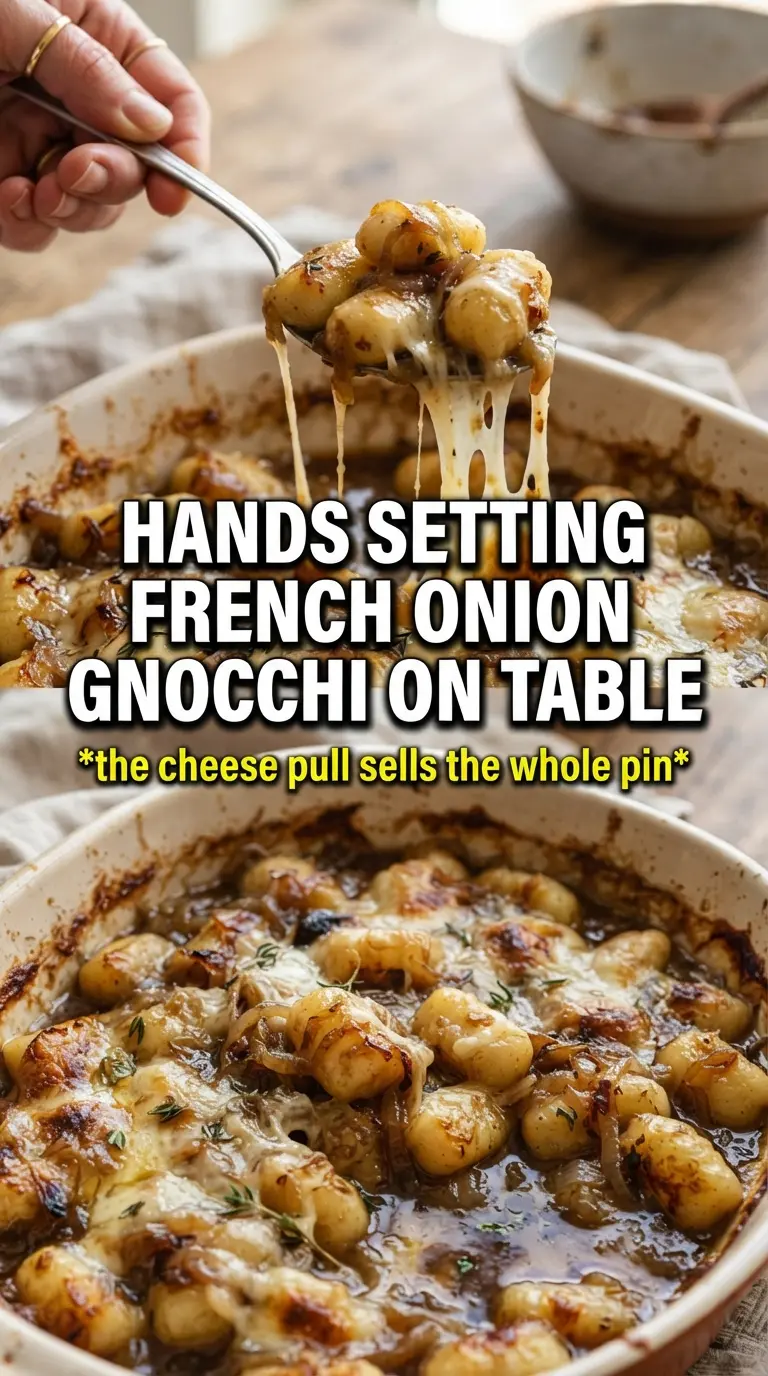
- Potato gnocchi — Uncooked gnocchi holds its shape in the oven and soaks up the broth as it bakes. Shelf-stable or refrigerated both work here; just don’t preboil it, or it can turn soft and break apart in the sauce.
- Onions — Three large onions give you enough volume to build a true French onion flavor. Yellow onions are the best choice because they soften and sweeten well; sweet onions also work, but they’ll make the dish a little softer and less savory.
- Dry white wine or dry sherry — This is what loosens the browned bits and brings a little brightness to balance the cream and cheese. If you don’t cook with wine, use extra broth plus a teaspoon of white wine vinegar stirred in at the end.
- Beef broth — Beef broth gives the sauce its classic French onion backbone. A good boxed broth is fine, but if yours is salty, hold back on added salt until the end.
- Gruyère — This is the cheese you want for that stretchy, nutty top. It melts cleanly and browns in a way that feels right for this dish; Swiss cheese can stand in, but it won’t taste quite as deep.
- Heavy cream — Cream softens the sharp edges of the broth and turns the sauce silky enough to coat the gnocchi. Half-and-half can work in a pinch, but the sauce will be thinner and less luxurious.
How to Build the Sauce So It Stays Rich in the Oven
Caramelizing the onions slowly
Melt the butter with the olive oil, then add the sliced onions and a good pinch of salt. Stir them often enough to keep the edges from catching, but not so often that they steam in their own moisture. After 35 to 40 minutes, they should be soft, collapsed, and a deep golden brown, with a sweet smell that’s almost nutty. If they look dark on the edges but still taste sharp, they need more time.
Deglazing the pan
Pour in the wine and scrape the bottom of the skillet as it bubbles. Those browned bits are not residue to clean off; they’re the flavor base. Let the wine cook for about 2 minutes so the raw alcohol smell fades, then stir in the garlic and thyme just long enough to wake them up without letting the garlic scorch.
Adding the broth and gnocchi
Stir in the broth, Worcestershire, and cream, then bring the mixture to a gentle simmer. You want it hot and steamy, not at a hard boil, because aggressive bubbling can make the cream look broken and can tighten the sauce too quickly. Add the uncooked gnocchi and stir until every piece is coated. At this stage, the sauce should look loose enough to move around the pan but thick enough to cling lightly to the gnocchi.
Baking until the top turns golden
Scatter the Gruyère over the top and bake or broil until the cheese is melted, browned in spots, and the sauce is bubbling around the edges. The gnocchi should be tender when pierced with a fork, but not falling apart. If the top browns before the sauce is bubbling underneath, the center needs more time in the oven at 425°F instead of relying only on the broiler.
How to Adapt This for a Meatless Dinner or a Smaller Pan
Vegetarian version with the same deep flavor
Swap the beef broth for a rich vegetable broth and add a splash of soy sauce or tamari for extra depth. You’ll lose a little of the classic French onion soup backbone, but the caramelized onions and Gruyère still carry most of the flavor.
Dairy-free adaptation
Use olive oil instead of butter, replace the cream with unsweetened oat cream or cashew cream, and skip the Gruyère topping or use a dairy-free meltable cheese. The sauce will be a little less rich, but it still gets that onion-heavy, savory finish if you keep the simmer gentle.
Gluten-free check
Most potato gnocchi are gluten-free, but not all brands are, so read the label closely. The rest of the dish is naturally gluten-free as long as your Worcestershire sauce and broth are certified or verified gluten-free.
Storage and Reheating
- Refrigerator: Store leftovers covered for up to 3 days. The gnocchi will soften a bit more as it sits, and the sauce will thicken.
- Freezer: I don’t recommend freezing this one. The cream sauce can separate and the gnocchi turns mealy after thawing.
- Reheating: Reheat gently in a 325°F oven, covered, with a splash of broth or water to loosen the sauce. The common mistake is blasting it in the microwave until the cheese turns oily and the gnocchi gets rubbery.
Answers to the Questions Worth Asking
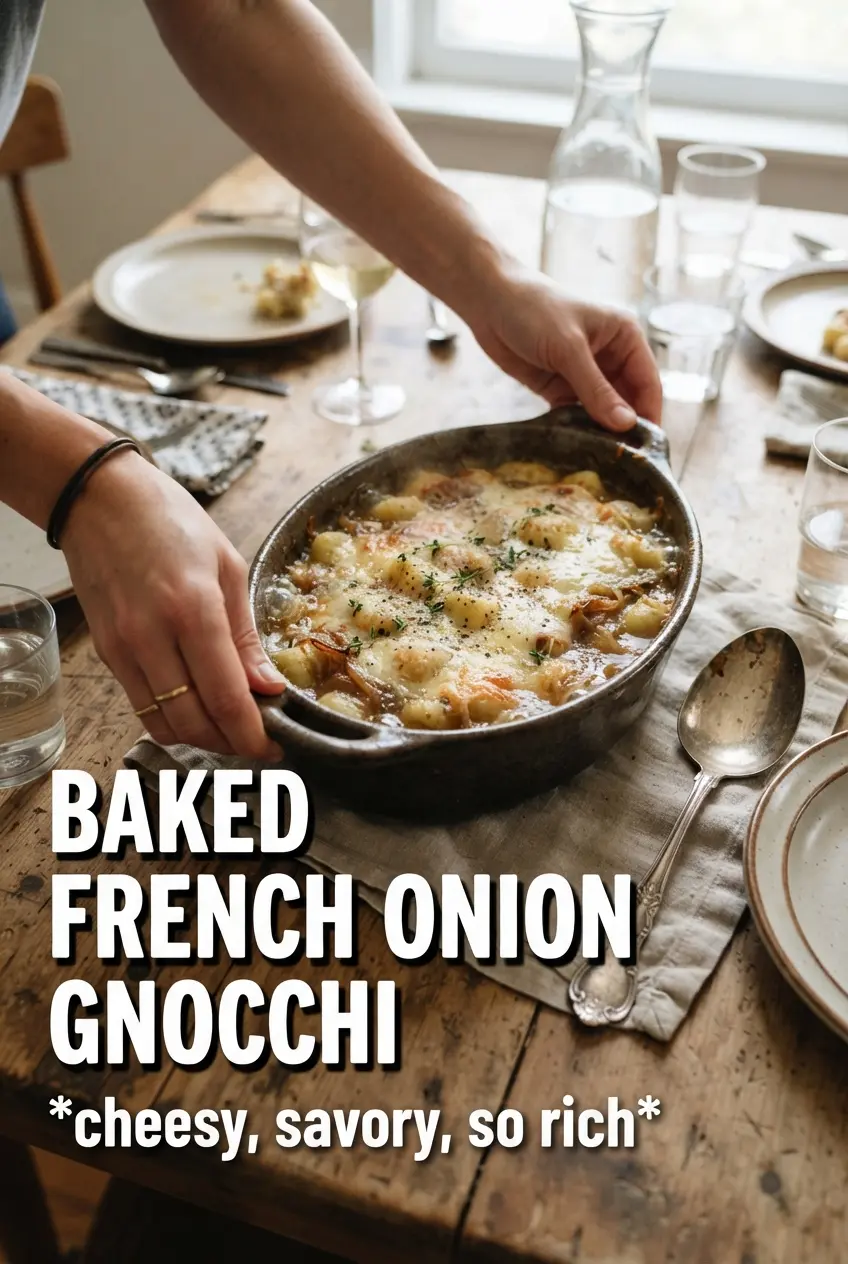
Baked French Onion Gnocchi
Ingredients
Equipment
Method
- Melt the butter with the olive oil in a large oven-safe skillet, then add the thinly sliced onions and cook over medium-low heat for 35-40 minutes until deeply caramelized, stirring occasionally so they don’t scorch.
- When the onions are very dark and jammy, deglaze the skillet with the dry white wine (or dry sherry) and cook for 2 minutes, scraping up browned bits.
- Add the minced garlic and fresh thyme to the skillet and cook for 1 minute, just until fragrant with no raw garlic smell.
- Pour in the beef broth, Worcestershire sauce, and heavy cream, then bring the mixture to a simmer so it turns glossy and slightly thickened.
- Add the uncooked potato gnocchi to the onion broth and stir to coat, letting the sauce return to a gentle simmer around the gnocchi.
- Scatter the shredded Gruyère evenly over the top so it melts into a browned crust during baking.
- Broil or bake at 425°F for 15-18 minutes until the gnocchi are cooked through, the sauce is bubbling, and the cheese is golden.