
Beef lasagna soup gives you everything people love about a baked pan of lasagna — the rich tomato sauce, the savory beef, the melted cheese, the tender noodles — without waiting for layers to bake in the oven. The broth turns deep and hearty, the pasta cooks right in the pot, and each bowl finishes with a creamy spoonful of ricotta that melts into the hot soup in the best way. It eats like comfort food, but it comes together on a weeknight.
The key is building the flavor in stages. Browning the beef first gives you those browned bits at the bottom of the pot, and the tomato paste needs a minute with the onions and garlic so it loses that raw, sharp edge. After that, the broth and tomatoes do the heavy lifting while the broken noodles simmer straight in the soup, soaking up the sauce instead of going bland and separate.
Below, I’ll walk through the parts that matter most — how to keep the noodles from turning mushy, how to make the cheese topping taste like lasagna filling, and what to change if you want to make it a little lighter or a little richer.
The broth got thick and rich without being heavy, and the ricotta-mozzarella topping melted into every bowl just like lasagna filling. My kids picked out the noodles first and asked for it again the next night.
Love the rich beef broth and cheesy ricotta topping? Save this Beef Lasagna Soup for the night you want lasagna flavor without layering or baking.
The Secret to Soup That Tastes Like Lasagna, Not Spaghetti Sauce
Lasagna soup only works when the broth stays balanced. Too much tomato paste or too little liquid, and you end up with a pot that tastes thick and flat instead of layered and savory. The beef broth matters here because it gives the soup a deeper base than water or even chicken broth would, and the crushed tomatoes bring body while the diced tomatoes keep each spoonful a little more interesting.
The other place people go wrong is with the noodles. If they go in too early, they swell past tender and start drinking up the broth until the soup turns starchy and heavy. Add them after the tomato base has simmered, then cook just until they’re tender with a little bite left in the center. They’ll keep softening in the bowl.
- Lean ground beef — Lean beef gives you enough flavor without leaving a greasy film on the broth. If your beef is fattier, drain it well after browning so the soup stays clean-tasting.
- Tomato paste — This is what makes the soup taste cooked and full-bodied instead of thin. Let it fry with the onions and garlic for a full minute or two so it darkens slightly and loses its raw edge.
- Lasagna noodles — Broken noodles work better than another pasta shape because they mimic the texture of lasagna and hold onto the broth. If you need a substitute, use mafalda or campanelle, but the soup will feel a little less like the classic dish.
- Ricotta, mozzarella, and parmesan — This topping is the lasagna part of the lasagna soup. Ricotta gives creaminess, mozzarella melts into the bowl, and parmesan sharpens the finish. Don’t skip the basil if you want that fresh, just-baked flavor at the end.
Building the Base in the Right Order
- Ground beef — Brown it until you see real color on the bottom of the pot. Pale beef gives you a bland soup; browned beef gives you depth. Drain off the excess fat so the tomato broth doesn’t turn oily.
- Onion and garlic — These build the savory base after the beef is cooked. Cook the onion until it softens and turns translucent, then add the garlic only after that so it doesn’t scorch.
- Crushed tomatoes and diced tomatoes — The crushed tomatoes make the broth thick and spoonable, while the diced tomatoes add texture. If you only have one type, the soup still works, but the combination gives the best balance.
- Italian seasoning, basil, oregano, and red pepper flakes — This is where the soup starts tasting like lasagna instead of generic tomato beef soup. Dried herbs work well here because they simmer in the broth and open up over time.
The 30 Minutes That Matter Most
Browning the Beef
Cook the beef in a large pot over medium-high heat until it’s no longer pink and you see browned bits clinging to the bottom. That fond is what gives the broth its deep savory taste. If the pot looks crowded, break the meat up as it cooks so it browns instead of steaming.
Softening the Onion and Toasting the Tomato Paste
Add the diced onion to the same pot and cook it until it softens and starts to smell sweet. Stir in the garlic and tomato paste and cook for about 2 minutes, scraping the bottom as you go. The paste should darken a shade and smell richer; if it still smells sharp, it needs another minute.
Simmering the Broth and Herbs
Pour in the tomatoes, beef broth, and seasonings, then bring everything to a boil before lowering the heat. The soup should simmer with small bubbles, not a hard boil, so the flavors blend without reducing too fast. Taste the broth before the noodles go in; this is the easiest time to adjust salt and heat.
Cooking the Noodles Without Overdoing Them
Add the broken lasagna noodles and simmer until they’re just tender, usually 10 to 12 minutes. Stir often, especially near the end, because the noodles like to settle and stick to the bottom. If the soup looks thicker than you want, add a splash of broth or water near the end instead of overcooking the pasta.
Make It Creamier With a Little More Cheese
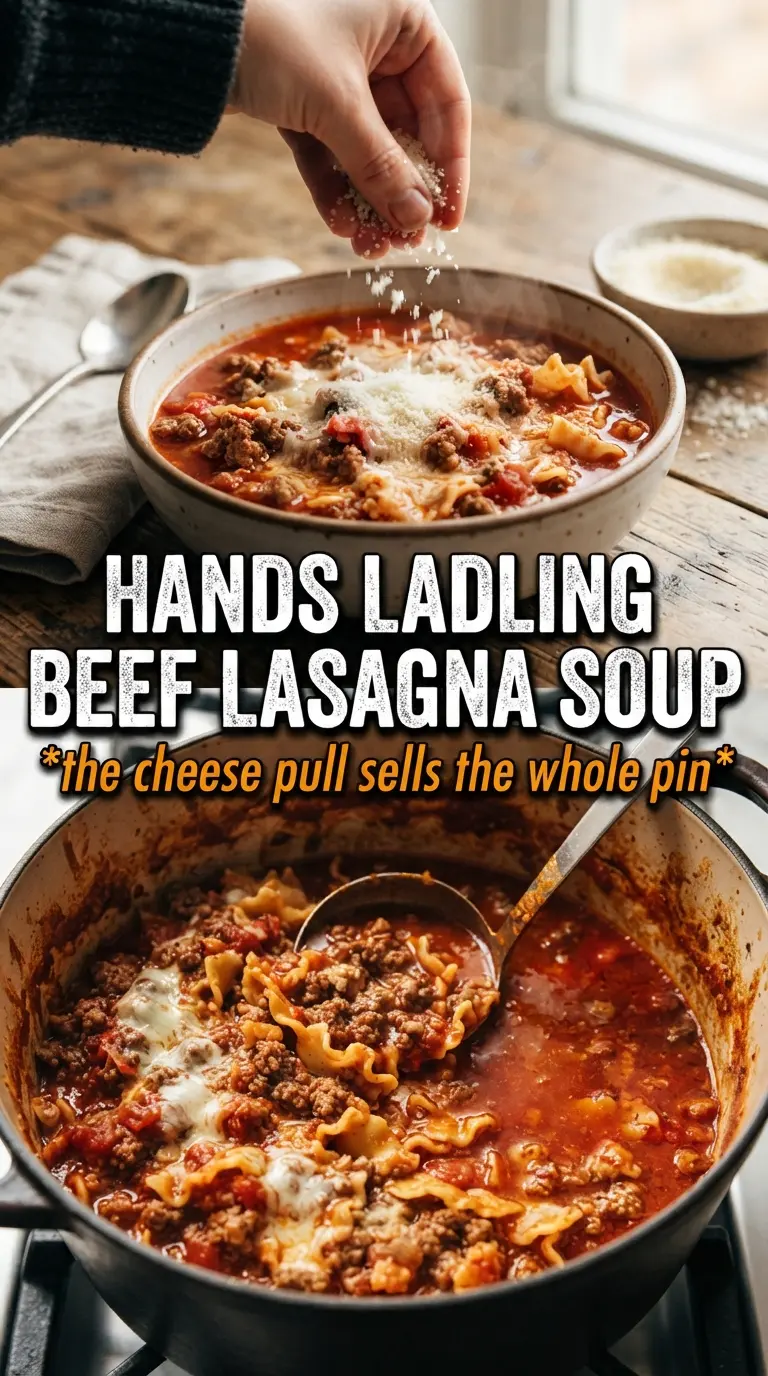
Stir a spoonful of ricotta directly into each bowl, then top with mozzarella and parmesan while the soup is still steaming hot. That gives you a richer, more lasagna-like finish without changing the base pot. If you want an even creamier broth, whisk a small spoonful of ricotta into the soup off the heat right before serving.
Make It Dairy-Free
Skip the ricotta and cheese topping and finish each bowl with olive oil and torn basil instead. The soup itself is already hearty and tomato-rich, so you won’t lose the structure of the dish. A dairy-free parmesan-style substitute can work on top, but the melted, creamy lasagna effect won’t be quite the same.
Use Gluten-Free Pasta
Swap in a sturdy gluten-free lasagna-style pasta or another short gluten-free noodle. Add it near the end and watch it closely, because gluten-free pasta can go from tender to soft fast and it tends to thicken the broth more than wheat pasta. If the soup sits a while, keep the noodles separate and combine them in the bowl.
Stretch It for a Bigger Crowd
Add an extra cup of broth and another handful of broken noodles if you need more servings. The soup handles that well as long as you keep enough tomato base and season after the extra liquid goes in. A larger pot is helpful here so the noodles can move around and cook evenly.
Storage and Reheating
- Refrigerator: Store for up to 4 days. The noodles will keep soaking up broth, so expect the soup to thicken as it sits.
- Freezer: It freezes, but the noodles soften after thawing. For the best texture, freeze the soup base without noodles, then add fresh pasta when you reheat.
- Reheating: Warm it gently on the stove over medium-low heat with a splash of broth or water. A hard boil will break the noodles down and turn the soup mushy.
Answers to the Questions Worth Asking

Beef Lasagna Soup
Ingredients
Equipment
Method
- Brown the ground beef in a large pot and drain the fat.
- Brown the ground beef over medium-high heat until no pink remains and crumbles are browned, then drain the excess fat.
- Sauté the diced onion in the same pot for 4 minutes, stirring occasionally until softened.
- Add the minced garlic and tomato paste and cook for 2 minutes, stirring until fragrant and slightly darkened at the edges.
- Add the crushed tomatoes, diced tomatoes, beef broth, Italian seasoning, dried basil, dried oregano, red pepper flakes, and black pepper, then bring to a boil.
- Add the broken lasagna noodles and reduce the heat to a gentle simmer.
- Simmer for 10-12 minutes until the noodles are tender, stirring occasionally to prevent sticking.
- Season with salt to taste and stir to combine.
- Mix the ricotta, shredded mozzarella, and parmesan together into a thick, spoonable dollop mixture.
- Serve hot soup in bowls with a very generous spoonful of the cheese dollop on top, and garnish with fresh basil.