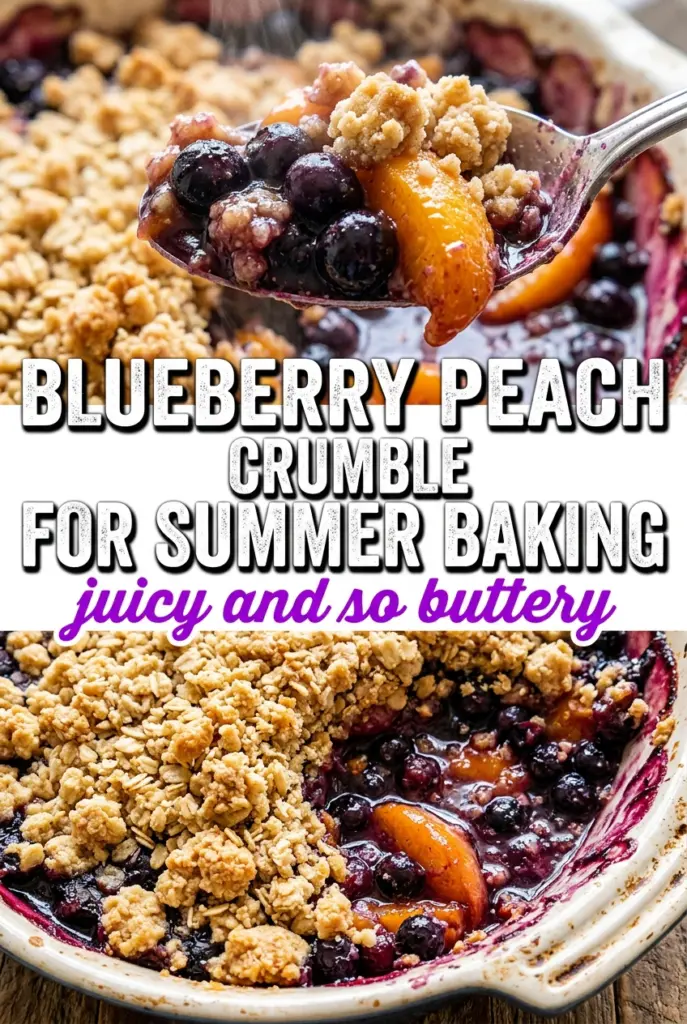
Juicy blueberries and ripe peaches tucked under a buttery oat topping make the kind of dessert that disappears fast from the pan. The fruit turns jammy at the edges while the crumble bakes up crisp and nubbly on top, so every spoonful gets soft fruit, syrupy juices, and those browned buttery bits that crackle under a spoon.
What makes this version work is the balance: enough cornstarch to thicken the fruit without turning it pasty, enough lemon juice to keep the peaches bright, and a crumble made with cold butter so it bakes into clumps instead of a sandy blanket. The oats bring chew, the brown sugar deepens the topping, and the fruit layer stays loose and spoonable instead of collapsing into soup.
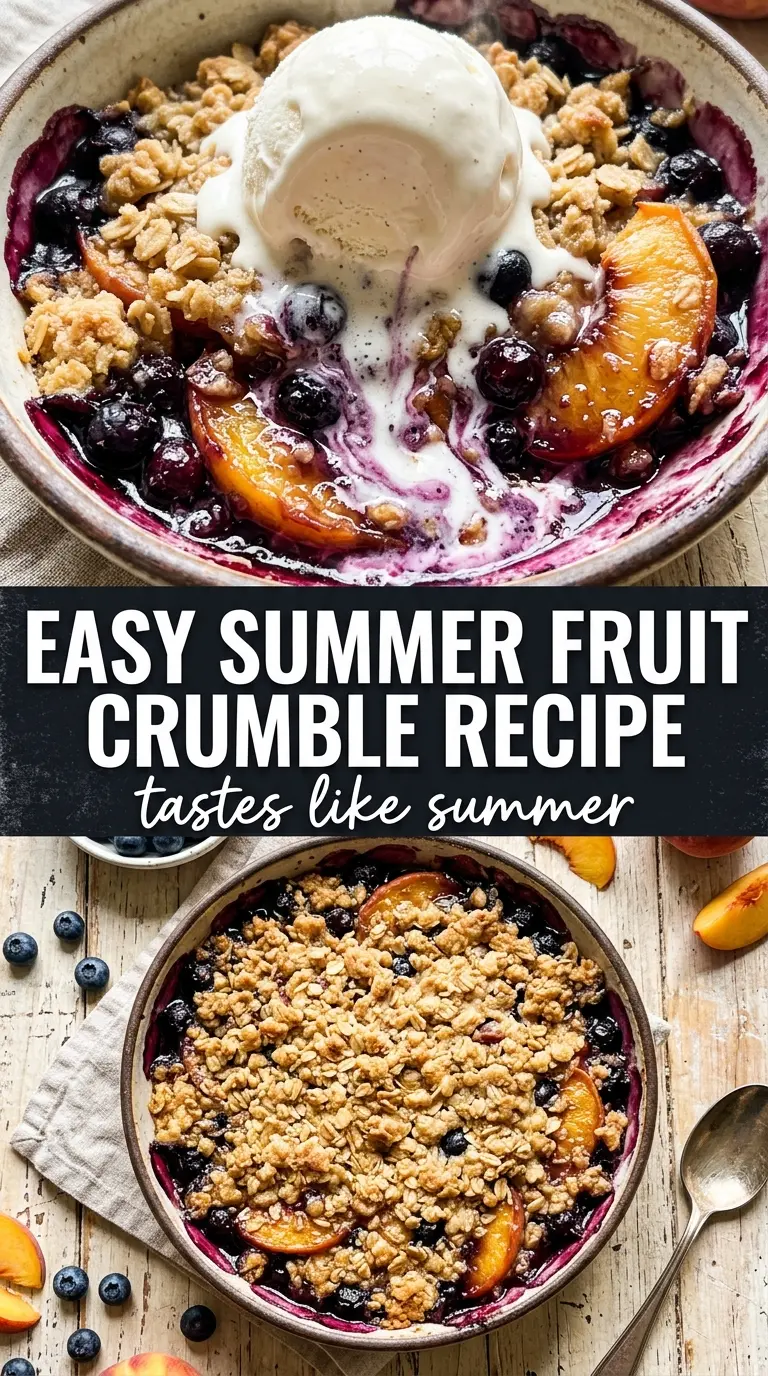
Below, you’ll find the small details that keep the topping crisp and the filling from running all over the dish, plus a few smart swaps if you need to work with what you have on hand.
The topping stayed crisp even after sitting for a bit, and the peaches and blueberries turned into this thick, spoonable filling instead of running everywhere. I served it warm with vanilla ice cream and there wasn’t a crumb left.
Save this blueberry peach crumble for the nights when you want warm fruit, a crisp oat topping, and dessert that comes together with pantry staples.
The Reason This Crumble Stays Crisp Instead of Going Soggy
The biggest mistake with fruit crumbles is dumping everything into the pan and hoping the oven sorts it out. It doesn’t. Peaches and blueberries release a lot of juice as they heat, and without enough thickener the filling turns thin and the topping starts absorbing steam instead of staying crisp. That is why the cornstarch goes in with the fruit before baking, not after, and why the crumble is built with cold butter in distinct pieces rather than melted into the dry ingredients.
Cold butter matters here because it creates little pockets that melt in the oven and leave behind flaky, crunchy bits. If you work the butter too long, the topping becomes a paste and bakes up dense. The other detail that matters is the baking dish: a 9×9-inch pan gives the fruit enough room to bubble up around the edges without spilling over, while still keeping the layer thick enough to stay juicy.
- Peaches — Use ripe but still slightly firm peaches. Soft fruit breaks down fast and can make the filling mushy before the topping finishes browning. If your peaches are very juicy, slice them and let them sit in the sugar for a few minutes before adding the cornstarch so the coating sticks evenly.
- Blueberries — Fresh berries hold their shape better than frozen here. Frozen blueberries work in a pinch, but don’t thaw them first or they’ll bleed too much liquid and turn the filling darker and looser.
- Cornstarch — This is the insurance policy for the fruit juices. It thickens as the filling heats, so the crumble serves in scoops instead of puddles. Arrowroot can work as a swap, but use a little less because it thickens more aggressively.
- Cold butter — The butter should stay cold right up until it goes into the flour and oats. Small, pea-sized pieces are the goal. Those pieces melt into crisp pockets, which is what gives the topping its texture.
Building the Fruit Layer and the Crumble Topping
Coating the Fruit
Toss the peaches and blueberries with the sugar, cornstarch, and lemon juice until every piece looks lightly slicked and evenly coated. Spread the fruit in an even layer so it bakes at the same rate across the dish. If the fruit sits in a big mound, the center stays watery while the edges overcook.
Cutting in the Butter
Mix the oats, flour, brown sugar, and cinnamon, then cut in the cold butter until the mixture looks like coarse crumbs with some larger pebbly bits. Those larger pieces are what bake into the best crunchy clusters. If the butter melts into the dry mix while you’re working it, chill the bowl for 10 minutes before topping the fruit.
Baking Until the Edges Bubble
Sprinkle the crumble evenly over the fruit and bake until the top is deep golden and the fruit is bubbling around the edges. That bubbling is the sign the cornstarch has activated and the filling has thickened. Pull it too early and the center will stay loose even after cooling.
Frozen Fruit Crumble
Frozen peaches or blueberries can stand in for fresh, but don’t thaw them first. Toss them straight from the freezer with the sugar and cornstarch, then add 5 to 10 minutes to the bake time. The filling will be a little softer and more rustic, but it still sets up well if you let it cool before serving.
Dairy-Free Version
Use a plant-based butter that stays firm when cold, not a soft spread from a tub. You want the same cold-crumb texture the dairy butter gives you, or the topping bakes up flat. The flavor stays close enough that the fruit still carries the dessert.
Gluten-Free Crumble
Swap the all-purpose flour for a good 1:1 gluten-free baking blend. The topping will be a touch more delicate, but the oats still give it plenty of structure. Check that your oats are certified gluten-free if cross-contamination matters.
Storage and Reheating
- Refrigerator: Cover and refrigerate for up to 4 days. The topping softens a bit, but the fruit stays flavorful.
- Freezer: It freezes well after baking. Cool completely, wrap tightly, and freeze for up to 2 months. Thaw in the refrigerator before reheating so the filling doesn’t separate.
- Reheating: Warm in a 325°F oven until the center is hot and the top crisps back up, about 15 to 20 minutes. The microwave will soften the crumble, so use it only if you don’t care about the topping staying crisp.
Answers to the Questions Worth Asking
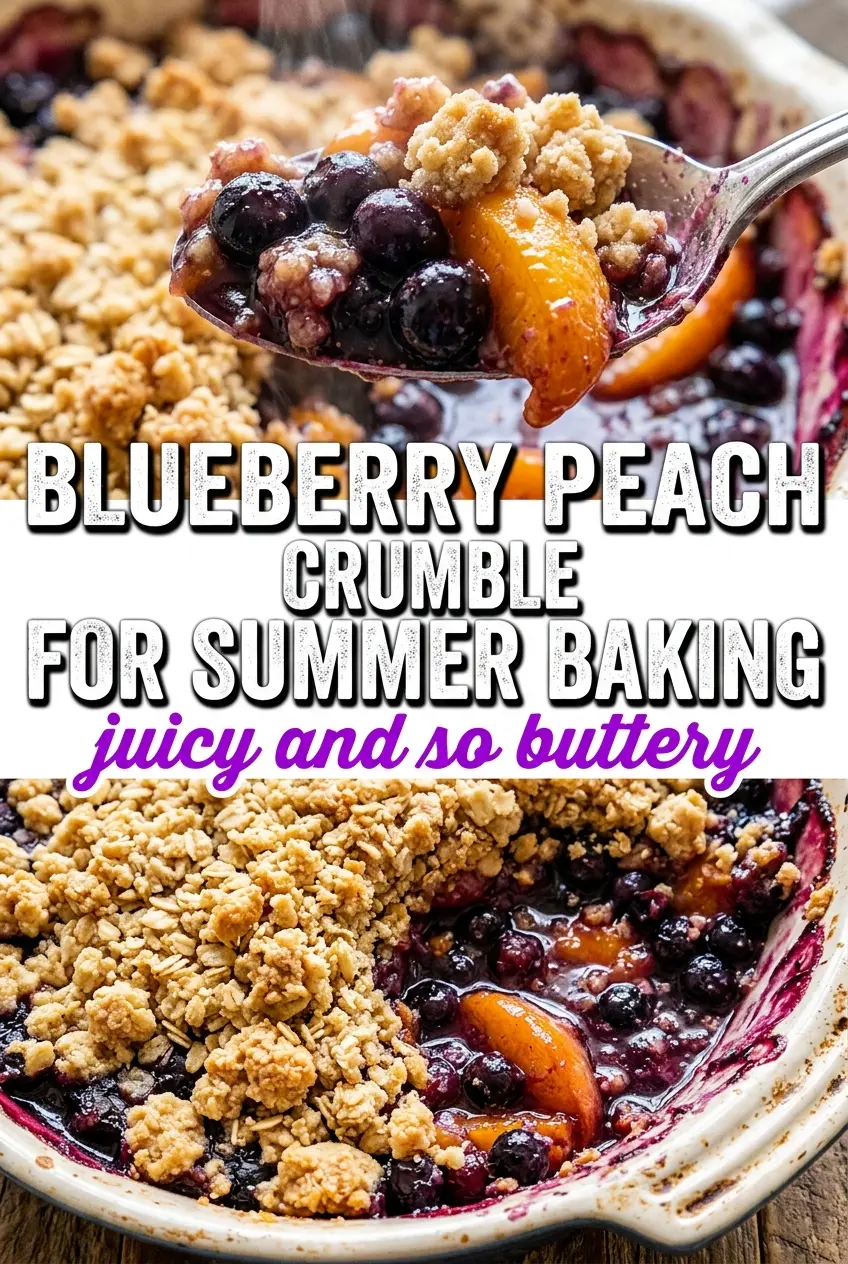
Blueberry Peach Crumble
Ingredients
Equipment
Method
- Preheat the oven to 350°F and grease a 9x9-inch baking dish.
- Toss the peaches and blueberries with the granulated sugar, cornstarch, and lemon juice, then spread evenly in the baking dish so the fruit layer is uniform.
- Combine the oats, flour, brown sugar, and cinnamon in a bowl until evenly mixed.
- Cut in the cold butter until coarse, pea-sized crumbs form, keeping the butter cold for a crisp topping.
- Sprinkle the crumble topping evenly over the fruit to cover the surface completely.
- Bake for 40–45 minutes at 350°F, until the topping is golden and the fruit is bubbling around the edges.
- Cool for 10 minutes before serving warm so the filling thickens slightly and slices cleanly.