
Golden, bubbling, and deeply savory, this cheesy root vegetable gratin turns a stack of humble vegetables into the kind of side dish people lean in for seconds on. The potatoes go soft and creamy, the parsnips bring a gentle sweetness, and the turnip or celery root keeps everything from tasting flat. What you get is a gratin with real contrast: tender layers underneath, a bronzed cheese crust on top, and enough richness to feel special without being heavy in a dull way.
The trick is getting the vegetables sliced thin enough to cook through at the same pace. That matters more here than almost anything else. The cream mixture also does the heavy lifting before the cheese even goes on, so the vegetables turn silky instead of sitting in a dry casserole that only looks finished on top. Gruyere gives you that nutty melt, while parmesan sharpens the crust and helps it brown.
Below, I’ve included the timing that keeps the top from overbrowning before the center is tender, plus a few swaps that still give you a proper gratin texture. If you’ve ever had one come out watery, bland, or oddly stiff, this version fixes the usual trouble spots.
The vegetables got perfectly tender in the center, and the top browned into that cheesy crust I was hoping for. I used celery root like you suggested and it gave the gratin a nice earthy flavor without overpowering the potatoes.
Save this cheesy root vegetable gratin for the holiday table or any dinner that needs a crisp, golden top and tender layered vegetables underneath.
The Thin-Slice Rule That Keeps a Gratin From Staying Crunchy
A gratin like this fails in one of two ways: the top browns too fast, or the vegetables never turn fully tender before the dish is done. Thin, even slices are what keep both problems under control. If one layer is thick and another is whisper-thin, the thin pieces collapse while the thick ones stay stubborn in the center. A mandoline makes this easier, but a sharp knife and steady pace work if you keep the slices close in size.
The other detail that matters is the cover time. Those first 40 minutes under foil aren’t just about steaming; they’re what turns dense root vegetables into something spoon-tender before the cheese goes on. If you uncover too soon, the top can dry out before the middle is ready. If you leave it covered too long, you miss the gratin part entirely and end up with a soft casserole instead of a browned one.
What Each Ingredient Is Doing in This Dish

- Yukon gold potatoes — These give the gratin its creamy backbone. Their texture stays lush without turning watery, which is why they work better here than russets.
- Parsnips, carrots, and turnip or celery root — This mix adds sweetness, earthiness, and a little bite so the dish tastes layered instead of one-note. Celery root brings the most pronounced savory edge; turnip is a little sharper and lighter. Use whichever you can find, but slice it as evenly as the potatoes so it cooks at the same pace.
- Heavy cream and whole milk — The cream gives richness and body, while the milk keeps the dish from feeling too heavy. You can swap in half-and-half for both if needed, but the sauce will be a little less plush and the final gratin a touch lighter.
- Gruyere and parmesan — Gruyere melts into the vegetables and brings that nutty, French-style gratin flavor. Parmesan is there for salt, sharpness, and browning. If you use only one cheese, the top won’t brown as well and the flavor will feel flatter.
- Garlic, thyme, and nutmeg — These season the cream so every layer tastes seasoned, not just the top. Fresh thyme is worth using if you have it because it perfumes the whole dish as it bakes. Nutmeg should stay in the background; if you can taste it clearly, you’ve used too much.
Building the Gratin So the Middle Cooks Before the Top Burns
Mixing the Cream Base
Whisk the cream, milk, garlic, thyme, nutmeg, salt, and pepper together before anything touches the pan. That puts seasoning everywhere, not just in the top layer. The mixture should smell garlicky and herbaceous, but not aggressively salty because the cheeses still bring plenty of seasoning later.
Layering the Vegetables
Arrange the slices in slightly overlapping rows and keep the layers loose enough for the cream to move through them. If you pack the dish too tightly, the liquid can’t circulate and the middle takes longer to soften. Press down gently once the cream goes in so the vegetables settle below the surface, but don’t mash the whole thing flat.
Covering for the First Bake
Seal the dish tightly with foil and bake until the vegetables are beginning to soften. The goal here is not color; it’s tenderness. If your foil is loose, steam escapes and the top edges of the potatoes can dry out before the center is cooked.
Finishing With Cheese
Once the vegetables are tender, uncover the dish and scatter the Gruyere and parmesan over the top. Bake until the cheese is bubbling and the top has a deep golden crust with browned spots at the edges. Let it rest for 10 minutes before serving so the cream thickens slightly and the layers hold together when you scoop them.
How to Adapt This for a Smaller Table or a Different Pantry
Dairy-Free Gratin With a Different Finish
Use unsweetened oat cream or full-fat canned coconut milk in place of the dairy, then lean harder on the garlic and thyme for flavor. The texture will still be rich, but the result won’t have the same clean, nutty finish that Gruyere gives you. For the topping, use a dairy-free shreds that browns well, or skip the cheese entirely and finish with olive oil and breadcrumbs if you just want a crisp top.
Gluten-Free Without Any Extra Work
This gratin is naturally gluten-free as written, which is one reason it’s such a reliable side dish. Just check your cheese labels if you’re cooking for someone with a strict allergy, since a few pre-shredded cheeses use anti-caking starches that can slightly dull the melt.
What to Use When You Can’t Find Celery Root
A second turnip or more parsnip works fine. You’ll lose a little of celery root’s savory depth, but the gratin still bakes up with good contrast and a layered sweetness from the other roots. Keep the slices thin so the substitute cooks in the same window as the potatoes.
Storage and Reheating
- Refrigerator: Store covered for up to 4 days. The top will soften, but the flavor deepens overnight.
- Freezer: It freezes, but the cream can separate a little on thawing, so the texture won’t be as silky. Freeze in portions, wrapped tightly, if you want leftovers later.
- Reheating: Reheat in a 325F oven covered with foil until hot, then uncover for the last few minutes to wake up the crust. The biggest mistake is blasting it in the microwave, which makes the potatoes grainy and the cheese greasy.
Answers to the Questions Worth Asking
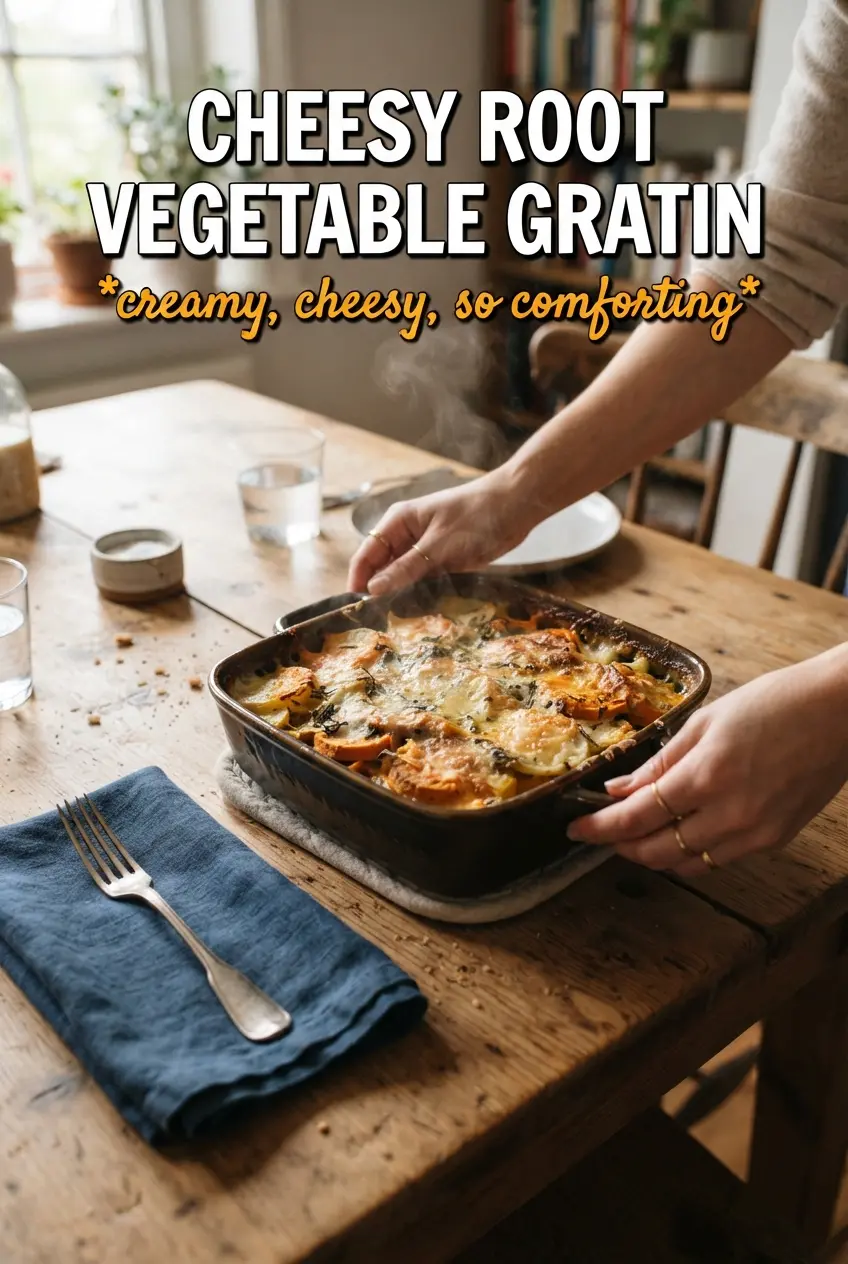
Cheesy Root Vegetable Gratin
Ingredients
Equipment
Method
- Preheat the oven to 375°F. Butter a 9x13 baking dish generously with the unsalted butter so the gratin releases cleanly.
- Whisk heavy cream, whole milk, minced garlic, fresh thyme, nutmeg, 1 teaspoon salt, and pepper together until smooth. The mixture should look lightly speckled from the thyme.
- Layer the root vegetables in the dish, alternating types in slightly overlapping rows. Press the slices down lightly so the layers stay compact.
- Pour the cream mixture over the vegetables, then press down gently again to encourage even soaking. Make sure most slices are moistened but not floating.
- Cover tightly with foil and bake at 375°F for 40 minutes. You should see steam and bubbling around the edges through the foil.
- Uncover and scatter Gruyere and parmesan over the top in an even layer. The surface should be fully covered for a browned crust.
- Bake uncovered at 375°F for 20-25 minutes until the vegetables are completely tender and the top is golden and bubbly. Look for active bubbling and browned cheese at the edges.
- Rest the gratin for 10 minutes before serving. It will thicken slightly so the layers hold together when you scoop.