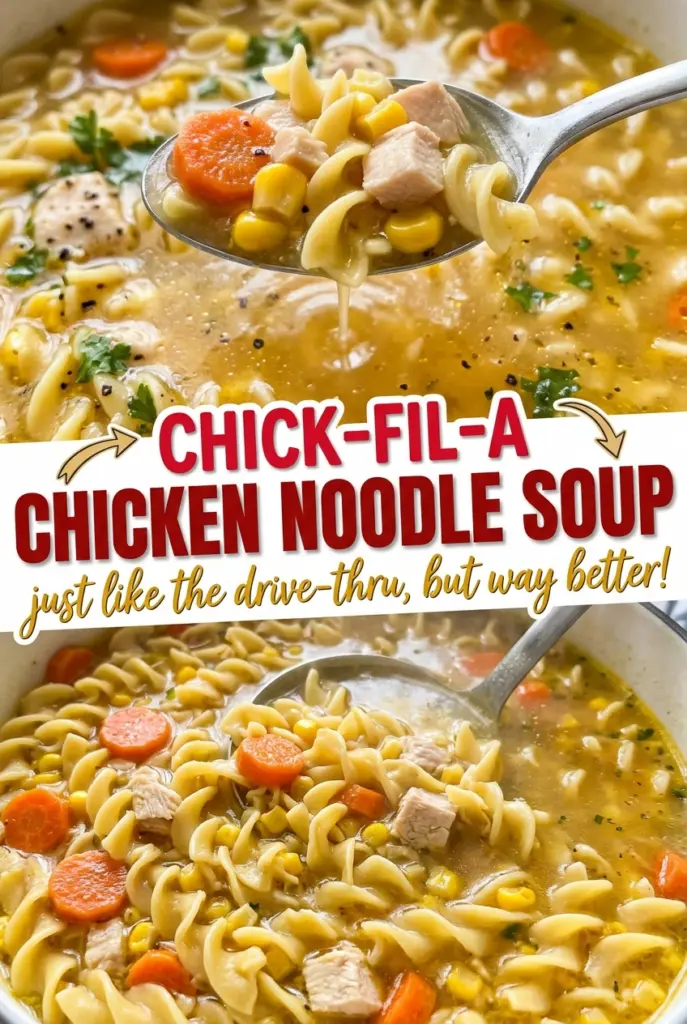
Clear broth, tender noodles, and small bites of chicken make this copycat Chick-fil-A chicken noodle soup the kind of bowl you keep thinking about after lunch is over. It’s light enough to eat when you don’t want anything heavy, but it still tastes finished and comforting, with just enough carrot, celery, and corn to keep every spoonful interesting.
The detail that makes this version work is the cut of the chicken. Finely diced chicken blends into the soup in the same way the restaurant version does, so you get little pieces in every bite instead of long shreds that take over the bowl. The broth stays clean and simple on purpose, with dried thyme, parsley, and a little garlic giving it that familiar fast-food comfort without turning it muddy or overly seasoned.
Below, I’ll show you why the vegetables go in first, why the noodles should be cooked at the end, and how to keep the broth from turning cloudy if you’re making this ahead. It’s an easy pot of soup, but the order matters more than people think.
The chicken stayed in little pieces instead of disappearing into shreds, and the broth was clear and comforting. I also liked that the noodles didn’t get mushy, even after reheating the next day.
Love the clear broth and tiny chicken pieces in this Chick-fil-A chicken noodle soup? Save it to Pinterest for the next time you want a simple bowl that tastes just like the copycat version.
The Chicken Needs to Be Diced, Not Shredded, for the Right Bowl
Most chicken noodle soups lean on shredded chicken, but that changes the whole feel of the soup. Shreds soak up broth and spread out in strands, which makes the bowl read heavier and less like the version people expect from Chick-fil-A. Small, even dice keep the texture neat and the spoonfuls balanced.
This matters even more if your chicken is already cooked before it goes into the pot. Diced chicken warms through fast, so it stays tender instead of drying out while the noodles finish. If you only have shredded chicken, use it sparingly and cut the pieces smaller with your hands or a knife so the texture doesn’t take over.
- Cooked chicken breast — Use plain, cooked chicken breast for the cleanest flavor and the most accurate texture. Rotisserie chicken works in a pinch, but the broth will taste richer and a little less like the original. Dice it fine so it disperses through the soup instead of floating in clumps.
- Chicken broth — Use a broth you actually like sipping on its own. This recipe is built on a clear broth, so a salty or overly dark stock will push it away from the light restaurant-style result. If your broth is strong, cut it with a little extra water.
- Egg noodles — These give the soup the soft, familiar finish people expect. Small pasta works too, but egg noodles hold onto the broth better and soften into that classic diner-style texture. Cook them until just tender; overcooked noodles turn the whole pot cloudy and starchy.
- Carrots, celery, and onion — Keep the dice small and even. Bigger chunks stay awkwardly firm while the noodles are done, and they break the smooth rhythm of the soup.
What Each Ingredient Is Actually Doing in This Recipe

- Primary ingredient (the star) — Quality matters most. Choose the best you can find.
- Cooking medium (oil, butter, or broth) — This carries flavors and prevents dryness.
- Seasonings (salt, pepper, spices, herbs) — Layer flavors so nothing overpowers. Build depth gradually.
- Aromatics (garlic, onion, herbs) — Cook with fat to bloom flavors. Become the foundation.
- Supporting ingredients — Complement the main ingredient without overpowering it.
- Sauce or liquid (if applicable) — Brings flavors together. Balance richness with acid.
- Acid (lemon, vinegar, wine, or other) — Brightens and prevents flat-tasting results.
- Final finish (garnish, glaze, or sauce) — Prevents one-dimensional taste and adds visual appeal.
Building the Broth in the Right Order
Softening the Vegetables First
Start with the broth and water, then add the carrots, celery, onion, garlic, parsley, thyme, and garlic powder. Let the vegetables simmer until they’re just tender, not collapsing. That 10-minute head start gives the broth time to absorb the aromatics while the vegetables stay bright and clean-tasting. If you rush this part, the soup tastes flat and the vegetables feel undercooked next to the noodles.
Adding the Chicken and Corn at the End of the Simmer
Stir in the diced chicken and corn after the vegetables are softened. The chicken only needs a few minutes to warm through because it’s already cooked, and the corn just needs enough time to lose its raw edge. Keep the simmer gentle here. A hard boil can break up the chicken and make the broth look tired instead of clear.
Cooking the Noodles Without Overdoing Them
Add the egg noodles last and cook them until they’re tender but still hold their shape. This is the stage that decides whether your soup feels fresh or soggy. Once the noodles are done, turn off the heat and season with salt and pepper. If you leave the pot boiling after the noodles go in, they keep drinking broth and the soup thickens more than you want.
Three Ways to Adjust This Soup Without Losing the Point
Gluten-Free Version
Swap the egg noodles for a gluten-free small pasta and cook it separately if you want the broth to stay clear. Gluten-free noodles can break down faster in the pot, so adding them to individual bowls keeps the texture closer to the original and prevents the soup from getting gummy as it sits.
Dairy-Free and Light as Written
This soup is naturally dairy-free, which is part of why it tastes so clean. Don’t add cream or milk unless you’re intentionally changing the recipe into a richer chowder-style soup; the original version depends on a clear broth and a light finish.
Using Rotisserie Chicken
Rotisserie chicken saves time and still works well, but pull off the skin and dice the meat finely before it goes in. The flavor will be a little more savory than the classic version, so keep the broth simple and don’t over-season until the end.
Storage and Reheating
- Refrigerator: Store in an airtight container for up to 4 days. The noodles will absorb broth as it sits, so expect the soup to thicken a bit.
- Freezer: It freezes, but the noodles soften after thawing. For the best result, freeze the broth, chicken, and vegetables without the noodles, then cook fresh noodles when you reheat it.
- Reheating: Warm it gently on the stove over medium-low heat. If the pot boils hard, the noodles turn mushy and the chicken gets tough at the edges. Add a splash of broth or water if the soup has thickened in the fridge.
Answers to the Questions Worth Asking
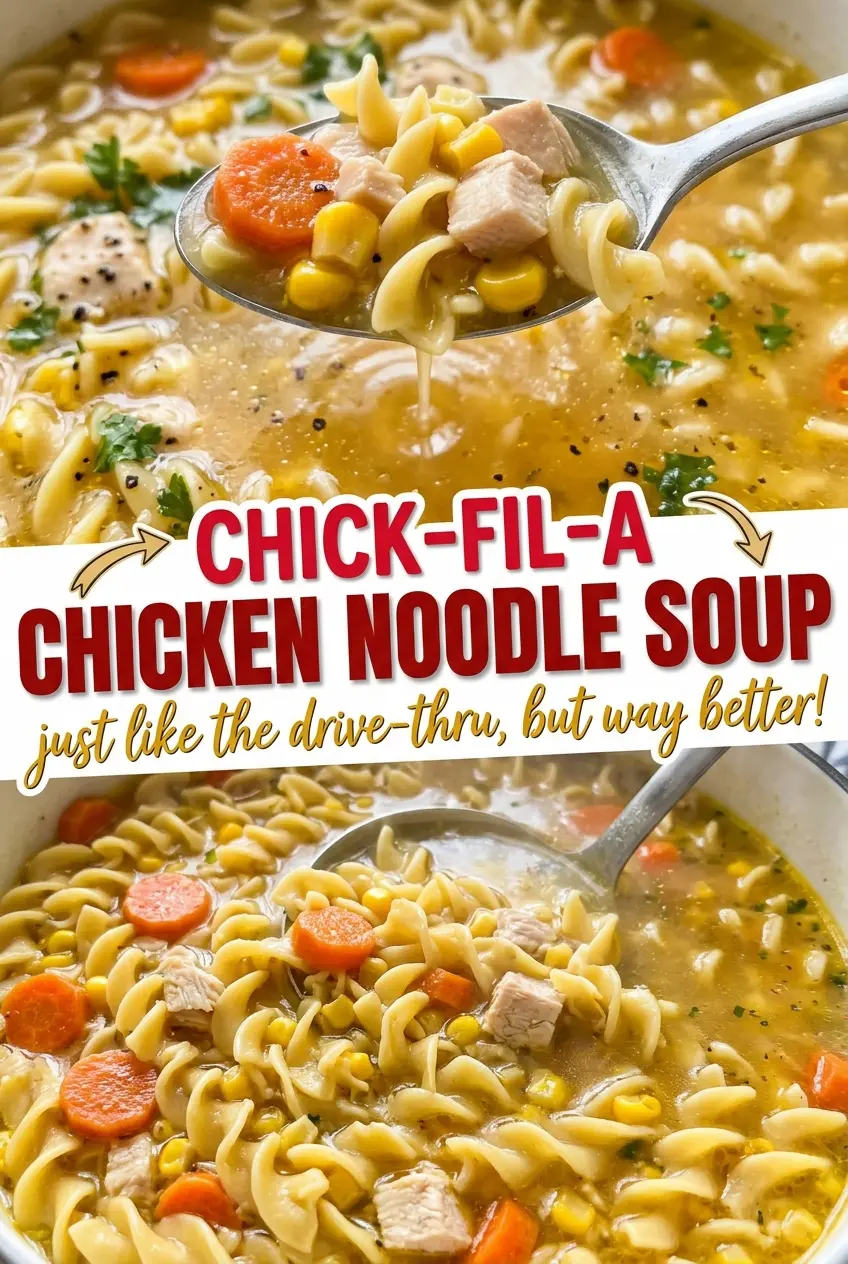
Chick-Fil-A Chicken Noodle Soup (Copycat)
Ingredients
Equipment
Method
- Bring the chicken broth and water to a boil in a large pot over high heat. Look for rolling bubbles across the surface before adding vegetables.
- Add the carrots, celery, onion, garlic, dried parsley, dried thyme, and garlic powder, then reduce to a steady simmer. Simmer for 10 minutes, stirring occasionally, until the vegetables are just tender.
- Add the finely diced cooked chicken and corn kernels to the pot. Simmer for 5 minutes until the chicken is heated through and the broth looks clear and golden.
- Add the egg noodles (or small pasta) and simmer for 6-8 minutes until tender. Watch the noodles for doneness and keep the broth at a gentle simmer.
- Season with salt and pepper to taste. Taste for balance and serve right away so the noodles stay springy.