
Deep mahogany broth, fall-apart beef, and vegetables that hold their shape through hours of slow cooking are what make this Crock Pot beef stew worth keeping on repeat. The beef turns spoon-tender without drying out, the potatoes soak up the broth without turning mushy, and the tomatoes plus Worcestershire add the kind of depth you usually only get from a stew that’s been babysat on the stove all afternoon.
The trick is in the layering and the finish. Putting the vegetables on the bottom keeps them in the cooking liquid where they soften evenly, while the beef sits on top and slowly sheds flavor into the stew as it cooks. The wine adds a little backbone, but if you skip it, extra broth still gives you a rich result. The cornstarch slurry goes in only at the end, after the beef is already tender, so the broth thickens cleanly instead of tightening up too soon.
Below, I’ll walk through the one step that keeps the stew from tasting flat, plus the easiest swaps if you want to keep it alcohol-free or stretch it into a bigger batch.
The broth thickened up beautifully at the end, and the beef was so tender it broke apart with a spoon. I loved that the potatoes and carrots stayed intact instead of turning to mush after 8 hours.
Save this Crock Pot beef stew for the kind of dinner that needs deep flavor, tender beef, and a broth that finishes thick and glossy.
The Reason This Stew Tastes Rich Instead of Watery
A lot of slow cooker beef stew comes out tasting thin because everything goes in at once and the pot never gets a chance to build depth before the vegetables start breaking down. This version avoids that trap by using tomato paste, Worcestershire sauce, and red wine as the backbone of the broth. Those ingredients don’t just add flavor; they give the liquid something to cling to so it tastes full instead of flat.
The other detail that matters is the cut of beef. Chuck has enough fat and connective tissue to get tender over a long cook, which is why it works here. Leaner stew meat can turn dry and stringy before the broth has a chance to round out. If your stew has tasted bland before, the problem usually wasn’t the slow cooker itself — it was not giving the broth enough support up front.
What Each Ingredient Is Actually Doing in This Stew
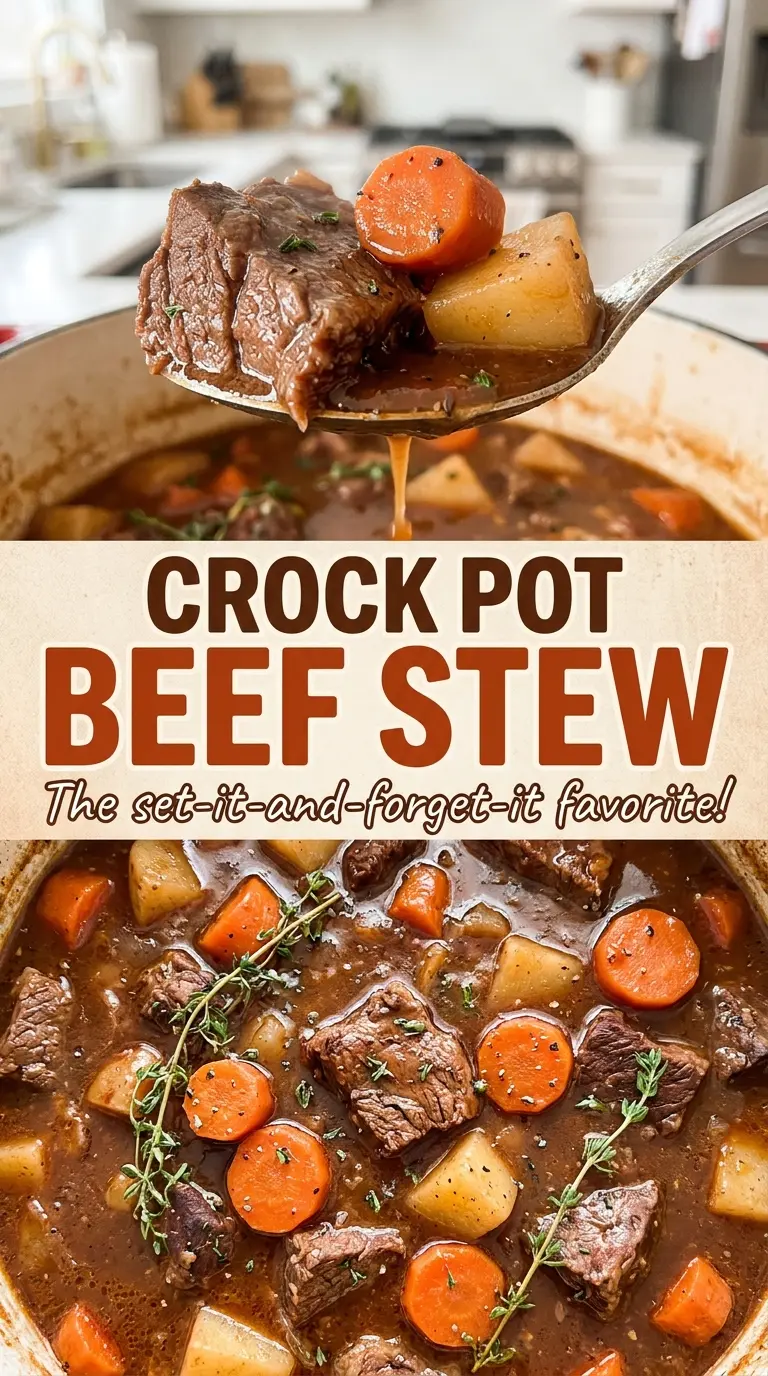
- Beef chuck — This is the cut that turns silky after hours of low heat. It needs time, not high heat, and the marbling is what keeps it from drying out. Cut it into larger cubes so it can hold together through the long cook.
- Baby potatoes — They’re sturdy enough to keep their shape and absorb the broth without falling apart. Halving them gives you enough surface area for flavor while still protecting the texture.
- Tomato paste and diced tomatoes — The paste adds concentration and body, while the tomatoes bring acidity that keeps the stew from tasting heavy. Don’t skip the paste; it’s one of the reasons the broth looks and tastes deeper.
- Red wine — It adds a dark, savory note that beef broth alone can’t quite match. If you don’t want to cook with wine, extra beef broth works, but the stew will taste a little less layered.
- Worcestershire sauce — This is the quiet ingredient that makes people ask what you did differently. It adds salt, tang, and a little fermented depth, which helps the broth taste finished.
The Slow Cooker Timing That Keeps the Beef Tender and the Vegetables Intact
Building the Base First
Start with the potatoes, carrots, celery, and onion on the bottom of the slow cooker. They sit in the broth and soften evenly there, while the beef above them slowly seasons the pot as it cooks. If you bury the beef under the vegetables, the meat can end up stewing unevenly and the texture gets muddier.
Letting the Beef Cook Low and Slow
Season the beef well before it goes in, then add the broth, wine, tomatoes, paste, Worcestershire, herbs, and garlic. Once the lid goes on, leave it alone. Lifting the lid lets heat escape and stretches the cooking time, which matters when you’re trying to get beef that pulls apart cleanly instead of chewing like pot roast that stopped too soon.
Thickening at the End
Remove the bay leaves after the beef is tender, then stir in the cornstarch slurry. Give the stew another 20 to 30 minutes on High so the broth turns glossy and lightly thickened. If you add the slurry too early, the stew can tighten before the beef is done and the vegetables can overcook while the liquid gets pasty.
How to Adapt This for Different Needs Without Losing the Stew Personality
Alcohol-Free Version
Use extra beef broth instead of the wine. The stew will still be savory and rich, but it loses a little of the rounded acidity that wine brings, so the tomato paste and Worcestershire become more important for depth.
Gluten-Free Stew
This can be gluten-free if your Worcestershire sauce is certified gluten-free. Cornstarch is already doing the thickening here, so you don’t need any flour-based swap to keep the broth thick and glossy.
Make It Heartier
Add mushrooms in the last 2 hours of cooking if you want an earthier stew without turning the pot muddy. You can also add peas during the last 15 minutes for a pop of color and sweetness without overcooking them.
Storage and Reheating
- Refrigerator: 4 days. The stew thickens as it sits, and the potatoes will soften a little more overnight.
- Freezer: It freezes well for up to 3 months, but the potatoes can get a slightly softer texture after thawing. Cool it completely before freezing in airtight containers.
- Reheating: Warm it gently on the stove over medium-low heat or in the microwave in short bursts, stirring between each one. If it looks too thick, add a splash of broth before heating; boiling it hard can make the beef stringy and the vegetables break apart.
Answers to the Questions Worth Asking

Crock Pot Beef Stew
Ingredients
Equipment
Method
- Season the beef generously with salt and pepper.
- Place the potatoes, carrots, celery, and onion in the bottom of the slow cooker.
- Nestle the beef on top, then add the garlic, beef broth, red wine or extra beef broth, diced tomatoes, tomato paste, Worcestershire sauce, dried thyme, dried rosemary, and bay leaves.
- Cook on Low for 8-10 hours or High for 4-5 hours until the beef is fall-apart tender, then visually check that the vegetables are soft and the beef shreds easily.
- Remove the bay leaves, then stir in the cornstarch slurry to disperse it evenly through the stew.
- Cook on High for 20-30 minutes until the broth thickens and coats the back of a spoon.
- Season with salt and pepper to taste, stirring until the flavor is balanced.