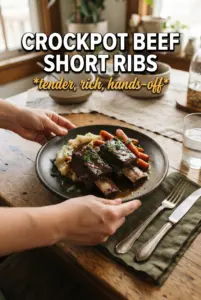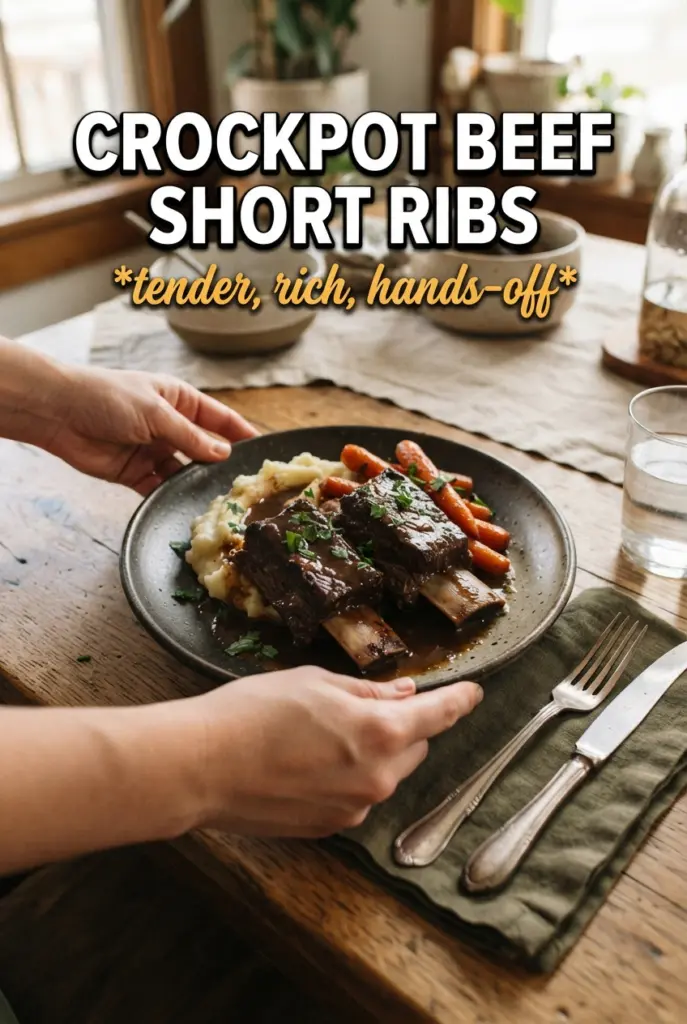
These crockpot beef short ribs turn out deeply savory, spoon-tender, and rich enough to coat a pile of mashed potatoes without feeling heavy. The meat falls off the bone after a long, slow braise, and the sauce gets that dark, glossy finish that tastes like it simmered all day because it did.
What makes this version work is the sear at the beginning and the slow, steady heat after that. Browning the ribs first builds flavor you just can’t get from the slow cooker alone, and the red wine, tomato paste, and Worcestershire sauce give the braising liquid enough depth to stand up to the richness of the beef. The vegetables melt into the sauce as they cook, which is exactly what you want here.
You’ll find the exact order that keeps the ribs tender instead of stringy, plus the little finishing step that thickens the sauce without turning it cloudy. If you’ve had short ribs that came out bland or greasy, this version fixes both problems.
The ribs were meltingly tender and the sauce thickened up beautifully after the cornstarch slurry. I served it over mashed potatoes and my husband kept going back for more of the gravy.
Love these slow-cooked beef short ribs? Save them to Pinterest for a rich, fall-off-the-bone dinner with mashed potatoes and glossy red wine gravy.
The Sear Is What Keeps These Short Ribs from Tasting Flat
Slow cookers are great at tenderness, but they don’t create depth on their own. If you skip the browning step, the ribs can taste more boiled than braised, even after eight hours. That hot skillet sear gives you the dark crust and the savory base that carry the whole dish.
The other mistake is packing everything in raw and hoping the long cook will fix it. Short ribs need a little structure at the start. Browning first, then laying them over the vegetables, keeps the meat from sitting in a pool of its own liquid and helps the sauce develop around the beef instead of under it.
What Each Ingredient Is Actually Doing in This Dish
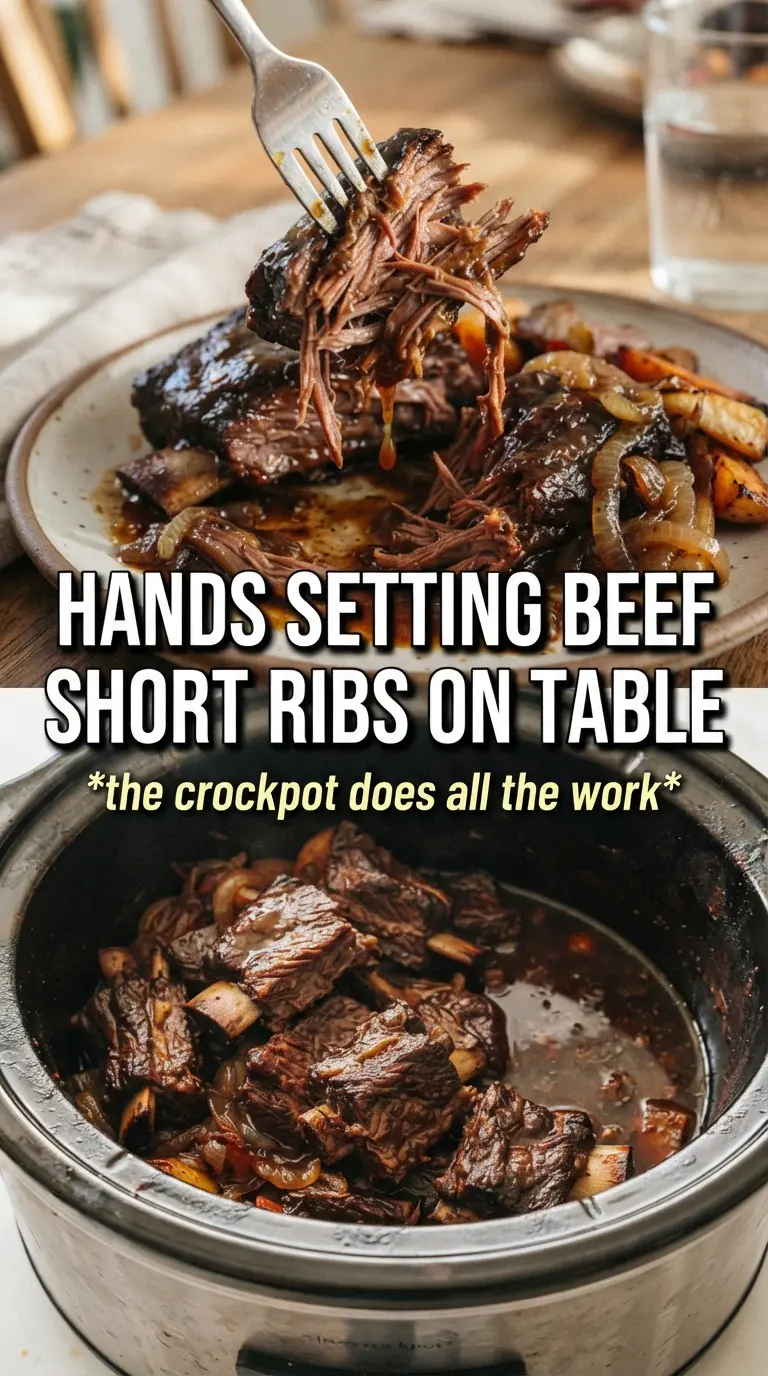
- Bone-in beef short ribs — These are the star because the bones and connective tissue melt into the sauce during the long cook. Boneless short ribs will work, but they usually finish a little less rich and a little less silky.
- Red wine — This gives the braising liquid backbone and brightness. Use something dry that you’d actually drink; a sweet wine will make the sauce taste muddled.
- Tomato paste — A tablespoon or two adds concentration and color without making the dish taste like tomato sauce. Cook it briefly in the liquid so it loses that raw edge.
- Worcestershire sauce — This is the quiet ingredient that makes the broth taste finished. It adds salt, acid, and a little savory depth that beef broth alone can’t match.
- Carrots, onion, celery, and garlic — They don’t just flavor the sauce; they also keep the braising liquid from tasting one-note. Dice them evenly so they soften at the same pace and help build body in the crockpot.
- Thyme, rosemary, and bay leaves — These herbs can stand up to long cooking without disappearing. Dried herbs work fine here, but if you use fresh rosemary, keep the amount modest because it can take over fast.
The 8-Hour Part That Actually Matters
Building the Braising Base
Scatter the onion, garlic, carrots, and celery in the slow cooker first so they form a bed for the ribs. That keeps the meat from sticking and lets the vegetables flavor the liquid from the bottom up. Whisk the broth, wine, tomato paste, and Worcestershire until the tomato paste is fully dissolved; otherwise you can get little dense streaks instead of a smooth sauce.
Getting the Sear Right
Season the ribs well before they hit the hot skillet. You want a deep brown crust on every side, not a gray exterior with a few sear marks. If the pan is crowded, the meat will steam and you’ll lose the flavor that the browning step is supposed to create, so work in batches if you need to.
Slow Cooking Until the Meat Gives Up
Cook on Low for 7 to 8 hours until a fork slides in without resistance and the meat starts to pull away from the bone. If it still clings tightly, it needs more time; short ribs get tender late in the process, then suddenly turn perfect. Resist the urge to lift the lid again and again because each peek drops the temperature and slows the braise.
Finishing the Sauce Without Losing the Flavor
Lift the ribs out carefully, then skim off the excess fat from the surface of the braising liquid. Stir in the cornstarch slurry and cook on High for about 15 minutes until the sauce turns glossy and lightly coats a spoon. If the sauce looks thin at first, don’t panic; cornstarch needs a full minute or two at heat to thicken properly.
Three Ways to Change the Dish Without Losing What Makes It Work
For a gluten-free dinner
This recipe already leans naturally gluten-free as long as your beef broth and Worcestershire sauce are certified gluten-free. The texture stays the same, and the sauce still thickens cleanly with cornstarch instead of flour.
For a deeper, richer gravy
Add an extra half cup of wine and let the sauce reduce a little longer after the ribs come out. That gives you a bolder braising liquid with a more concentrated finish, but it also makes the wine note more noticeable, so use a dry one.
For a lighter version
Trim visible surface fat from the ribs before cooking and skim the braising liquid carefully at the end. You won’t lose tenderness, but the sauce will taste cleaner and sit a little lighter on the plate.
Swap the mashed potatoes
Polenta, creamy parsnip mash, or buttered egg noodles all work well under these ribs. The sauce is the anchor, so use a base that can soak up the braise instead of fighting it.
Storage and Reheating
- Refrigerator: Store the ribs and sauce in an airtight container for up to 4 days. The sauce will gel a bit when cold, which is normal.
- Freezer: These freeze well for up to 3 months. Cool completely, pack the ribs with plenty of sauce, and thaw overnight in the fridge before reheating.
- Reheating: Warm gently on the stovetop or in a covered dish in the oven at 325°F until hot. Add a splash of broth if the sauce has tightened too much, and don’t boil it hard or the meat can dry out.
The Questions That Come Up Before You Make Short Ribs in a Crockpot
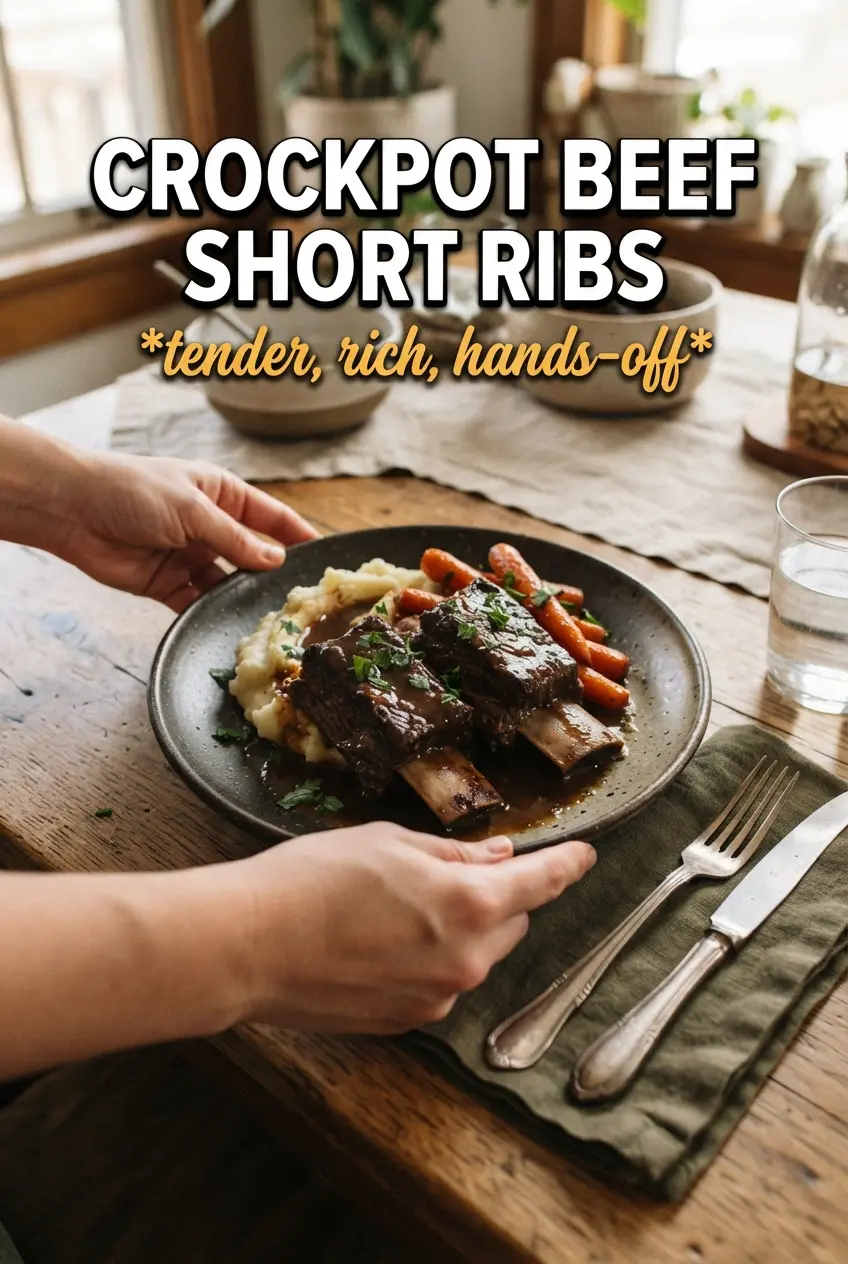
Crockpot Beef Short Ribs
Ingredients
Equipment
Method
- Season the short ribs generously with salt and pepper, then heat olive oil in a hot skillet until shimmering. Sear the ribs on all sides until deeply browned, about 6-10 minutes total, using a visual cue of dark caramelized crust.
- Add the diced onion, minced garlic, diced carrots, and diced celery to the Crockpot and spread into an even layer. Nestle the seared ribs on top so they sit partially supported by the vegetables.
- Whisk the beef broth, red wine, tomato paste, and Worcestershire sauce until smooth. Pour the mixture over the ribs until the liquid reaches at least halfway up the meat.
- Add the dried thyme, dried rosemary, and bay leaves to the crockpot, spreading them around the ribs. Cook on Low for 7-8 hours, until the meat is falling off the bone, with the sauce turning dark red and aromatic.
- Remove the ribs from the crockpot and set aside, then remove the bay leaves from the braising liquid. Skim off excess fat from the top using a spoon, leaving a cleaner, darker sauce.
- Stir cornstarch into a slurry with a small amount of the hot braising liquid, then whisk it back into the crockpot. Cook on High for 15 minutes, until the sauce thickens to a glossy coating that clings to the ribs.
- Serve the ribs over mashed potatoes and spoon the thickened braising sauce on top. Arrange with visible sauce pooling on the potatoes for a rich, braised look.