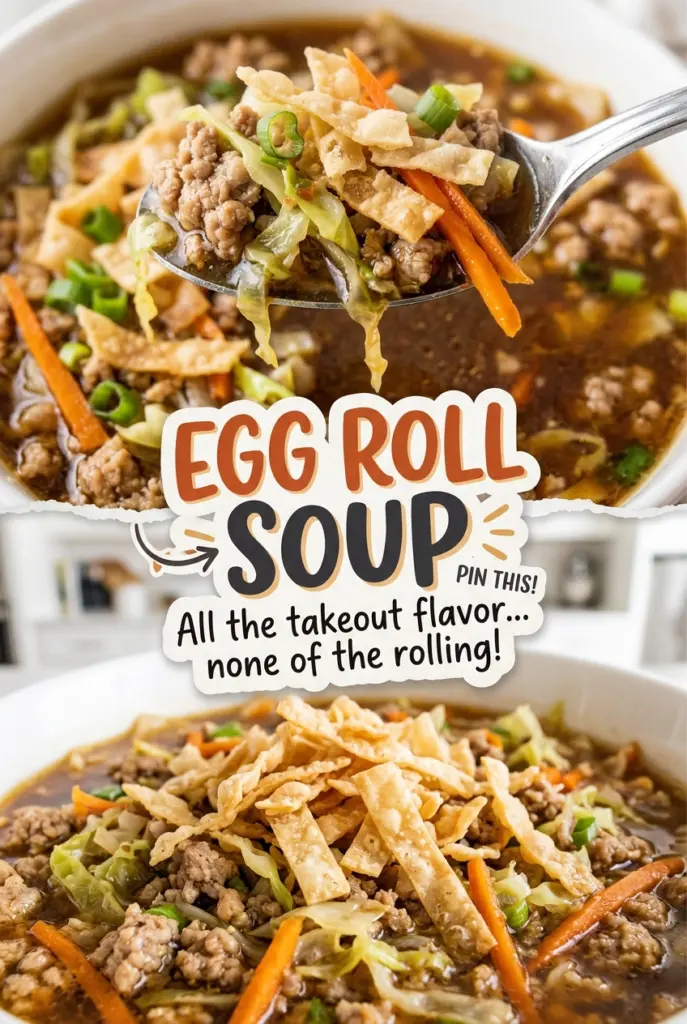
Egg roll soup delivers the same savory, ginger-scented comfort as a takeout favorite, but in a bowl that eats lighter and cooks fast. The broth stays clean and punchy, the cabbage softens just enough to feel silky, and the pork gives it that unmistakable egg-roll filling flavor without the wrapper. Crisp wonton strips on top bring back the crunch you’d miss otherwise, so every spoonful has a little contrast.
What makes this version work is the way the aromatics and seasonings build in layers. Browning the pork first creates the base, then garlic and ginger get just enough time in the pot to perfume the broth without turning bitter. The soy sauce, sesame oil, rice vinegar, and sriracha are balanced enough to taste savory and bright, not flat or overly salty, which matters a lot in a soup this simple.
Below, I’ve included the small adjustments that keep the broth from tasting thin and the vegetables from turning mushy. If you like a stronger takeout-style finish, there’s also a simple way to dial up the sesame and vinegar at the end instead of guessing at the start.
The broth had that exact egg roll taste my husband likes, and the cabbage stayed tender but not mushy. I added the wonton strips right at the table and they stayed crisp until the last bite.
Save this egg roll soup for the nights when you want all the savory takeout flavor without the extra fuss.
The Trick to Keeping Egg Roll Soup Brothy, Not Muddy
Egg roll soup falls apart when the pot gets overcrowded or the vegetables cook too long. Cabbage releases water as it softens, so if you simmer it hard for too long, the broth can lose its punch and taste washed out. The goal is a clear, savory broth with tender vegetables that still have some shape.
That starts with browning the meat well instead of steaming it. Those browned bits at the bottom carry a lot of the flavor, and they dissolve into the broth once the liquid goes in. The vegetables go in after the broth has already been seasoned, which helps them absorb flavor instead of diluting it.
- Ground pork — Pork gives this soup the most egg-roll-like taste because it’s rich and savory. Ground chicken works too, but it’s leaner, so you may want to add a little extra sesame oil for depth.
- Cabbage — Thin shreds cook quickly and stay pleasantly tender. Thick chunks take longer and can turn limp before the broth is ready.
- Fresh ginger and garlic — These need only a short cook in the hot fat. If they brown, they’ll turn sharp and bitter instead of warm and fragrant.
- Rice vinegar — This is what keeps the soup from tasting heavy. Don’t swap in a strong dark vinegar here; you want brightness, not acidity that takes over.
Building the Soup in the Right Order

Brown the pork in a large pot over medium-high heat and break it up as it cooks. You want it cooked through and lightly browned, not gray and wet. If the pot looks crowded and the meat starts steaming, let it sit undisturbed for a minute or two so it can actually color. Drain off excess fat if there’s a lot in the pot, but leave enough behind to cook the garlic and ginger.
Add the garlic and ginger next and cook them just until fragrant, about a minute or two. Once they start smelling fresh and toasty, move on. If they stay in the pot too long before the broth goes in, the garlic can get harsh and the ginger can lose its brightness.
Pour in the broth, soy sauce, sesame oil, rice vinegar, and sriracha, then bring everything to a boil before adding the cabbage and carrots. The simmer should stay gentle once the vegetables go in. Hard boiling will break down the cabbage too fast and pull the soup away from that crisp-tender texture that makes it feel like egg roll filling in broth form. Stir in the green onions at the end so they stay fresh and slightly sharp.
What to Change When You Want It a Little Different
Make it with ground chicken
Ground chicken keeps the soup lighter and a little leaner. Because chicken doesn’t bring as much richness as pork, the sesame oil matters more here, and a final taste at the end helps you decide if it needs a touch more salt or soy sauce.
Make it gluten-free
Use a gluten-free tamari or coconut aminos in place of regular soy sauce, and choose gluten-free crispy toppings if you want the same crunch. The broth will still taste savory and balanced, though coconut aminos reads a little sweeter than soy sauce.
Make it spicier
Add more sriracha at the end instead of loading up the pot early. Heat blooms fast in hot broth, so it’s easier to sharpen the soup after it’s cooked than to calm it down once it’s too aggressive.
Storage and Reheating
- Refrigerator: Keeps well for 3 to 4 days. The cabbage softens a bit more as it sits, but the flavor gets even better by the next day.
- Freezer: Freezes well for up to 2 months, though the cabbage will be softer after thawing. If you know you want leftovers for freezing, undercook the vegetables slightly so they hold up better later.
- Reheating: Warm it gently on the stove over medium-low heat until hot. A hard boil can make the cabbage go limp and can dull the broth, so slow reheating keeps the texture closest to fresh.
Questions I Get Asked About This Recipe
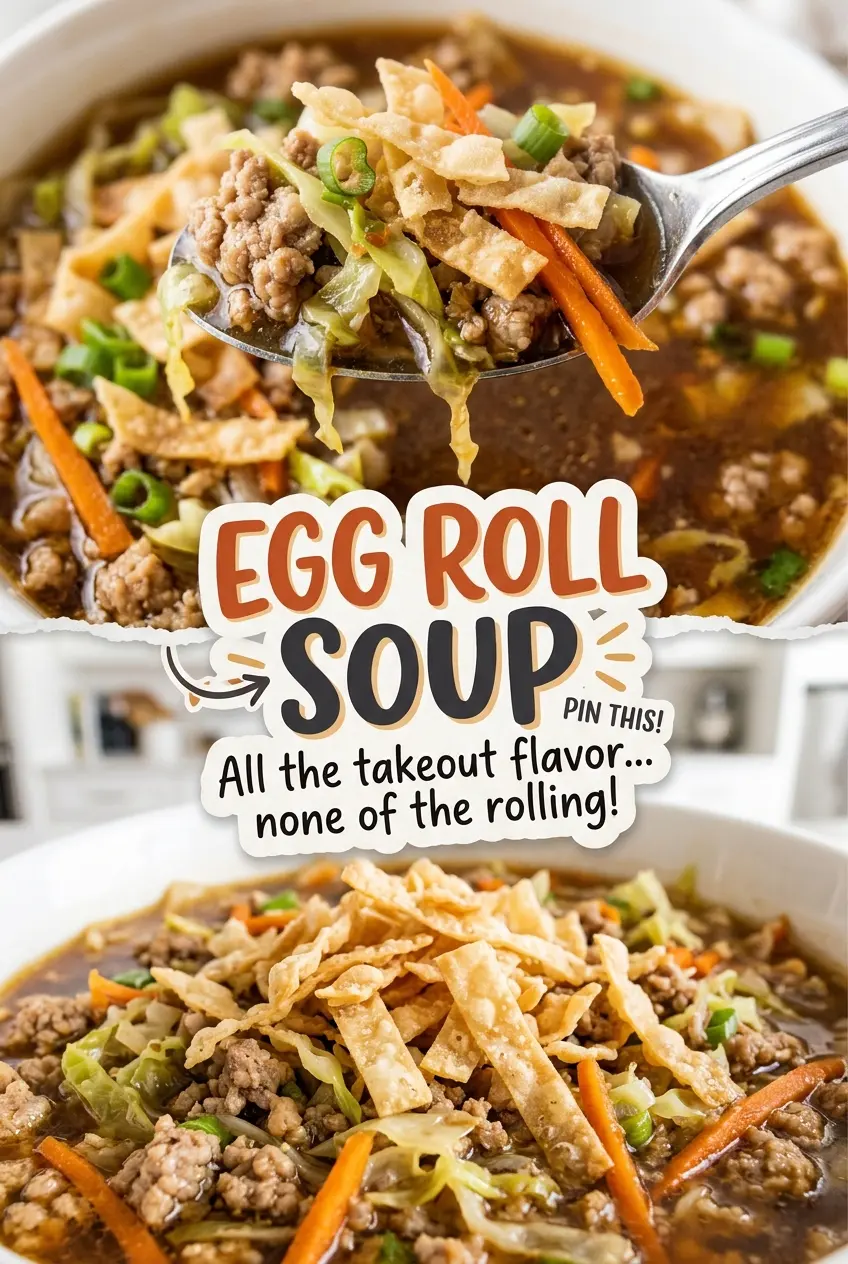
Egg Roll Soup
Ingredients
Equipment
Method
- Heat the vegetable oil in a large pot over medium-high heat, then add the ground pork (or chicken) and break it up as it cooks until browned, about 8-10 minutes. Drain excess fat so the broth stays light.
- Add the minced garlic and grated ginger to the pot and cook for 1-2 minutes until fragrant. Stir to prevent sticking at the bottom of the pot.
- Pour in the chicken broth, soy sauce, sesame oil, rice vinegar, and sriracha, then bring the mixture to a boil over high heat. This should look actively bubbling across the surface.
- Add the shredded cabbage and carrots, then reduce to a simmer and cook 8-10 minutes until the vegetables are tender. Visual cue: the cabbage should soften but not collapse.
- Stir in the sliced green onions, then season with salt and pepper to taste. Let it simmer 1 minute so the onions stay bright.
- Ladle the soup into bowls and top with crispy wonton strips, sesame seeds, and extra green onions if desired. Serve immediately so the wonton strips stay crisp.