
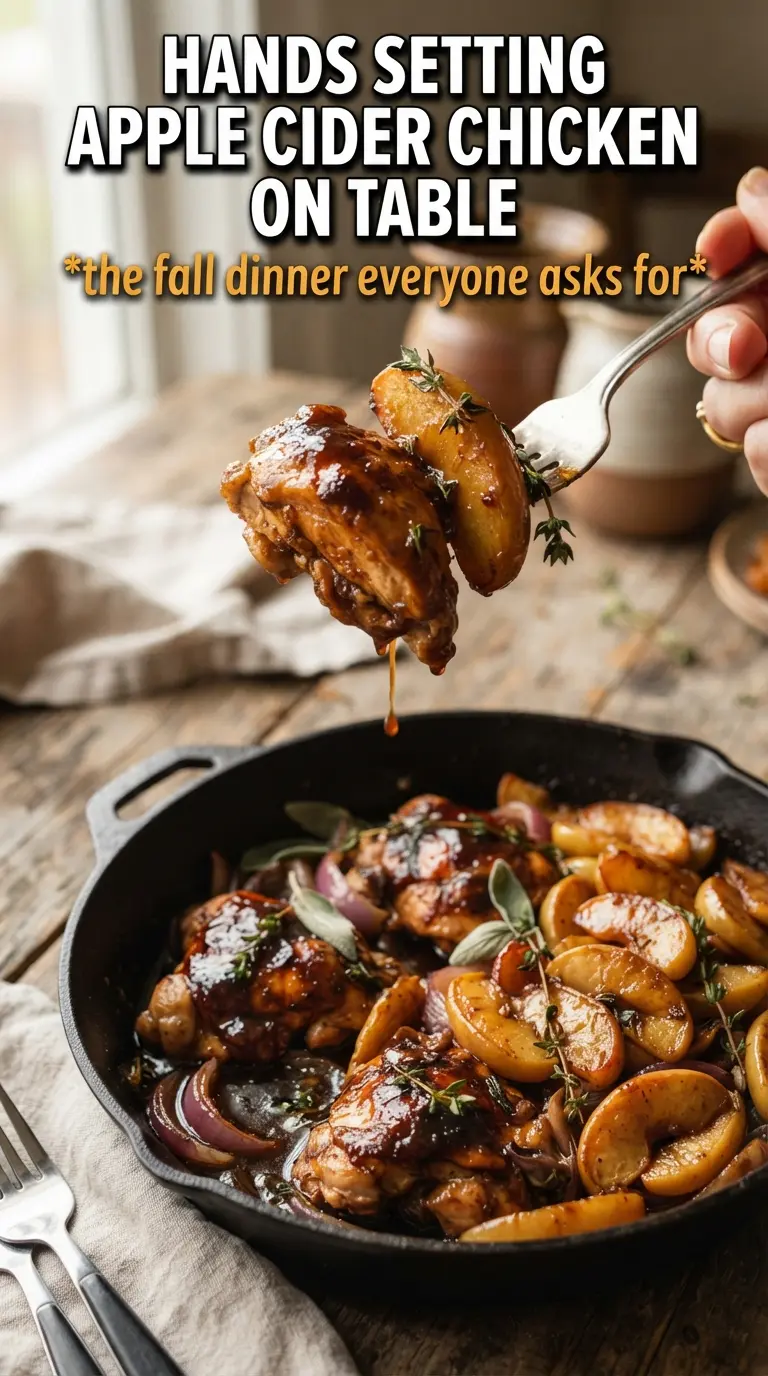
Golden chicken thighs tucked into a glossy apple cider cream sauce are the kind of dinner that stops conversation for a minute. The skin stays crisp enough to give you that first satisfying bite, while the sauce turns silky and a little tangy from cider and Dijon, with soft apples and shallots melting into the pan. It tastes like a dish that took much longer than it did, which is usually a good sign you’ve landed on a keeper.
The trick here is building layers in the same pan instead of rushing the sauce in a separate pot. Browning the chicken first leaves behind fond, and that browned coating becomes the backbone of the sauce once the cider hits the pan. The apples are cooked just enough to soften and sweeten without disappearing, so you get little tender bites instead of apple mush.
Below, I’ve laid out the parts that matter most: how to keep the chicken skin from going soft, why the cider should reduce before the cream goes in, and the small swaps that still keep the dish feeling French and balanced.
The cider sauce thickened up beautifully, and the apples held their shape instead of turning to mush. My husband kept spooning extra sauce over his chicken and asked if we could have it again next week.
Save this French Apple Cider Chicken for the night you want crisp chicken, caramelized apples, and a cider-cream sauce that comes together in one pan.
The One Thing That Keeps the Chicken Skin Crisp in a Cream Sauce
The fastest way to ruin a dish like this is to let the chicken sit in the sauce too early. Skin-on thighs need direct heat first so the fat renders and the skin turns deep golden before any liquid goes in. If you skip that step or rush it, you don’t get crisp chicken — you get pale, rubbery skin floating in gravy.
The other important part is the order of the sauce. The cider needs a few minutes in the hot pan to pick up the browned bits and reduce slightly before the broth and cream go in. That keeps the finished sauce tasting concentrated instead of thin and sweet. Dijon pulls everything together and gives the sauce a clean edge so the cream doesn’t taste flat.
What Each Ingredient Is Doing in This Dish
- Bone-in, skin-on chicken thighs — These hold up to searing and simmering far better than breasts. The bone keeps the meat juicy, and the skin gives you the flavor and texture that make the whole dish feel finished.
- Hard apple cider or fresh apple cider — This is the backbone of the sauce. Hard cider gives a slightly sharper, drier flavor, while fresh cider makes the sauce sweeter and rounder. Either works; if you use fresh cider, let it reduce a little longer so the sauce doesn’t lean sugary.
- Apples — Use a firm apple that holds its shape, like Honeycrisp, Pink Lady, or Granny Smith. Soft apples collapse too fast and turn the sauce jammy.
- Shallots and garlic — Shallots bring a gentle sweetness that feels more polished than onion here, and garlic deepens the savory side without taking over. Slice the shallots thin so they soften into the sauce instead of staying sharp.
- Dijon mustard — This adds body and a little bite. It also helps the cream stay balanced, especially if your cider is on the sweeter side.
- Heavy cream — Use the real thing. Half-and-half can work in a pinch, but it won’t give you the same silky finish and is more likely to thin out once it simmers.
Building the Sauce in the Same Pan, Without Breaking It
Searing the Chicken Properly
Season the thighs well, then place them skin-side down in the hot olive oil and butter and leave them alone for several minutes. You want to hear a steady sizzle and see the skin release on its own before you try to turn it. If it sticks, it needs another minute. Once the skin is a deep golden brown, flip briefly and remove the chicken so the rest of the sauce can build in the rendered fat.
Softening the Apples and Shallots
Add the shallots and apple slices to the same pan and cook them until the edges start to brown and the shallots turn translucent. That step does more than soften them; it pulls sweetness out of the apples and keeps the sauce from tasting flat. Stir in the garlic and thyme only for the last minute, because garlic burns fast and turns bitter if you give it too much heat.
Reducing the Cider Before the Cream
Pour in the cider and let it bubble for a couple of minutes so the sharp alcohol note cooks off and the flavor concentrates. Then add the broth and Dijon and return the chicken skin-side up. Cover and simmer gently until the thighs are cooked through; a hard boil will tighten the meat and make the sauce greasy. The cream goes in near the end, after the chicken is done, so it stays smooth instead of separating from too much heat.
Finishing to the Right Texture
After the cream goes in, simmer just long enough for the sauce to coat the back of a spoon. If it still looks thin, give it a few more minutes uncovered. If it looks too thick, a splash of broth loosens it back up. Taste at the end and adjust salt and pepper only after the sauce has reduced, since that’s when the seasoning settles into its final balance.
What to Change When You Need a Different Version
Dairy-Free Version With a Lighter Finish
Swap the heavy cream for full-fat coconut milk or an unsweetened oat-based cooking cream. Coconut milk will make the sauce a little richer and slightly sweeter, while oat cream stays closer to the original flavor. Keep the heat low when you add it so the sauce stays smooth.
Using Chicken Breasts Instead of Thighs
You can use bone-in chicken breasts, but they need less simmering time and dry out faster. Sear them as directed, then shorten the covered simmer until they reach 165°F at the thickest part. The sauce will still work, but thighs give you a more forgiving, juicier result.
Making It Gluten-Free
This recipe is naturally gluten-free as written as long as your cider and broth are certified gluten-free. That matters more than people think, because some broths and ciders use additives or flavorings that can introduce gluten. No other changes are needed.
Adding More Vegetables to Make It a Full Pan Dinner
Add sliced mushrooms with the shallots, or tuck in baby potatoes that have been parboiled first. Mushrooms deepen the savory side of the sauce, while potatoes turn it into a fuller meal without changing the flavor balance. Raw potatoes won’t finish in time, so give them a head start if you want them tender.
Storage and Reheating
- Refrigerator: Store leftovers in an airtight container for up to 3 days. The sauce will thicken as it chills and the chicken skin will soften.
- Freezer: It freezes, but the cream sauce may separate a little after thawing. If you plan to freeze it, stop before adding the cream and stir that in after reheating.
- Reheating: Warm it gently in a covered skillet over low heat with a splash of broth to loosen the sauce. High heat is what causes the cream to split and the chicken to dry out.
Answers to the Questions Worth Asking

French Apple Cider Chicken
Ingredients
Equipment
Method
- Season the chicken thighs well with salt and pepper. Heat olive oil and 1 tbsp butter in a Dutch oven over medium-high heat and sear chicken skin-side down for 6-8 minutes until golden.
- Flip the thighs and cook for 3 more minutes until the second side is lightly browned. Remove the chicken to a plate.
- In the same Dutch oven, sauté shallots and apple slices for 4-5 minutes until golden. Add garlic and fresh thyme and cook for 1 minute.
- Deglaze with the cider and cook for 2 minutes. Add chicken broth and Dijon mustard, stirring to combine.
- Return chicken skin-side up to the sauce. Cover and simmer for 20 minutes until the chicken is cooked through.
- Stir in heavy cream and simmer for 5 minutes to thicken slightly. Season with salt and pepper to taste.