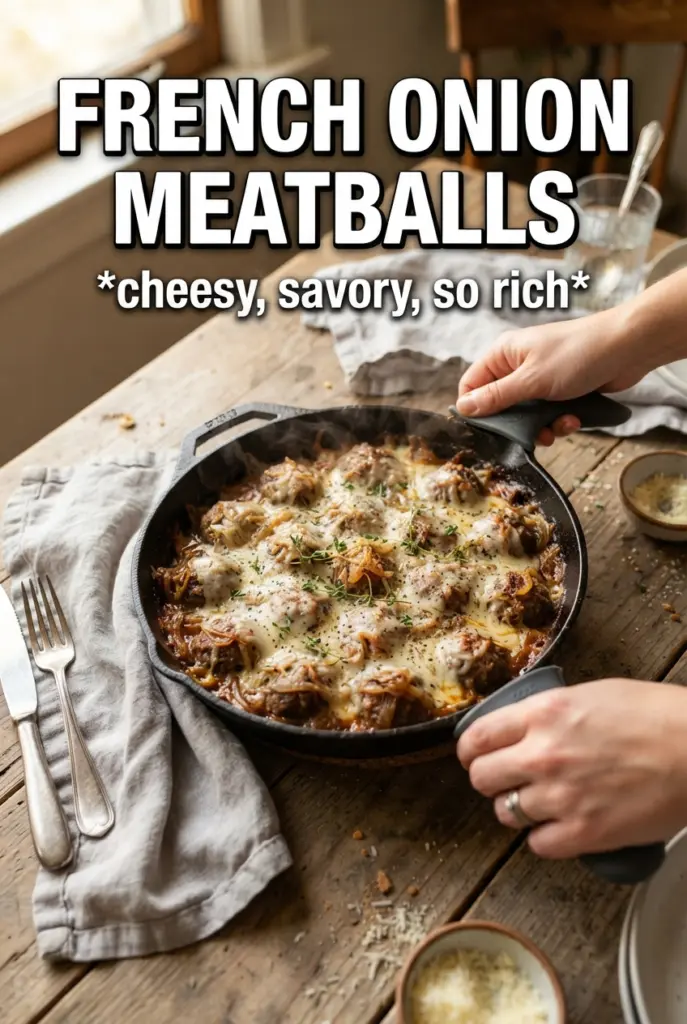
French onion meatballs hit that sweet spot between cozy and a little dramatic: deeply browned beef, slow-sweet onions, savory broth, and a blanket of melted cheese that turns golden and bubbly under the broiler. The meatballs stay tender, the sauce turns rich without becoming heavy, and every bite tastes like the best part of French onion soup with enough substance to count as dinner.
What makes this version work is the layering. The meatballs are browned first so they pick up flavor before they ever meet the onion broth, and the onions are cooked low and slow until they collapse into a jammy, caramelized base. A splash of dry white wine or broth loosens the pan and pulls up the browned bits, which gives the sauce that deep savory edge instead of just tasting like onions in stock.
Below, I’ll walk you through the one part that matters most: getting the onions properly caramelized without rushing them. I’ve also included the best cheese choices, a few practical swaps, and the reheating method that keeps the sauce silky instead of greasy.
The onions cooked down into this deep sweet sauce and the cheese on top got perfectly browned under the broiler. I served it with crusty bread and there wasn’t a spoonful left.
These French onion meatballs are perfect when you want that caramelized onion sauce and melted cheese crust without making soup and dinner separately.
The Onion Phase Is Where the Whole Dish Gets Its Depth
The biggest mistake with French onion anything is trying to move the onions along too fast. If they brown before they soften, the sauce tastes sharp and one-note instead of sweet, savory, and rounded. You want them to give up their moisture first, then slowly turn deep gold, then finally collapse into a dark, jammy layer that coats the pan.
The meatballs matter too, but not because they need a fancy mix. They need enough binder to stay tender after simmering in the sauce, and they need that first browned crust to add flavor to the broth. If you skip the browning step, the sauce has less to grab onto and the final dish tastes flatter.
- Browned meatballs — The pan-seared surface gives the sauce a meaty base and helps the meatballs hold together during simmering.
- Onions — Yellow onions are the best choice here because they caramelize well and turn sweet without needing extra sugar.
- Dry white wine or beef broth — Wine adds acidity and helps deglaze the pan, but broth works if that’s what you have. Use a dry wine, not something sweet.
- Gruyere or provolone — Gruyere gives the most classic French onion flavor; provolone melts beautifully and is a little milder. Pre-shredded cheese works in a pinch, but freshly shredded melts more smoothly.
What Each Ingredient Is Actually Doing in This Recipe

- Primary ingredient (the star) — Quality matters most. Choose the best you can find.
- Cooking medium (oil, butter, or broth) — This carries flavors and prevents dryness.
- Seasonings (salt, pepper, spices, herbs) — Layer flavors so nothing overpowers. Build depth gradually.
- Aromatics (garlic, onion, herbs) — Cook with fat to bloom flavors. Become the foundation.
- Supporting ingredients — Complement the main ingredient without overpowering it.
- Sauce or liquid (if applicable) — Brings flavors together. Balance richness with acid.
- Acid (lemon, vinegar, wine, or other) — Brightens and prevents flat-tasting results.
- Final finish (garnish, glaze, or sauce) — Prevents one-dimensional taste and adds visual appeal.
Building the Sauce Without Losing the Meatballs
Brown the Meatballs First
Mix the beef with breadcrumbs, egg, Worcestershire, garlic powder, onion powder, salt, and pepper until just combined. Overmixing makes the meatballs dense, and dense meatballs turn springy instead of tender. Roll them into 1.5-inch balls and brown them in butter until the outside is deeply colored, then set them aside. They do not need to cook through at this stage; they finish gently in the sauce.
Caramelize the Onions Slowly
Use the same skillet and let the onions cook in the butter over medium-low heat. Stir them often enough to keep them from burning, but not so often that they never catch and color. If the onions start sticking hard or drying out before they’ve softened, lower the heat and add a splash of broth to keep the sugars from scorching. This part takes patience, and that’s exactly why the sauce tastes rich instead of raw.
Build the Broth and Finish the Bake
Deglaze the pan with the wine, scraping up every browned bit from the bottom, then add the broth, Worcestershire, and thyme. Return the meatballs to the sauce and let them simmer until cooked through and flavorful. If your skillet isn’t oven-safe, move everything to a baking dish before adding the cheese. Broil just until the top is melted, blistered, and spotty brown. The cheese should look creamy and browned at the edges, not dry and crusted.
What to Change When You Need a Different Version
Gluten-Free Meatballs That Still Hold Together
Use certified gluten-free breadcrumbs or crushed gluten-free crackers in the meatballs. The texture stays tender, and the egg still gives you the structure you need. If you use a very dry crumb, add a tablespoon of broth so the mixture doesn’t turn crumbly.
Dairy-Free Version With the Same Savory Base
Swap the butter for olive oil or a dairy-free butter substitute and use a good melting dairy-free cheese if you want the broiled top. The sauce will still be rich from the onions and beef broth, though it won’t have quite the same sweet finish you get from real butter and Gruyere.
Make It Lighter With Ground Turkey
Ground turkey works, but it needs the browned onions and cheese more than beef does, since turkey is milder. Add an extra tablespoon of Worcestershire and don’t overcook the meatballs during browning or they’ll dry out before they reach the oven.
Storage and Reheating
- Refrigerator: Store covered for up to 4 days. The sauce thickens as it chills, so it will look a little tighter the next day.
- Freezer: Freeze the meatballs and onion sauce without the cheese topping for up to 2 months. Add the cheese fresh before reheating and broiling.
- Reheating: Reheat covered in a 325°F oven or on the stovetop over low heat with a splash of broth. High heat can make the sauce separate and can tighten the meatballs.
Answers to the Questions Worth Asking
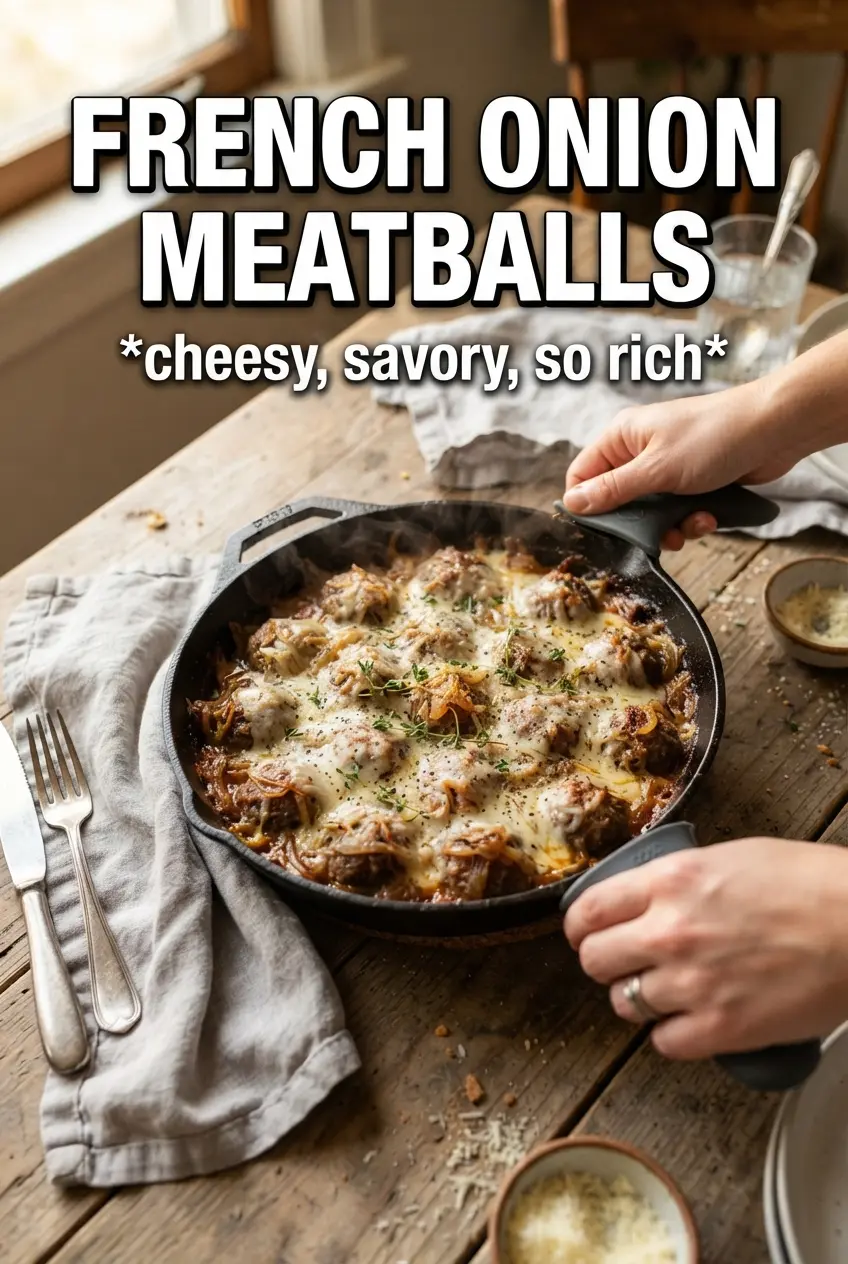
French Onion Meatballs
Ingredients
Equipment
Method
- In a mixing bowl, combine ground beef, breadcrumbs, egg, Worcestershire, garlic powder, onion powder, and salt and pepper until evenly incorporated. Roll into 1.5-inch balls and set aside as you form them.
- Heat 1 tbsp butter in a cast iron skillet over medium-high heat, then brown the meatballs on all sides. Continue until well-browned, then transfer to a plate and set aside.
- Lower the heat to medium-low and add the remaining butter to the same skillet with the browned bits. Caramelize onions, stirring occasionally, for 30-35 minutes until deep golden and soft.
- Pour in the dry white wine or beef broth to deglaze, scraping up browned fond from the pan. Cook for 1-2 minutes until the liquid looks slightly reduced.
- Add beef broth, Worcestershire, and fresh thyme to the skillet and stir to combine. Bring to a gentle simmer, then add the meatballs back into the sauce.
- Simmer the meatballs in the sauce for 15 minutes, turning them once so they stay coated. The broth should look lightly thickened and the meatballs should be heated through.
- Transfer to a baking dish if your skillet isn’t oven-safe, then scatter the Gruyere or provolone over everything. Make sure the cheese covers the surface in an even layer.
- Broil for 3-4 minutes until the cheese is golden and bubbly. Pull from the oven when the top is browned with blistered spots.