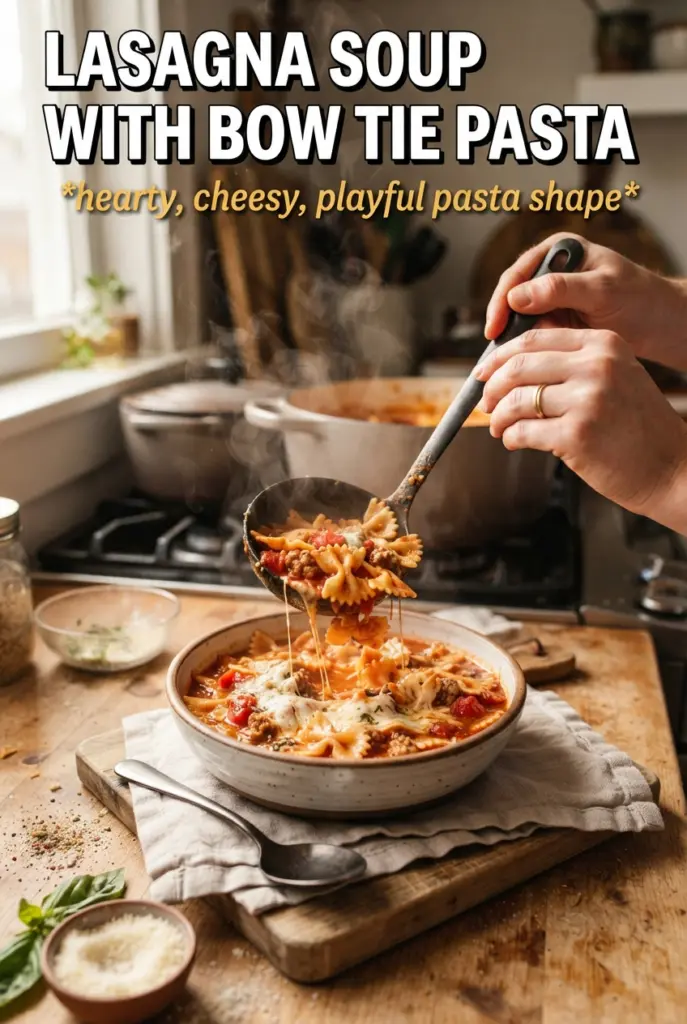
All the comfort of lasagna, but in a bowl you can eat with a spoon. The broth turns rich and tomatoey, the Italian sausage gives it a savory backbone, and the farfalle catches little pockets of sauce in every bite. The cheese dollop melts into the hot soup and gives you that familiar creamy, lasagna-like finish without layering noodles and baking for an hour.
What makes this version work is the balance between the pasta and the broth. Bow tie pasta soaks up more liquid than lasagna noodles, so the soup needs a little extra broth to stay brothy instead of turning into a thick pasta stew. The tomato paste gets cooked with the onion and garlic long enough to lose its raw edge, which gives the whole pot a deeper, slower-cooked flavor in a short amount of time.
Below, I’ve included the small timing details that keep the pasta from overcooking, plus a few useful variations if you want to make it lighter, richer, or stretch it for leftovers.
The soup was rich without being heavy, and the bow ties held up better than I expected. I added a splash of broth before serving the leftovers and it tasted just as good the next day.
Save this lasagna soup for a one-pot dinner with sausage, farfalle, and that creamy ricotta-mozzarella topping.
The One Thing That Keeps This Soup Brothy Instead of Pasty
The biggest mistake with lasagna soup is treating the pasta like an afterthought. Bow tie pasta doesn’t just sit there; it drinks broth as it cooks and keeps absorbing it as the soup rests. If you add it too early, the pot goes from spoonable to thick and crowded fast.
That’s why the broth volume matters here, and why it helps to keep a little extra on hand. The soup should look loose when the pasta goes in. By the time the farfalle is al dente, the broth will have tightened slightly and turned glossy, not muddy. If it starts looking more like sauced pasta than soup, add a splash of broth before serving.
What Each Ingredient Is Doing in This Bowl
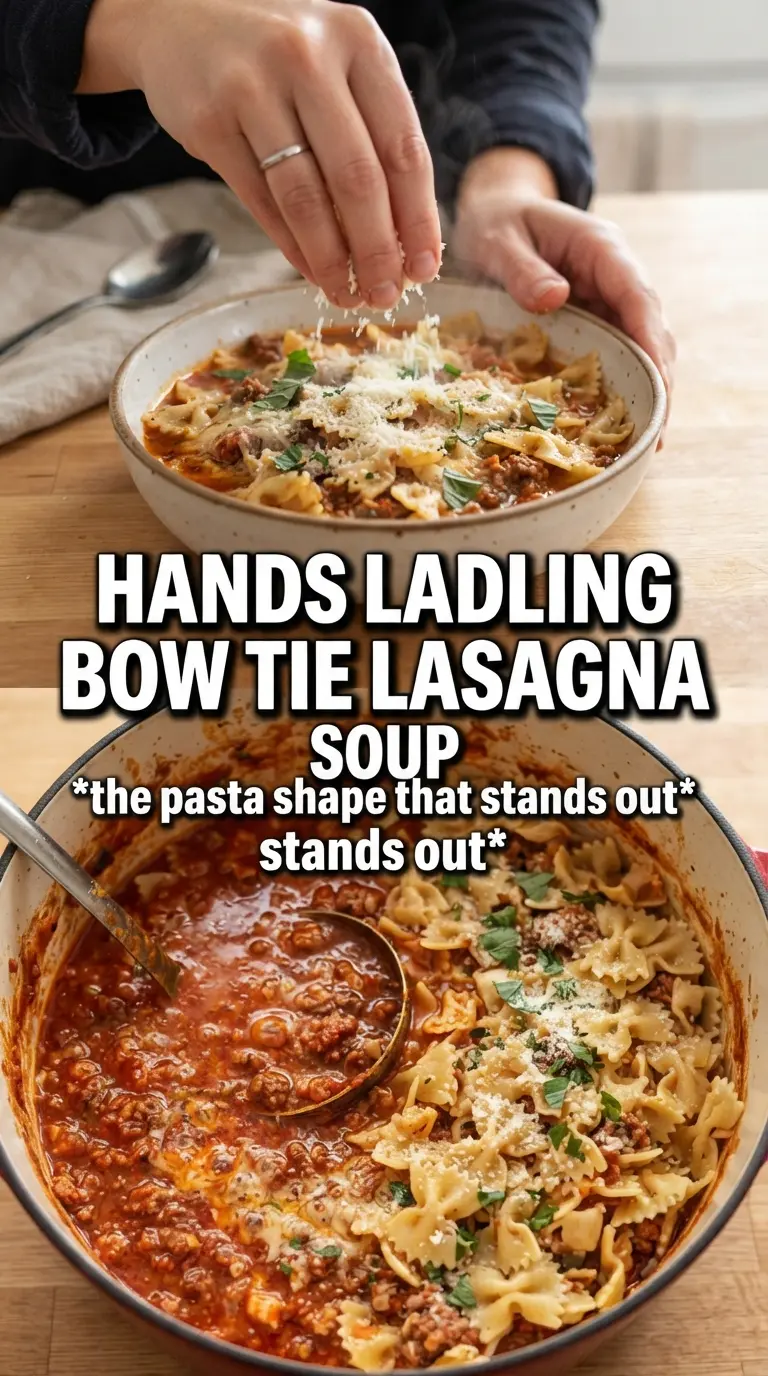
- Italian sausage — This is the main source of richness, salt, and seasoning. Mild sausage keeps the soup balanced; hot sausage gives it a little kick without needing extra spice.
- Tomato paste — It deepens the tomato flavor and gives the broth a cooked, savory base. Let it cook with the onion and garlic for a full minute or two so it loses the sharp, tinny edge.
- Crushed tomatoes and diced tomatoes — Crushed tomatoes build the body of the soup, while diced tomatoes give you some texture. If you only have crushed tomatoes, the soup will still work; it just comes out smoother.
- Farfalle — The bow ties hold up well and catch cheese in the folds, but they absorb broth fast. If you swap in another pasta, choose one with ridges or shape, not a tiny noodle that will disappear.
- Ricotta, mozzarella, and parmesan — This topping is what makes the bowl taste like lasagna instead of tomato soup with pasta. Use whole-milk ricotta if you can; it melts into a creamier spoonful than part-skim.
Building the Soup in the Right Order
Brown the Sausage First
Cook the sausage in a large pot until it’s deeply browned and no pink remains. Those browned bits at the bottom are part of the flavor, so don’t rush this stage or drain the pot clean unless there’s an excessive amount of fat. If the sausage is steamed instead of browned, the soup tastes flatter from the start.
Cook the Aromatics and Tomato Paste Together
Add the onion and cook until it turns soft and translucent, then stir in the garlic and tomato paste. Let that mixture cook for about 2 minutes, stirring often, until the paste darkens slightly and smells sweet instead of sharp. If the garlic browns hard, pull the heat down immediately; burned garlic will carry through the whole pot.
Simmer Before the Pasta Goes In
Pour in the tomatoes, broth, Italian seasoning, basil, and red pepper flakes, then bring the pot to a boil before adding pasta. That initial simmer helps the tomato base taste cohesive instead of thin. The soup should be bubbling steadily, not violently, when the farfalle goes in so the pasta cooks evenly without breaking apart.
Cook the Farfalle Until It Still Has a Little Bite
Add the bow tie pasta and cook until it’s al dente, usually 8 to 10 minutes. Taste a piece a minute before the package says it should be done, because it will continue softening in the hot broth after you pull the pot off the heat. If the soup looks too thick near the end, add a splash or two of broth and stir it in before seasoning.
Finish With the Cheese Dollop
Mix the ricotta, mozzarella, parmesan, and basil in a bowl just before serving. Spoon a generous dollop onto each bowl and let the heat from the soup soften it naturally. Don’t stir it all into the pot unless you want the whole batch cloudy and heavier; the contrast between the hot soup and the cool cheese is what makes each bowl taste finished.
How to Change This Without Losing the Lasagna Feel
Make It Dairy-Free
Skip the ricotta-mozzarella topping and finish each bowl with a spoonful of dairy-free cashew cream or a drizzle of olive oil plus basil. You’ll lose the classic creamy lasagna finish, but the tomato and sausage base still stands on its own. Use a plant-based sausage only if it browns well, since that seared flavor matters here.
Make It Gluten-Free
Use your favorite gluten-free farfalle, but watch it closely because many gluten-free pastas soften faster and can break down in broth. If you know your pasta tends to get mushy, cook it separately and add it to the bowls right before serving. That keeps the soup texture cleaner and prevents the broth from turning starchy.
Use Ground Turkey Instead of Sausage
Ground turkey works, but it needs help because it doesn’t bring the same built-in seasoning or fat. Add an extra pinch of Italian seasoning and a little more salt, and keep enough oil in the pot so the onion and tomato paste can cook properly. The result is lighter and leaner, though not quite as rich.
Stretch It for Leftovers
If you want the soup to hold up better the next day, cook the pasta separately and add it to each bowl when serving. This keeps the farfalle from drinking up all the broth overnight. It’s the best move if you’re cooking ahead for lunches or want the texture to stay close to day one.
Storage and Reheating
- Refrigerator: Store for up to 4 days. The pasta will keep soaking up broth, so expect the soup to thicken.
- Freezer: Freeze the soup without the pasta for the best texture. The tomato base freezes well, but cooked farfalle tends to get soft and puffy after thawing.
- Reheating: Warm gently on the stove over medium-low heat with a splash of broth or water. High heat can overcook the pasta and make the tomato base taste flat.
Answers to the Questions Worth Asking
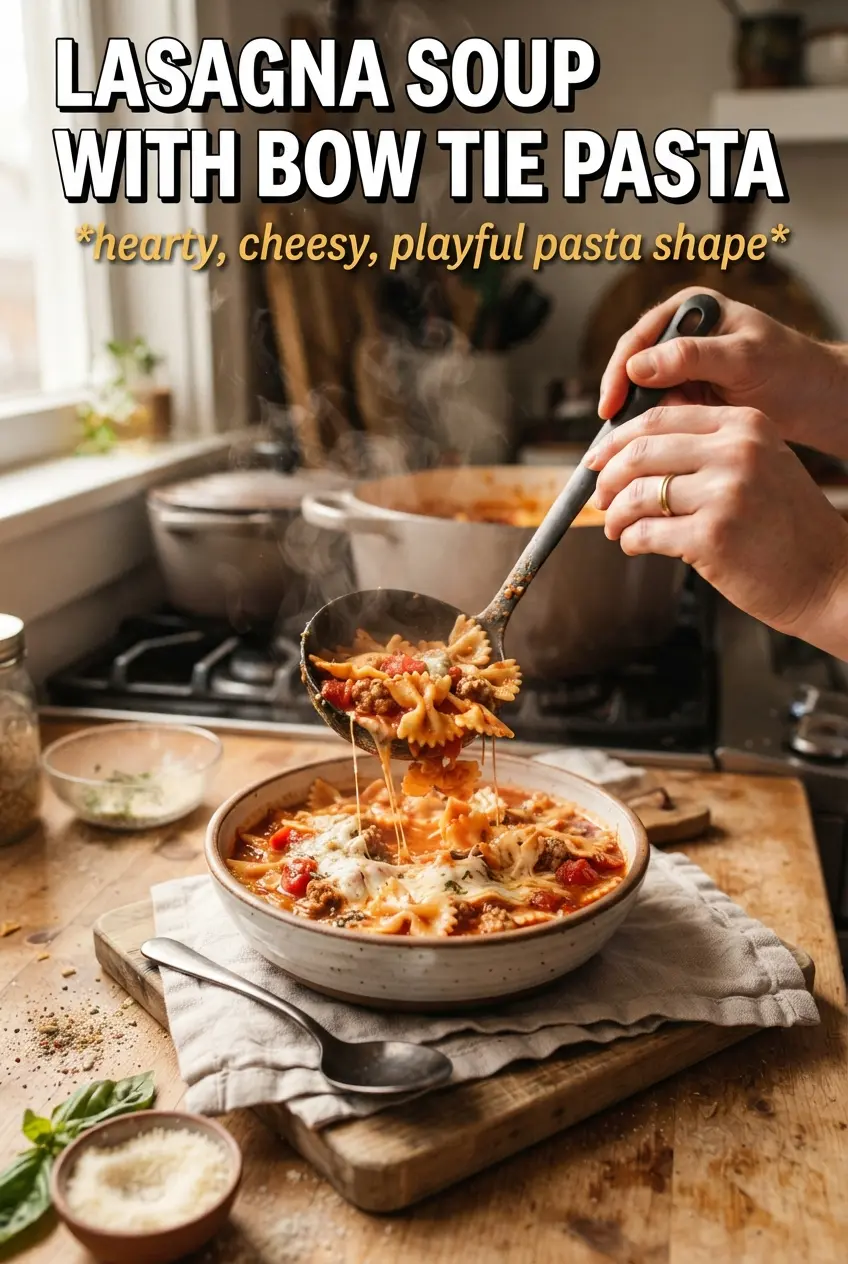
Lasagna Soup With Bow Tie Pasta
Ingredients
Equipment
Method
- Brown the Italian sausage in a large pot over medium-high heat, then drain the fat.
- Continue browning until the sausage is fully cooked and no longer pink, keeping the pot ready for the next step.
- Sauté the onion for 3 minutes until softened, then add the garlic and tomato paste and cook for 2 minutes.
- Stir constantly for 2 minutes so the tomato paste darkens slightly without burning.
- Add the crushed tomatoes, diced tomatoes, chicken broth, Italian seasoning, dried basil, and red pepper flakes, then bring to a boil.
- Keep at a steady boil until the flavors are bubbling throughout, about 2-3 minutes.
- Add the farfalle (bow tie) pasta and cook for 8-10 minutes until al dente.
- Stir occasionally to prevent sticking while the pasta absorbs broth.
- Season with salt and pepper to taste.
- Mix the cheese dollop ingredients—ricotta, shredded mozzarella, and parmesan—then spoon a generous dollop into each bowl.
- Top each bowl with fresh basil, and serve hot.
- If the soup thickens too much while the pasta cooks, add extra broth to loosen it to a soup consistency.