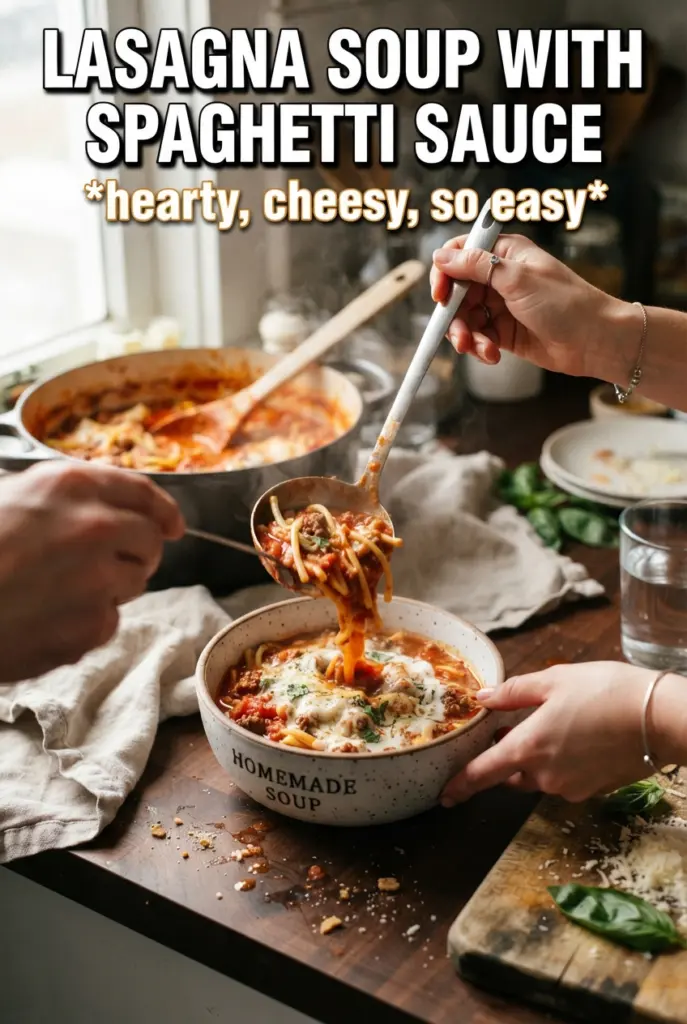
Lasagna soup with spaghetti sauce gives you the same cozy, layered comfort as baked lasagna, but in a bowl that comes together in about half an hour. The broth turns rich and savory from the sausage, the jarred sauce adds instant tomato depth, and the broken noodles soak up enough flavor that every spoonful tastes complete instead of thin or brothy.
The trick here is treating the spaghetti sauce like a shortcut, not a crutch. A good jar has built-in seasoning and body, which means you don’t need to cook down tomatoes for an hour to get that deep red base. Browning the meat first matters, too, because those browned bits season the whole pot and keep the soup from tasting flat. The ricotta-mozzarella topping is the part that makes it land like lasagna instead of just pasta soup.
Below, I’ll walk through the little choices that keep the noodles tender, the broth balanced, and the cheese topping creamy instead of grainy. There’s also a few easy swaps if you want to use what you already have in the pantry.
The broth had so much flavor from the jarred spaghetti sauce and sausage, and the noodles stayed perfectly tender without getting mushy. I loved that the ricotta and mozzarella melted into the soup a little on top instead of disappearing.
Save this lasagna soup for the nights when you want all the comfort of baked lasagna with a faster stove-top finish and a creamy ricotta topping.
The Shortcut That Keeps This Soup Tasting Like Lasagna, Not Jarred Sauce
The biggest mistake with lasagna soup is using jarred sauce as a shortcut and then stopping there. If the sauce goes into the pot without being paired with browned meat, sautéed onion, and enough broth to loosen it, the soup can taste heavy and one-note. This version avoids that by building the base in layers: first the sausage and onion, then the garlic, then the sauce and tomatoes, and only after that the noodles.
The noodles matter more than people think. Broken lasagna sheets give you that familiar shape without turning the pot into a brick of pasta, but they also thicken the broth as they simmer. That’s a good thing as long as you keep an eye on the pot and stir occasionally so the noodles don’t stick together or sink to the bottom and scorch.
- Italian sausage or ground beef — Sausage brings built-in seasoning and a little fat, which makes the soup taste fuller. Ground beef works too, but add a touch more salt and don’t skip the browning step, because that’s where the savory flavor comes from.
- Spaghetti sauce — This is the shortcut that gives the soup most of its tomato backbone. Use a brand you already like on pasta, because the flavor comes through clearly here. If your sauce is sweeter than you want, the broth and diced tomatoes will balance it out.
- Diced tomatoes — They keep the soup from tasting too smooth or too uniform. The pieces soften into the broth while still giving you little bursts of tomato in the spoonful.
- Ricotta and mozzarella — Ricotta gives you that creamy lasagna filling feel, while mozzarella melts into the hot soup and stretches a little over the top. Use whole-milk ricotta if you can; it stays creamier and less grainy.
- Broken lasagna noodles — These are best added directly to the simmering soup so they absorb flavor as they cook. Don’t cook them separately unless you’re planning leftovers, because pasta in the pot will keep drinking broth as it sits.
What Each Ingredient Is Actually Doing in This Recipe

- Primary ingredient (the star) — Quality matters most. Choose the best you can find.
- Cooking medium (oil, butter, or broth) — This carries flavors and prevents dryness.
- Seasonings (salt, pepper, spices, herbs) — Layer flavors so nothing overpowers. Build depth gradually.
- Aromatics (garlic, onion, herbs) — Cook with fat to bloom flavors. Become the foundation.
- Supporting ingredients — Complement the main ingredient without overpowering it.
- Sauce or liquid (if applicable) — Brings flavors together. Balance richness with acid.
- Acid (lemon, vinegar, wine, or other) — Brightens and prevents flat-tasting results.
- Final finish (garnish, glaze, or sauce) — Prevents one-dimensional taste and adds visual appeal.
The 20 Minutes That Matter Most in the Pot
Brown the Meat Until the Pan Smells Deep and Savory
Cook the sausage or beef in a large pot over medium-high heat until it’s no longer pink and you’ve got browned bits stuck to the bottom. Those browned spots are flavor, so don’t rush past them with low heat. If there’s a lot of grease, drain the excess, but leave a thin film so the onion and garlic can cook in something flavorful.
Let the Onion and Garlic Soften Before the Sauce Goes In
Add the diced onion and cook it until it turns translucent and loses its raw bite, about 3 minutes. Then stir in the garlic for just a minute, long enough to smell it bloom but not long enough for it to brown. If the garlic burns, the whole pot turns bitter, and there’s no fixing that later.
Build the Broth Before the Noodles Hit the Pot
Pour in the spaghetti sauce, diced tomatoes, broth, and seasonings, then bring everything to a boil before adding the noodles. That boiling point helps the broth taste integrated instead of like sauce diluted with water. Once the noodles go in, drop the heat to a steady simmer so they soften without splitting apart.
Finish When the Noodles Are Tender but Still Defined
Simmer the broken noodles for 10 to 12 minutes, stirring every so often so they don’t clump. You’re looking for noodles that are tender with a little bite left in the center, because they’ll keep softening in the hot broth after you take the pot off the burner. Taste and season at the end, since the sausage, sauce, and broth all bring salt of their own.
Make it with ground turkey for a lighter bowl
Ground turkey works if you want a lighter version, but it needs a little help. Add a drizzle of olive oil to the pot and season more aggressively, because turkey won’t bring the same richness as sausage. The final soup will be a touch leaner and cleaner in flavor, but still plenty satisfying.
Use gluten-free pasta without losing the texture
Gluten-free lasagna noodles can work, but they soften faster and can break apart if you over-stir. Check them a minute or two early, and expect the broth to thicken a little less than it does with regular pasta. If you need the soup to hold longer, cook the noodles separately and add them to each bowl.
Skip the dairy in the topping and still get a creamy finish
For a dairy-free bowl, leave off the ricotta and mozzarella and spoon on a little plain dairy-free yogurt or cashew cream instead. You lose the classic cheesy pull, but you still get that cool, creamy contrast against the hot soup. Add fresh basil at the end so the bowl still tastes finished.
How to store leftovers without mushy noodles
Lasagna soup keeps best when the noodles are stored separately from the broth, but if everything is already mixed together, it will still hold for a couple of days. Refrigerate for up to 3 days. Freezing is possible for the soup base, but not for the noodle-filled pot, since the pasta turns soft and bloated after thawing. Reheat gently on the stove over medium-low heat with a splash of broth or water to loosen the broth before serving.
Answers to the Questions Worth Asking
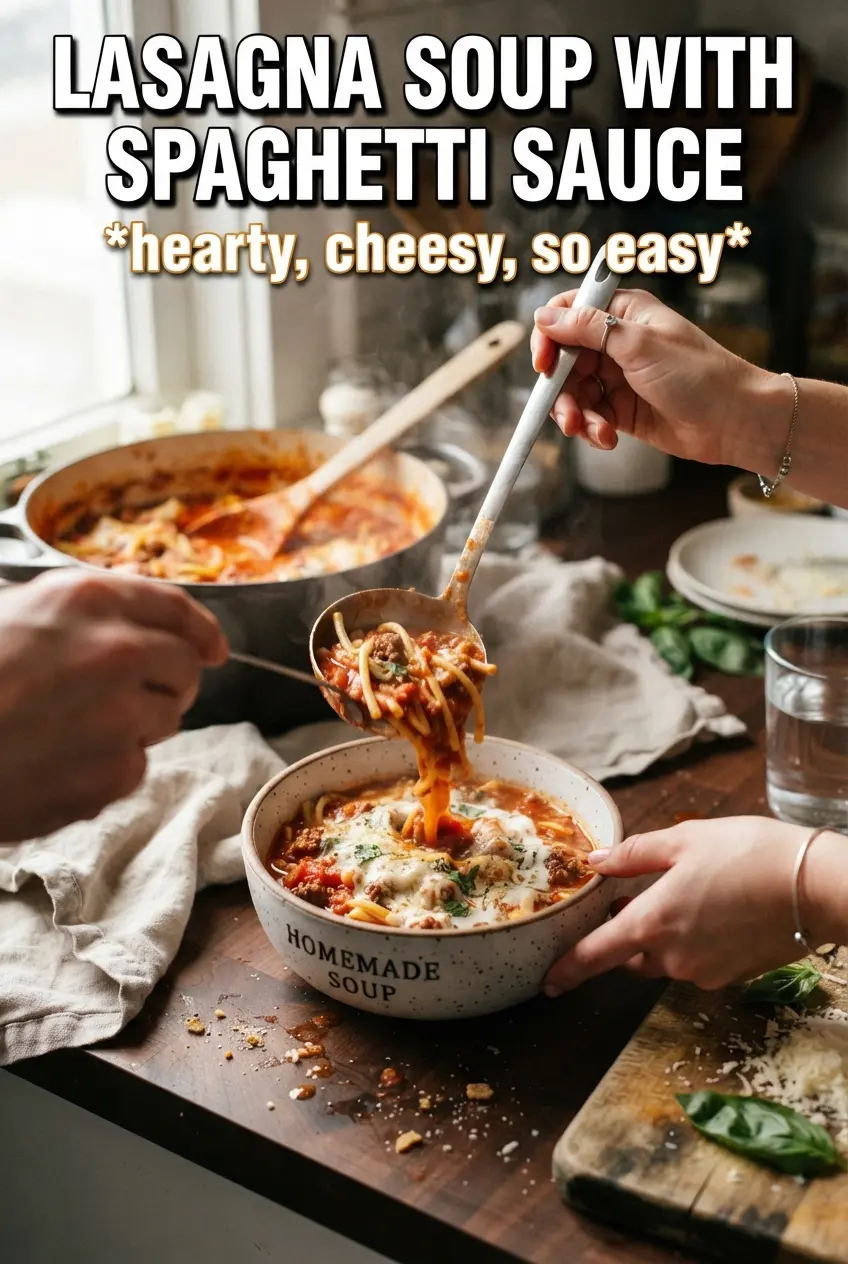
Lasagna Soup With Spaghetti Sauce
Ingredients
Equipment
Method
- Brown Italian sausage or ground beef in a large pot over medium-high heat until no longer pink, then drain excess fat.
- Sauté onion for 3 minutes until softened, then add garlic and cook 1 minute until fragrant.
- Pour in spaghetti sauce, diced tomatoes, and beef or chicken broth, then stir in Italian seasoning, dried basil, and red pepper flakes.
- Bring the soup to a boil over medium-high heat, then add broken lasagna noodles.
- Simmer for 10-12 minutes until the noodles are tender, stirring occasionally to prevent sticking.
- Season with salt and pepper to taste, then stir well.
- Mix ricotta, shredded mozzarella, parmesan, and fresh basil until combined into a thick dollop.
- Ladle soup into bowls and top each serving with a generous spoonful of the cheese dollop.