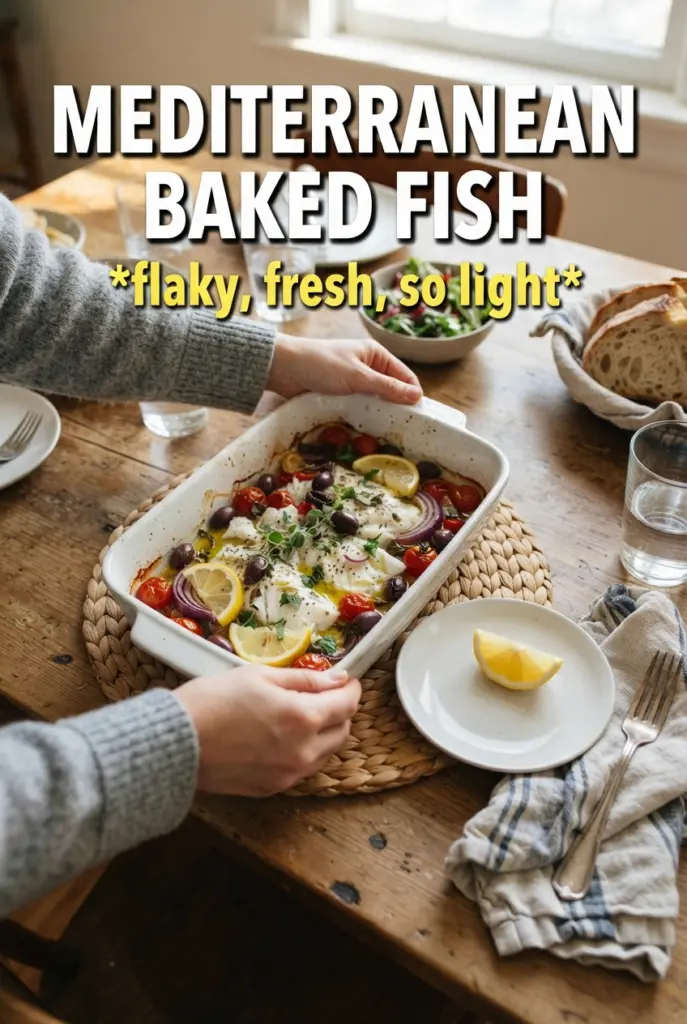
Flaky white fish, juicy tomatoes, briny olives, and capers make this Mediterranean baked fish feel bright and substantial without turning fussy. The tomatoes soften into a quick sauce in the oven, the garlic mellows just enough, and the fish bakes right on top so every bite picks up the olive oil and pan juices underneath. It’s the kind of dinner that tastes like you worked harder than you did.
What makes this version work is the two-stage bake. The vegetable mixture gets a head start, which concentrates the tomatoes and pulls flavor out of the olives, capers, and roasted red peppers before the fish ever goes in. That matters because delicate fillets cook fast. If you add them too early, they can go from tender to dry before the sauce underneath has a chance to taste like much of anything.
Below, I’ll walk through the timing that keeps the fish flaky, the ingredient choices that matter most, and a few smart swaps if you need to work with what’s already in your kitchen.
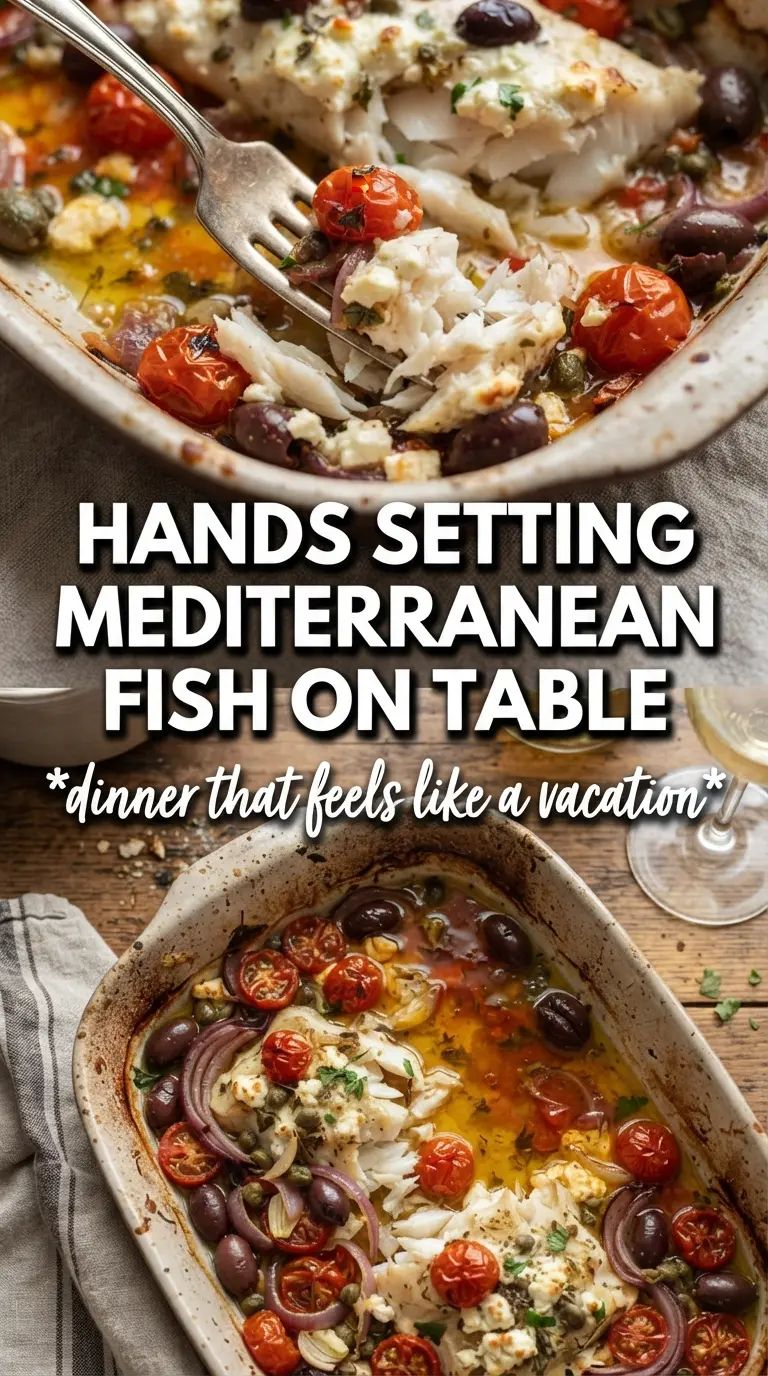
The tomatoes turned into this glossy sauce under the fish, and the capers kept it from tasting flat. I pulled it at 13 minutes and the fillets were perfectly flaky, not dry at all.
Save this Mediterranean baked fish for a fast dinner with juicy tomatoes, briny olives, and flaky fish that bakes right in the sauce.
The Shortcut That Keeps the Fish Tender Instead of Overcooked
The biggest mistake with baked fish is treating it like it needs the same timing as the vegetables around it. It doesn’t. The tomatoes, olives, capers, and peppers need a head start so they can collapse into a saucy base, but the fish should only join once that base is hot and fragrant. That way the fillets cook in steam and olive oil instead of drying out in an empty pan.
Another thing that helps here is using a wide baking dish, not a crowded one. Fish cooks more evenly when the fillets sit in a single layer with a little space between them. If you tuck everything too tightly together, the vegetables steam more than roast and the sauce loses its concentrated edge.
- Cod, halibut, or sea bass — Any firm white fish works here, but thicker fillets are more forgiving. If you use a thinner fish like tilapia, cut the final bake time and check early because it will flake apart fast.
- Cherry tomatoes — These do the heavy lifting for the sauce. Halving them helps them burst and release their juices; whole tomatoes won’t break down as quickly.
- Kalamata olives and capers — This is the briny backbone of the dish. If you swap in green olives, the flavor gets sharper and less rich. Rinse capers only if yours taste aggressively salty.
- Jarred roasted red peppers — They add sweetness and a soft, silky texture. Fresh bell peppers won’t give the same mellow result unless you roast them first.
- Dry white wine or broth — Wine adds a little brightness and depth, but broth works well if that’s what you have. Use something that tastes clean, not sweet, because the dish already has enough softness from the tomatoes and peppers.
What Each Ingredient Is Actually Doing in This Recipe
- Primary ingredient (the star) — Quality matters most. Choose the best you can find.
- Cooking medium (oil, butter, or broth) — This carries flavors and prevents dryness.
- Seasonings (salt, pepper, spices, herbs) — Layer flavors so nothing overpowers. Build depth gradually.
- Aromatics (garlic, onion, herbs) — Cook with fat to bloom flavors. Become the foundation.
- Supporting ingredients — Complement the main ingredient without overpowering it.
- Sauce or liquid (if applicable) — Brings flavors together. Balance richness with acid.
- Acid (lemon, vinegar, wine, or other) — Brightens and prevents flat-tasting results.
- Final finish (garnish, glaze, or sauce) — Prevents one-dimensional taste and adds visual appeal.
Building the Tomato-Olive Base Before the Fish Goes In
Wake Up the Pan Vegetables First
Start by combining the tomatoes, olives, capers, roasted red peppers, garlic, wine or broth, olive oil, oregano, and red pepper flakes in the baking dish. The goal isn’t to toss ingredients together and hope for the best. You want everything coated in oil and spread out so the heat can hit the tomatoes evenly. If the garlic is buried in one spot, it can scorch before the tomatoes have a chance to soften.
Give the Vegetables a Head Start
Roast the vegetable mixture for 10 minutes before adding the fish. By then, the tomatoes should look a little wrinkled and the pan should smell savory and sweet, with the garlic mellowed out. This short roast is what turns the base from chopped vegetables into something spoonable. Skip it and the fish finishes before the sauce ever develops.
Finish With the Fish, Not the Other Way Around
Season the fillets with salt and pepper, then nestle them into the hot vegetable mixture. Bake 12 to 15 minutes more, depending on thickness, until the fish flakes cleanly with a fork and looks opaque all the way through. If the center still looks translucent, give it a couple more minutes; if you wait until it looks totally firm in the oven, it’s already overdone by the time it reaches the table.
Garnish While It’s Still Hot
Finish with parsley and lemon wedges right away. The parsley adds freshness, but the lemon is what wakes up the olives, capers, and wine or broth underneath. Don’t squeeze the lemon too early or the brightness disappears into the pan juices before serving.
How to Adapt This for Different Fish, Diets, and Leftovers
Make It Dairy-Free Without Changing a Thing
This recipe is naturally dairy-free, which is part of why it tastes so clean and bright. The olive oil and pan juices carry all the richness you need, so there’s nothing to replace.
Use What Fish You Can Find
Cod gives you the most classic flaky result, but halibut and sea bass hold up beautifully too. If your fillets are thin, start checking at 10 minutes after the fish goes in. The difference between tender and dry can be less than two minutes.
Swap the Wine for Broth
Broth makes this more pantry-friendly and keeps the sauce savory without adding alcohol. Use a low-sodium broth if you can, since the olives and capers already bring plenty of salt.
Storage and Reheating
- Refrigerator: Store leftovers in an airtight container for up to 2 days. The fish will firm up a little, but the tomato-olive sauce stays flavorful.
- Freezer: I don’t recommend freezing this one. Baked fish loses too much texture after thawing, and the tomatoes turn soft in a way that doesn’t help the dish.
- Reheating: Warm gently in a 300F oven, covered, just until heated through. High heat dries the fish out fast, so skip the microwave unless you’re willing to sacrifice texture.
Answers to the Questions Worth Asking
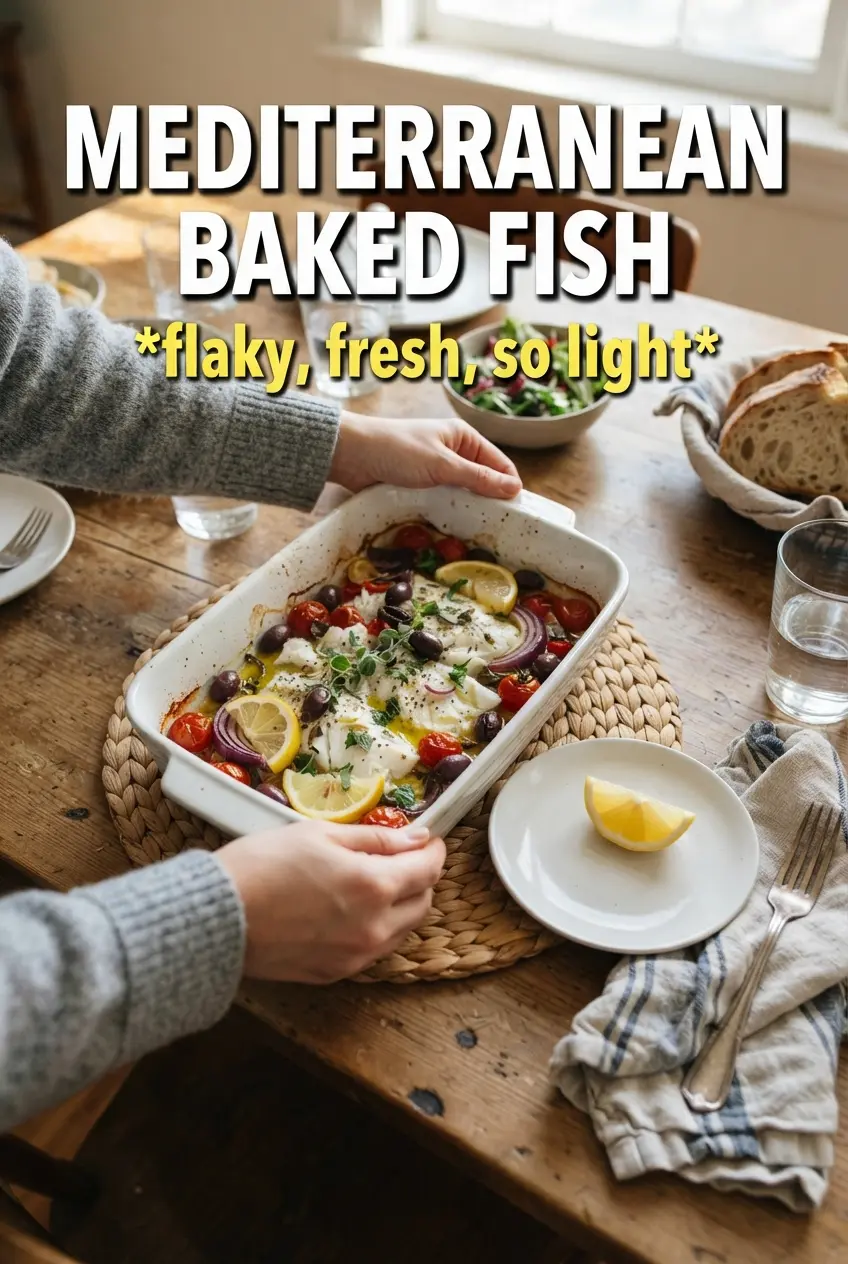
Mediterranean Baked Fish
Ingredients
Equipment
Method
- Preheat the oven to 400°F and grease a 9x13 baking dish.
- In the baking dish, combine cherry tomatoes, Kalamata olives, capers, roasted red peppers, garlic, dry white wine or broth, olive oil, dried oregano, and red pepper flakes.
- Roast the vegetable mixture for 10 minutes, until fragrant and slightly softened.
- Season the fish fillets with salt and pepper, then nestle them into the hot vegetable mixture.
- Bake for 12–15 minutes at 400°F until the fish flakes easily with a fork.
- Garnish with fresh parsley and serve with lemon wedges.