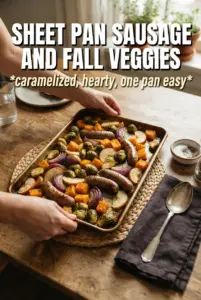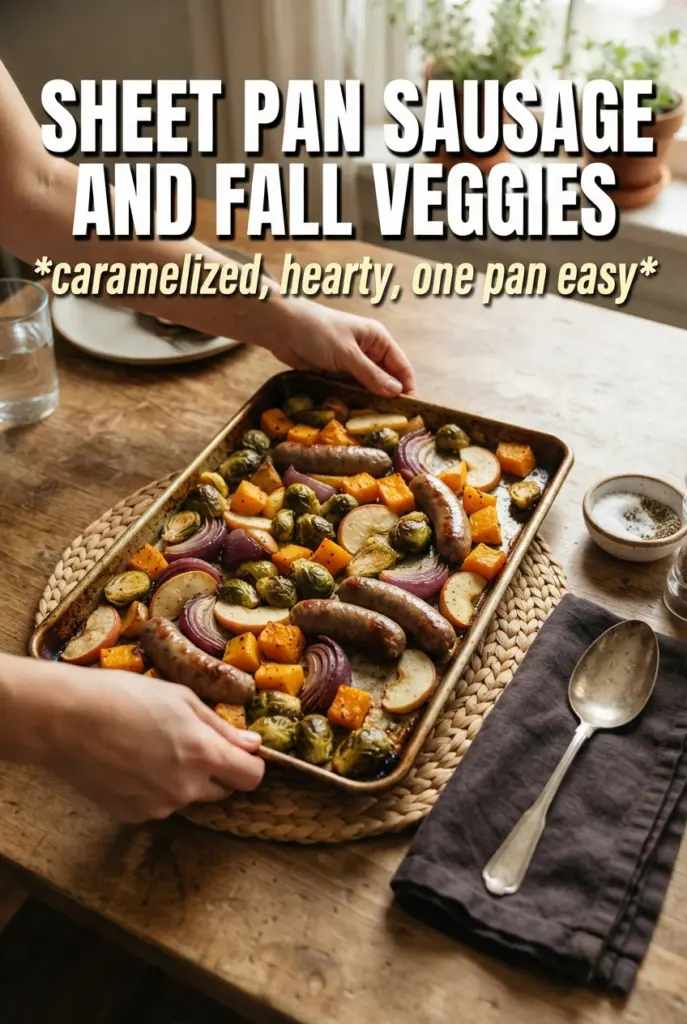
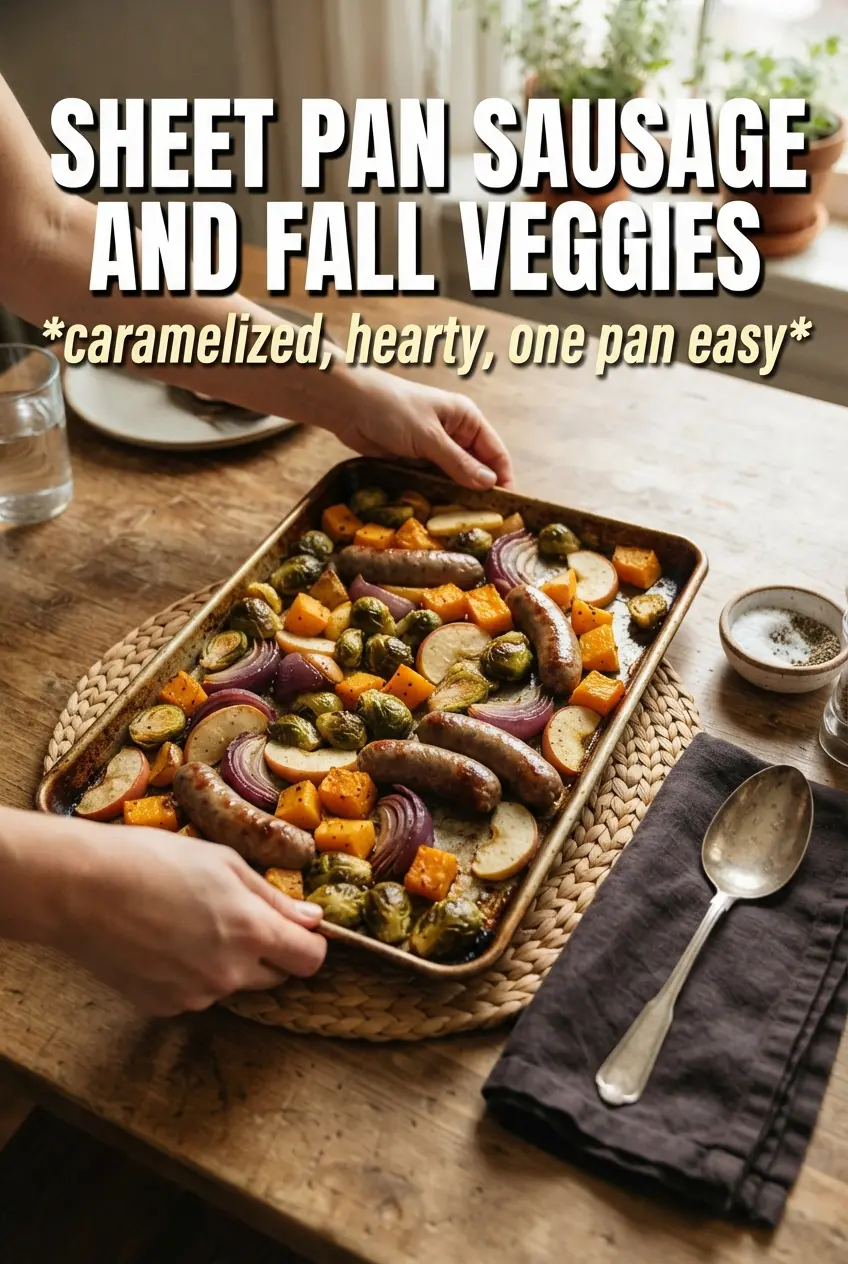
Caramelized sausage, roasted squash, and Brussels sprouts that turn crisp at the edges are the reason this sheet pan dinner earns repeat status. The pan comes out with sweet, savory, and just a little tangy all in the same bite, and the best part is that the oven does almost all the work while everything browns together instead of steaming in separate pans.
The trick is giving the vegetables enough space and cutting them into pieces that finish at the same time. Butternut squash needs a head start in size, the Brussels sprouts should be halved so their cut sides can brown, and the glaze goes on before roasting so the maple and balsamic can cling to the sausage and vegetables as they cook. A quick broil at the end pushes the edges from roasted to deeply caramelized without drying anything out.
Below you’ll find the timing I use to keep the sausage juicy and the vegetables tender with real color, plus a few swaps that make this work with what you already have on hand.
The squash got beautifully caramelized and the sausage stayed juicy, which never happens when I roast everything together. The maple-balsamic glaze was just enough to coat everything without making the pan soggy.
Save this sheet pan sausage and fall veggies dinner for nights when you want caramelized edges, juicy sausage, and one pan to clean.
The Shortcut to Roasting Everything at the Same Speed
The biggest mistake with sheet pan dinners is crowding the pan. When the vegetables sit on top of each other, they steam instead of brown, and the sausage gives off enough fat to turn the whole tray soft if there isn’t room for the heat to move around. A large rimmed baking sheet matters here because the goal is contact with the hot metal, not a mound of ingredients.
Cutting the squash into small, even cubes is what keeps it in step with the sausage and peppers. Brussels sprouts should be halved through the stem so the cut side can hit the pan and caramelize. If your sausage is very fatty, you may need a little less oil than the recipe card calls for, but don’t cut it too much or the rosemary and balsamic glaze won’t spread evenly.
What Each Ingredient Is Doing in This Pan
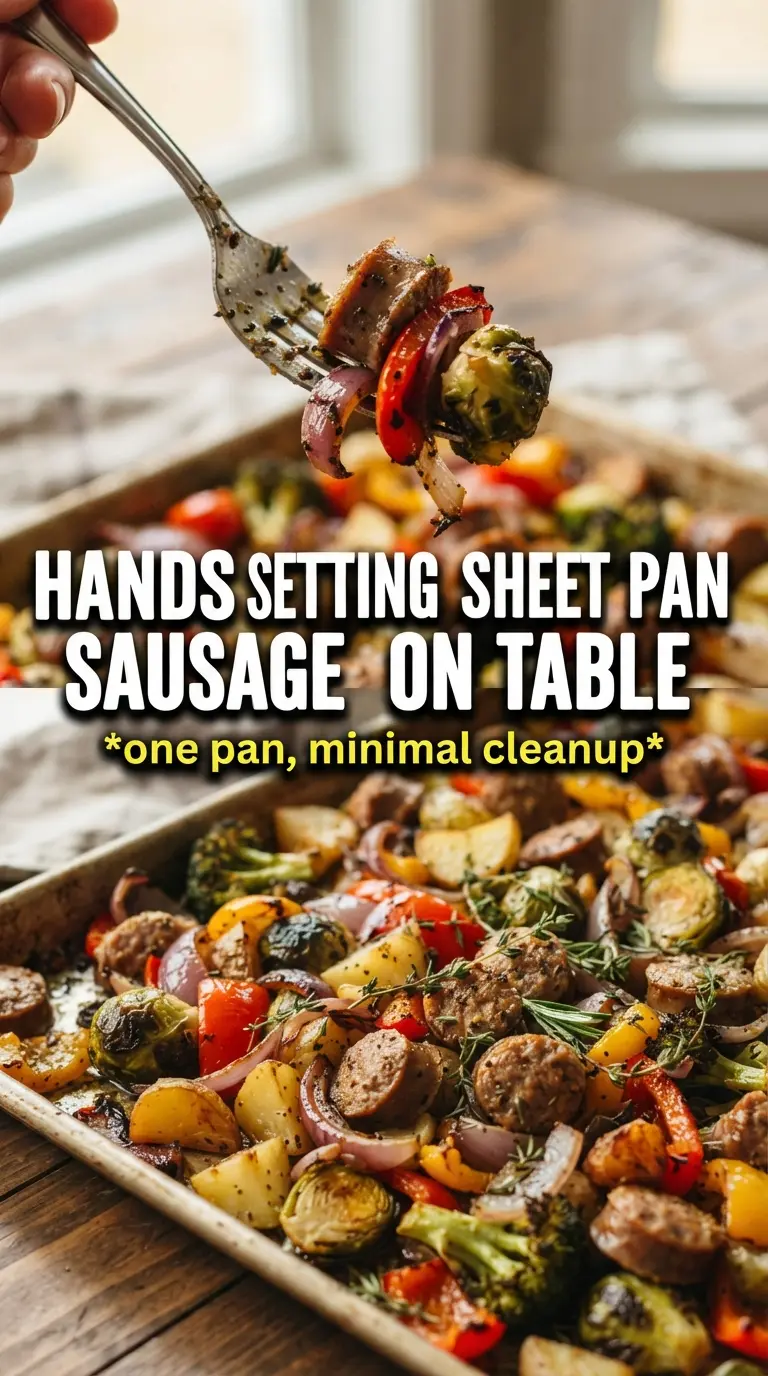
- Italian sausage links — These bring fat, seasoning, and browning power all at once. Slice them into rounds so the cut edges can caramelize; whole links take longer and don’t get the same roasted texture. If you use chicken sausage, keep the heat the same but expect a little less rendered fat on the pan.
- Butternut squash — This is the sweet, sturdy base that holds up to high heat. Peel it well and cut it into consistent cubes so it doesn’t lag behind the rest of the tray. Pre-cut squash works fine if the pieces aren’t oversized and uneven.
- Brussels sprouts — Halved sprouts give you crispy cut sides and tender centers. This is one place where fresh matters more than frozen, because frozen sprouts release too much water and never roast the same way.
- Apple — The apple adds brightness and a little juice that cuts through the richness of the sausage. Use a firm variety like Honeycrisp or Fuji so it softens without collapsing. Slice it thick enough to stay intact.
- Balsamic, maple syrup, and Dijon — This is the glaze that ties the tray together. The balsamic brings tang, the maple gives a roasted sweetness, and the Dijon keeps it from tasting flat. Don’t skip the mustard; it helps the glaze cling and rounds out the sweetness.
- Fresh rosemary and garlic — Rosemary can handle the oven’s heat without disappearing, and garlic perfumes the whole tray as it roasts. If you use dried rosemary, cut the amount in half because dried herbs can go from earthy to sharp fast under high heat.
How to Get Deep Color Without Burning the Glaze
Mix the glaze first
Whisk the olive oil, balsamic vinegar, maple syrup, Dijon, garlic, rosemary, Italian seasoning, salt, and pepper in a small bowl before anything hits the pan. That way the seasoning is evenly distributed and the glaze coats every piece instead of pooling in one corner. If the maple syrup sits at the bottom of the bowl, keep whisking until the mixture looks smooth and glossy.
Spread everything in one layer
Scatter the sausage and vegetables across the lined baking sheet so they have room around them. Overlap is the enemy here because piled vegetables trap steam and come out soft instead of browned. If your sheet pan looks crowded, split the mixture between two pans rather than forcing it all onto one.
Roast, then stir once
Roast at 425°F for 30 to 35 minutes, stirring about halfway through so the pieces on the edges don’t overbrown before the centers catch up. You’re looking for squash that’s tender at the tip of a knife, Brussels sprouts with browned edges, and sausage that’s cooked through and lightly crisped where it touches the pan. If the glaze starts to look dry before the vegetables are done, that’s normal; the sugars are concentrating as everything roasts.
Broil for the finish
Turn on the broiler for the last 2 to 3 minutes if you want extra caramelization. Stay close, because the line between deeply browned and burnt is short when maple syrup is involved. Pull the pan as soon as you see dark, sticky edges and a few charred spots on the Brussels sprouts and sausage.
What to Change When You Want a Different Version
Dairy-Free and Gluten-Free Without Losing the Roast
This recipe is naturally dairy-free, and it can stay gluten-free if you choose a sausage brand without fillers or breadcrumbs. The texture won’t change, but the seasoning on the sausage matters more when there are fewer extras in the pan, so pick a well-seasoned link.
Swap the Squash for Sweet Potatoes
Sweet potatoes work well if that’s what you have, but they roast a little faster and can turn softer at the edges. Cut them into slightly larger chunks than the squash so they don’t break down before the sausage is done.
Use Chicken Sausage for a Lighter Pan
Chicken sausage gives you a lighter, leaner dinner, but you lose some of the rendered fat that helps the vegetables brown. Add the full amount of olive oil and keep an eye on the pan so the vegetables don’t dry out before they caramelize.
Make It Spicier
Hot Italian sausage or a pinch of red pepper flakes in the glaze adds heat without changing the structure of the dish. The spice works best when it’s balanced by the apple and maple, so you get warmth instead of harsh burn.
Storage and Reheating
- Refrigerator: Store leftovers in an airtight container for up to 4 days. The vegetables will soften a little, but the flavor holds up well.
- Freezer: This freezes better than most roasted vegetable dinners, though the Brussels sprouts and squash will be softer after thawing. Freeze in a flat container for up to 2 months and thaw overnight in the refrigerator.
- Reheating: Reheat on a sheet pan in a 375°F oven until hot, about 10 to 15 minutes. The microwave works in a pinch, but it softens the browned edges and makes the sausage rubbery if you overdo it.
Answers to the Questions Worth Asking
Sheet Pan Sausage And Fall Veggies
Ingredients
Equipment
Method
- Preheat the oven to 425°F and line a large rimmed baking sheet with parchment. Visual cue: parchment should be smooth and ready to catch drips.
- Whisk olive oil, balsamic vinegar, maple syrup, Dijon mustard, garlic, fresh rosemary, Italian seasoning, salt, and pepper. Visual cue: the glaze looks glossy and evenly blended.
- Arrange sausage rounds, butternut squash, Brussels sprouts, red onion, bell peppers, and apple in an even layer on the sheet pan. Visual cue: vegetables and sausage have space to roast rather than steam.
- Drizzle the glaze over everything, then toss to coat. Visual cue: surfaces look lightly lacquered with sauce.
- Roast at 425°F for 30-35 minutes, stirring once halfway. Visual cue: vegetables are caramelized with browned edges and sausage is cooked through.
- Broil for 2-3 minutes to push extra caramelization. Visual cue: tops darken slightly in spots without burning.