
Cheesy lasagna soup brings all the comfort of a baked pan of lasagna into one pot, and the best versions are the ones that still eat like dinner, not just a novelty. You want a broth that tastes rich and tomatoey, noodles that hold their bite, and enough cheese to make every spoonful feel layered and complete. This version does that without turning muddy or gluey, which is where a lot of lasagna soups fall apart.
The trick is building the base before the noodles go in. Browning the sausage gives the broth depth, tomato paste adds a little sweetness and body, and the cream cheese melts in at the end so the soup turns silky instead of grainy. The ricotta goes on top in cool spoonfuls, which keeps it distinct and gives you that lasagna-style contrast instead of one blended dairy blob.
Below, I walk through the exact moment to add the cheese, how to keep the noodles from getting too soft, and a few smart swaps if you want to make the pot work for different diets or pantry situations.
The broth got thick and cozy without being heavy, and the noodles stayed tender instead of turning mushy. I topped mine with extra ricotta and my husband went back for a second bowl right away.
Craving a bowl of cheesy lasagna soup? Save this one for the nights when you want sausage, tomato broth, and melty cheese in a single cozy spoonful.
The Part That Keeps Lasagna Soup From Turning Heavy
The biggest mistake with lasagna soup is treating the dairy like regular soup add-ins. If you dump ricotta or mozzarella into a hard boil, you get stringy clumps and a broken-looking pot instead of that creamy, layered finish you were after. The cheese belongs at the end, off the heat or very low heat, when the broth has already done its job.
Broken lasagna noodles are another place people lose control of the texture. They keep cooking after the pot comes off the burner, so stop when they’re just tender with a little bite left in the middle. If they go soft in the pot, they’ll turn too tender by the time you ladle the soup into bowls.
- Italian sausage — This is the backbone of the broth. It gives you fat, seasoning, and a meaty base all at once, which is why the soup tastes layered instead of flat. Mild or hot both work; just know hot sausage will push the whole pot in a spicier direction.
- Tomato paste — Don’t skip the short cook with the onions and garlic. That minute or two removes the raw edge and deepens the tomato flavor so the broth tastes like it simmered longer than it did.
- Cream cheese — This is what smooths everything out. It melts more reliably than ricotta in the broth, but it needs heat cut down first. If your soup looks grainy, the pan was too hot when the dairy went in.
- Ricotta, mozzarella, and parmesan — These three cheeses play different roles. Ricotta gives the bowl that lasagna feel, mozzarella adds melt, and parmesan brings salt and sharpness. Freshly grated parmesan melts cleaner and tastes better than the canned stuff here.
- Lasagna noodles — Broken noodles are the point, not a shortcut. Wide pasta sheets hold onto the broth and cheese in a way that smaller pasta shapes don’t. Break them into rough pieces so some are short and some are long; that unevenness feels more like real lasagna.
What Each Ingredient Is Actually Doing in This Recipe

- Primary ingredient (the star) — Quality matters most. Choose the best you can find.
- Cooking medium (oil, butter, or broth) — This carries flavors and prevents dryness.
- Seasonings (salt, pepper, spices, herbs) — Layer flavors so nothing overpowers. Build depth gradually.
- Aromatics (garlic, onion, herbs) — Cook with fat to bloom flavors. Become the foundation.
- Supporting ingredients — Complement the main ingredient without overpowering it.
- Sauce or liquid (if applicable) — Brings flavors together. Balance richness with acid.
- Acid (lemon, vinegar, wine, or other) — Brightens and prevents flat-tasting results.
- Final finish (garnish, glaze, or sauce) — Prevents one-dimensional taste and adds visual appeal.
Building the Pot in the Right Order
Browning the Sausage First
Cook the sausage until it’s fully browned and you see actual caramelization on the bottom of the pot. That color matters more than speed. If the sausage just turns gray, the soup will taste like boiled meat instead of something with depth. Drain off excess fat if the pot looks greasy, but leave enough behind to cook the onion and garlic.
Softening the Onion and Toasting the Tomato Paste
Add the diced onion and cook it until it turns translucent and loses its raw crunch, then stir in the garlic and tomato paste. The paste should darken slightly and smell sweeter after a couple of minutes. If it starts sticking aggressively, lower the heat; you want toasted, not scorched, tomato.
Simmering the Broth and Noodles
Once the tomatoes, broth, seasoning, and red pepper flakes go in, bring the pot to a real boil before adding the noodles. Then drop the heat to a steady simmer so the pasta cooks evenly without breaking apart. Stir once or twice while it simmers, especially near the end, because the noodles can settle and stick if the pot sits untouched.
Finishing With the Cheese
Turn off the heat before stirring in the cream cheese and half the mozzarella. The residual heat is enough to melt them without making the dairy seize or turn grainy. Ladle the soup into bowls, then finish each serving with ricotta, the remaining mozzarella, parmesan, and basil. That topping order gives you the best mix of creamy, stretchy, and fresh in one bowl.
How to Adapt This for Different Kitchens and Diets
Make It Gluten-Free Without Losing the Lasagna Feel
Use a sturdy gluten-free lasagna noodle or another wide gluten-free pasta that can hold up in broth. Cook it just until tender, because gluten-free pasta often softens faster after the heat is off. The soup still tastes like lasagna, but the texture will be a little more delicate, so serve it soon after it’s done.
Swap the Sausage for a Lighter Bowl
Ground turkey works well if you want something lighter, but it needs help. Add a little extra Italian seasoning and a pinch more salt, because turkey won’t bring the same built-in seasoning or richness that sausage does. A splash of olive oil at the start also helps keep the base from tasting lean.
Dairy-Free Version That Still Tastes Creamy
Use a full-fat unsweetened dairy-free cream cheese and skip the ricotta and mozzarella toppings, then finish with chopped basil and a drizzle of olive oil. The broth stays silky, but you’ll lose the classic cheesy pull and the bowl will lean more tomato-forward. A little nutritional yeast can add back some savory depth if you want it.
How to Store the Leftovers
- Refrigerator: Store in an airtight container for up to 4 days. The noodles will keep soaking up broth, so expect a thicker soup the next day.
- Freezer: It freezes, but the pasta softens a lot, and the dairy can separate a bit. If you want to freeze it, leave out the noodles and cheese, then add fresh pasta and cheese when reheating.
- Reheating: Warm it gently on the stovetop over medium-low with a splash of broth or water to loosen it. The common mistake is blasting it in the microwave until the cheese turns rubbery and the noodles fall apart.
Answers to the Questions Worth Asking
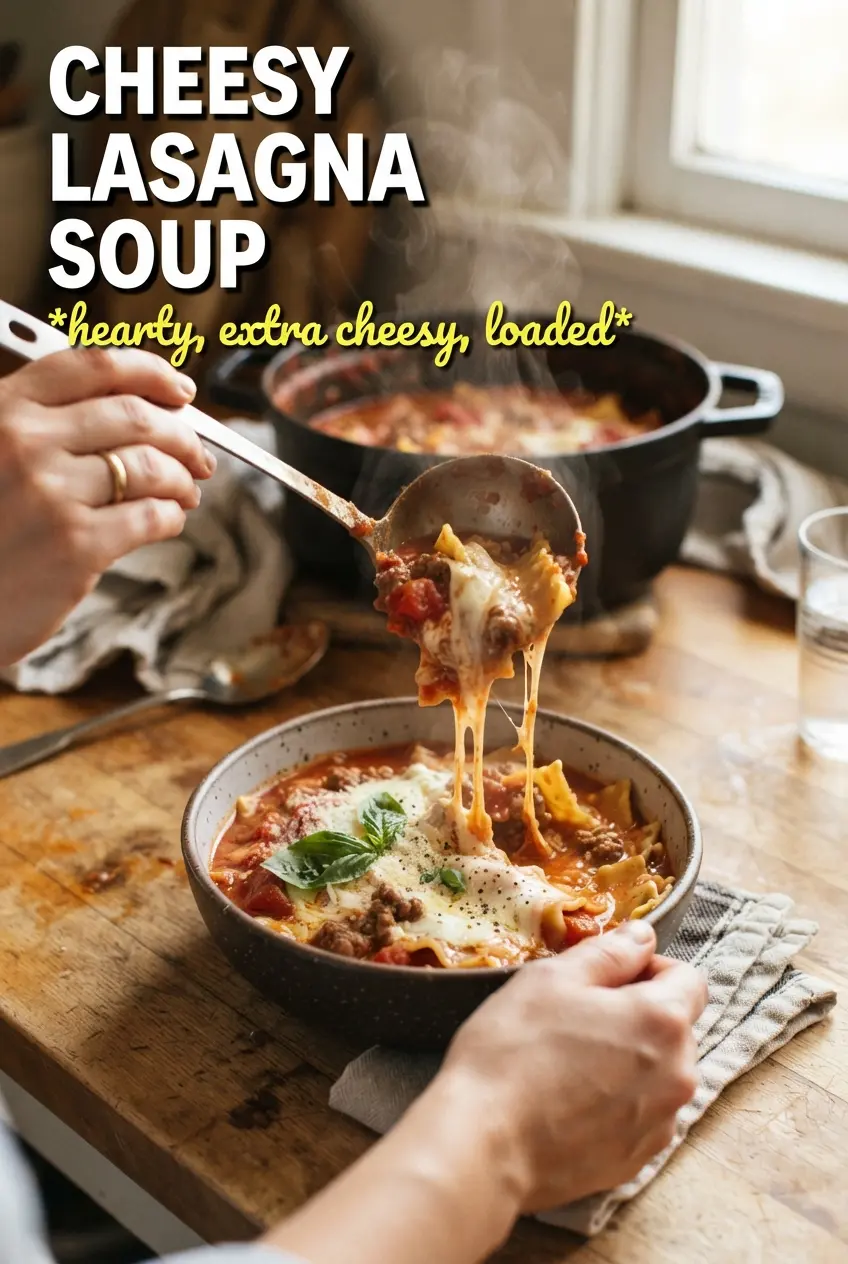
Cheesy Lasagna Soup
Ingredients
Equipment
Method
- Brown Italian sausage in a large pot and drain off excess fat.
- Transfer to an even layer in the pot so it keeps browning without burning.
- Sauté diced onion for 4 minutes, until softened.
- Add minced garlic and tomato paste, then cook for 2 minutes, stirring until fragrant.
- Add crushed tomatoes, beef broth, Italian seasoning, and red pepper flakes, then bring the mixture to a boil for a bubbling, consistent simmer-ready base.
- Add broken lasagna noodles and simmer for 10-12 minutes, stirring occasionally, until tender and cooked through.
- Remove from heat and stir in cubed cream cheese until it melts into the broth.
- Stir in 1/2 the mozzarella until fully melted and the soup looks glossy.
- Season with salt and pepper to taste.
- Ladle into bowls.
- Top each bowl with a spoonful of ricotta, a handful of remaining mozzarella, and a sprinkle of parmesan.
- Garnish with fresh basil right before serving for a bright green finish.