
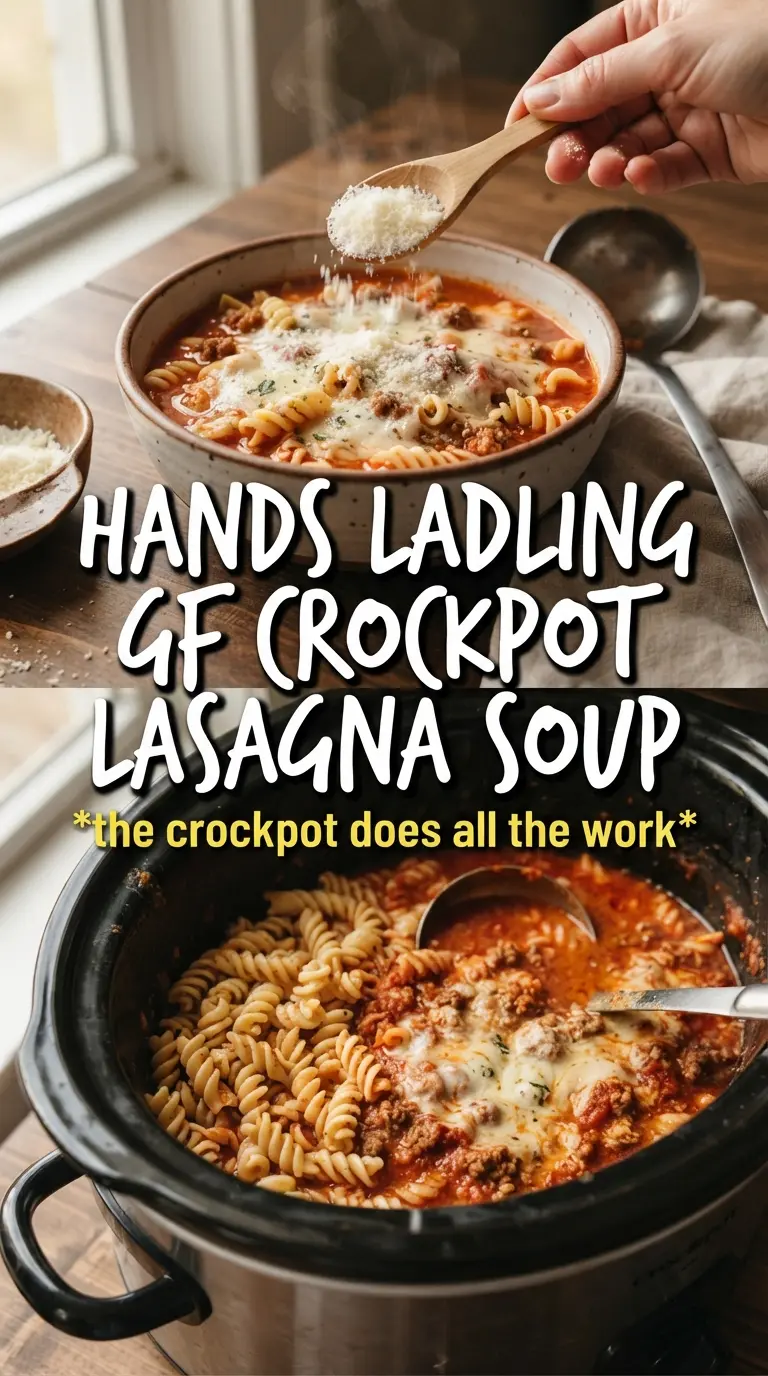
All the comfort of lasagna shows up here in spoonable form: rich tomato broth, savory sausage, tender gluten-free noodles, and a ricotta-mozzarella spoonful that melts into the bowl as soon as it hits the heat. The broth stays hearty instead of watery, the pasta keeps its texture, and you get the same cozy payoff without layering a casserole dish or babysitting the stove.
The trick is building the flavor base first and holding the pasta back until the end. Gluten-free noodles soften fast and can turn mushy if they sit in the slow cooker for hours, so they go in for the last stretch only. Browning the sausage before it goes into the crockpot adds depth right from the start, and the tomato paste gives the broth a little body so it tastes like soup with purpose, not just diluted sauce.
Below, I’ll walk through the timing that keeps the pasta intact, the cheese topping that makes each bowl taste finished, and a few easy swaps if you need to adjust for what you’ve got on hand.
The pasta stayed perfectly tender when I added it at the end, and the ricotta-mozzarella topping melted into the broth just like lasagna in a bowl. My husband went back for seconds and said it tasted even better the next day.
Save this gluten-free crockpot lasagna soup for the night you want all the lasagna flavor without the layering or oven time.
The Pasta Timing That Keeps This Soup From Turning Gummy
The part that ruins most lasagna soups is letting the noodles cook too long in a slow cooker full of hot broth. Gluten-free pasta gets soft fast, and once it crosses that line, there’s no bringing it back. Adding it for the last 30 to 35 minutes keeps the texture close to al dente and lets the soup stay brothy instead of starchy.
The other thing that matters is what happens before the pasta goes in. Browning the sausage first gives you browned bits and a deeper savory base, and the tomato paste helps the broth taste fuller instead of thin. If your soup seems a little loose at first, that’s normal; the pasta and cheese dollop both thicken each bowl as they sit.
- Browned sausage — This is where the biggest flavor comes from. If you skip the browning step, the soup still works, but it tastes flatter and the broth won’t have the same depth.
- Certified gluten-free broth — Use a broth you trust if gluten is a concern, because some boxed broths are not labeled cleanly. This is one place where the label matters more than the brand name.
- Gluten-free lasagna noodles or penne — Broken lasagna noodles give the most authentic look, but GF penne is easier to manage and just as practical. Either way, add the pasta late and check it early, because GF pasta goes from tender to overdone fast.
- Ricotta, mozzarella, and parmesan — The cheese mixture is what makes the bowl taste like lasagna instead of tomato soup. Ricotta gives you creaminess, mozzarella melts into the broth, and parmesan sharpens the whole thing.
What Each Ingredient Is Actually Doing in This Recipe
- Primary ingredient (the star) — Quality matters most. Choose the best you can find.
- Cooking medium (oil, butter, or broth) — This carries flavors and prevents dryness.
- Seasonings (salt, pepper, spices, herbs) — Layer flavors so nothing overpowers. Build depth gradually.
- Aromatics (garlic, onion, herbs) — Cook with fat to bloom flavors. Become the foundation.
- Supporting ingredients — Complement the main ingredient without overpowering it.
- Sauce or liquid (if applicable) — Brings flavors together. Balance richness with acid.
- Acid (lemon, vinegar, wine, or other) — Brightens and prevents flat-tasting results.
- Final finish (garnish, glaze, or sauce) — Prevents one-dimensional taste and adds visual appeal.
Building the Broth Before the Pasta Goes In
Starting With the Sausage Base
Brown the sausage in a skillet until it has real color and no pink remains, then drain off the excess fat before it goes into the crockpot. That step keeps the soup rich without making it greasy. If the sausage stays pale, the broth tastes more like boiled meat than a slow-simmered lasagna filling.
Letting the Slow Cooker Do the Work
Add the sausage, onion, garlic, tomatoes, broth, tomato paste, Italian seasoning, basil, and red pepper flakes to the slow cooker, then cook until the onion softens and the broth turns deep red and fragrant. Low for 5 to 7 hours gives the cleanest flavor, but high works when you’re short on time. If the soup looks a little separated near the top, stir it before adding pasta; that usually means the tomato paste just needs to be redistributed.
Adding the Gluten-Free Pasta at the End
Stir in the broken noodles during the last 30 to 35 minutes and keep a close eye on them. Gluten-free pasta doesn’t forgive a long hold, and the exact timing depends on the brand. Start checking at 20 minutes if you’re using a softer style, and pull the cooker off the heat as soon as the noodles are tender with a slight bite in the center.
Finishing the Bowl
Mix the ricotta, mozzarella, parmesan, and basil in a small bowl, then spoon a generous dollop over each serving. The heat from the soup should soften the cheese mixture without fully dissolving it, so you still get that lasagna-like contrast. If the soup tastes flat at the end, finish with salt and pepper after the cheese goes on, not before, because the parmesan adds saltiness on its own.
How to Adapt This for Different Pans, Diets, and Leftovers
Make It Dairy-Free
Use a dairy-free ricotta-style spread and swap in a plant-based mozzarella that melts well. The soup itself is already dairy-free, so the topping is the only real adjustment. You’ll lose a little of the creamy lasagna finish, but the tomato and sausage base still carries plenty of flavor.
Use Ground Turkey Instead of Italian Sausage
Ground turkey works well if you want a lighter soup, but it needs help where sausage normally brings built-in seasoning and fat. Add an extra pinch of salt, a little fennel if you like that classic sausage note, and a drizzle of olive oil when browning. The result is milder, so the herbs in the broth matter more.
Make It Mild Enough for Kids
Skip the red pepper flakes and use mild Italian sausage instead of hot. You’ll still get the same lasagna-style flavor, just without the slow burn at the end of each spoonful. If you want to keep some depth, add a little extra basil rather than more heat.
Storage and Reheating
- Refrigerator: Store for up to 4 days. The pasta will continue to absorb broth, so the soup gets thicker by day two.
- Freezer: Freeze the soup base without the pasta for best results. Gluten-free noodles can turn grainy after thawing, so add fresh pasta when you reheat if you want the best texture.
- Reheating: Warm gently on the stove or in the microwave with a splash of broth. A hard boil will overcook the pasta and can make the cheese topping separate if you add it too early.
Questions I Get Asked About This Recipe

Gluten Free Crockpot Lasagna Soup
Ingredients
Equipment
Method
- Brown the Italian sausage, then drain it and add it to the Crockpot.
- Add the diced onion and minced garlic to the Crockpot.
- Stir in the crushed tomatoes, diced tomatoes, chicken broth, and tomato paste.
- Add the Italian seasoning, dried basil, and red pepper flakes, then mix until evenly combined.
- Cook on Low for 5-7 hours (or High for 2.5-3 hours), until the broth is hot and flavorful.
- Set a timer for the final 30-35 minutes and switch to High if needed so the pasta can finish quickly.
- Add the broken gluten-free lasagna noodles or GF penne and continue cooking until the pasta is tender.
- Check frequently in the last 30-35 minutes, since gluten-free pasta can overcook easily.
- Season with salt and pepper to taste.
- Mix the cheese dollop by combining ricotta, shredded mozzarella, parmesan, and fresh basil.
- Serve the soup in bowls with a generous dollop of the cheese mixture and top with fresh basil.