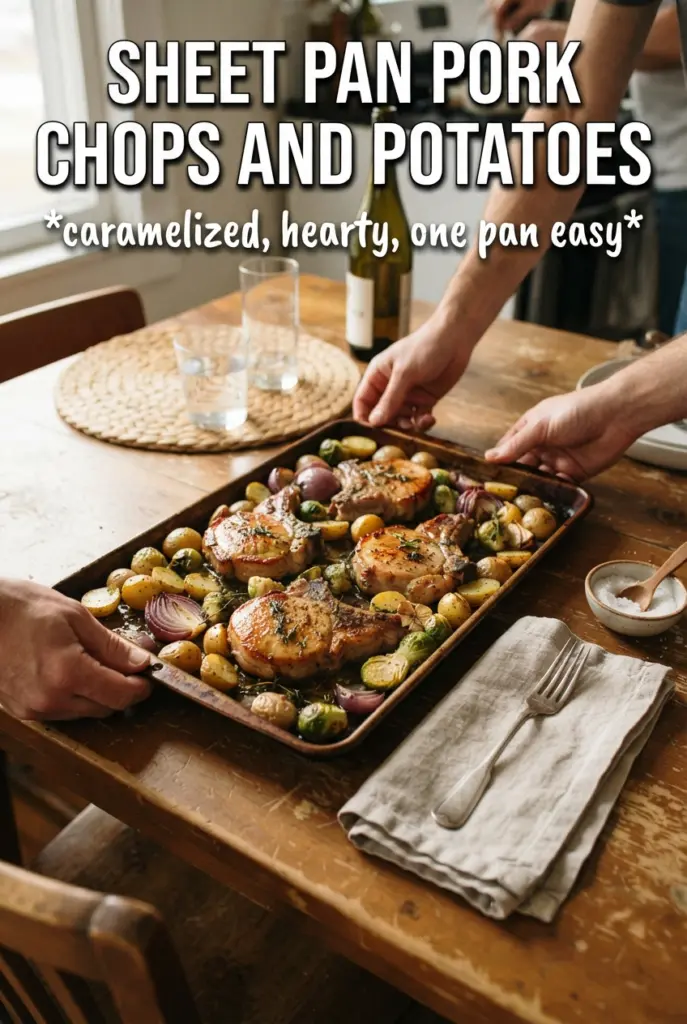
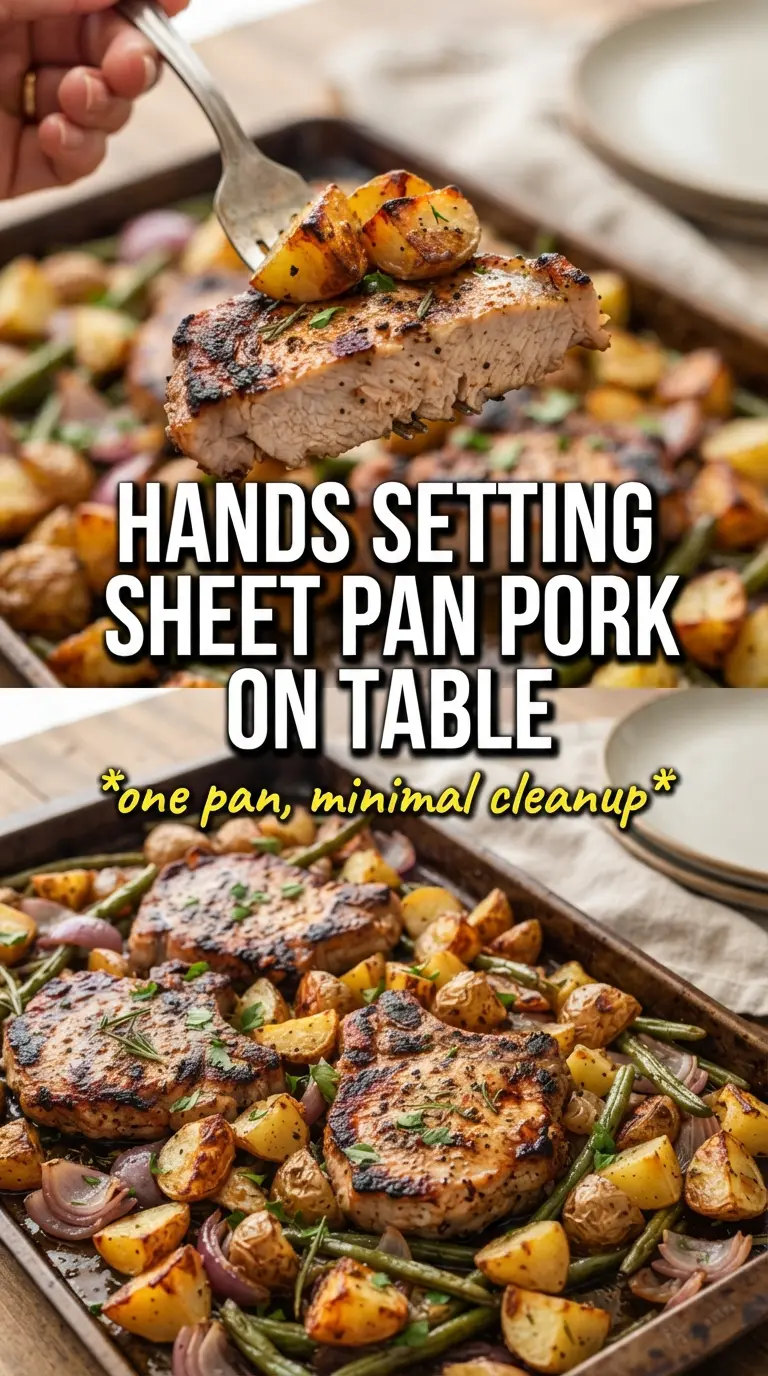
Pork chops come out at their best when the potatoes are already on their way to crisp and the pan has enough heat to give the meat a good start. That’s what makes this sheet pan dinner worth keeping around: the potatoes turn caramelized at the edges, the green beans stay bright with a little bite, and the pork stays juicy instead of drying out in a long roast. The garlic butter finishes everything with a glossy coating that picks up the browned bits left on the pan.
The trick here is giving the potatoes a head start before the chops go in. Bone-in chops around 1 inch thick can handle the oven time, but they still cook faster than the potatoes if you put everything on the pan at once. A quick skillet sear builds flavor on the pork before it finishes in the oven, and that extra step keeps the texture from going flat.
Below, I’ll walk through the timing that keeps the potatoes tender, the chops just cooked through, and the green beans from turning limp. There’s also a note on what to do if your pork chops are thinner or thicker than the ones listed here.
The potatoes got those crispy edges I was hoping for, and the pork stayed juicy even after the second roast. The garlic butter at the end made the whole pan taste like I spent a lot longer on it than I did.
Sheet pan pork chops and potatoes with garlic butter are what to pin when you want a full dinner with crisp edges, juicy pork, and almost no cleanup.
The Part That Keeps the Pork Juicy While the Potatoes Finish
The mistake with sheet pan pork chops is putting everything on the pan at the same time and hoping it all finishes together. Potatoes need longer and more direct heat to soften and brown. Pork chops, especially bone-in ones, need a shorter window or they’ll go from juicy to dry fast.
This method solves that by starting the potatoes first, then searing the chops before they go back into the oven. That sear isn’t just for color. It gives the pork a browned surface that holds onto flavor while the center finishes gently in the oven. The green beans go in near the end so they keep some snap instead of collapsing into the pan.
- Bone-in pork chops — These stay juicier than boneless chops during the oven finish. If you only have boneless chops, cut the final roast time down a few minutes and check them early.
- Baby potatoes — Their small size and waxier texture help them roast evenly without falling apart. Halving them gives you more cut surface, which means more browning.
- Green beans — They don’t need a long cook. Add them late so they soften just enough and pick up the garlic butter without turning mushy.
- Smoked paprika — This gives the pork a deeper, savory edge that plain paprika won’t match. It works especially well with the butter and herbs.
What Each Ingredient Is Actually Doing in This Recipe
- Primary ingredient (the star) — Quality matters most. Choose the best you can find.
- Cooking medium (oil, butter, or broth) — This carries flavors and prevents dryness.
- Seasonings (salt, pepper, spices, herbs) — Layer flavors so nothing overpowers. Build depth gradually.
- Aromatics (garlic, onion, herbs) — Cook with fat to bloom flavors. Become the foundation.
- Supporting ingredients — Complement the main ingredient without overpowering it.
- Sauce or liquid (if applicable) — Brings flavors together. Balance richness with acid.
- Acid (lemon, vinegar, wine, or other) — Brightens and prevents flat-tasting results.
- Final finish (garnish, glaze, or sauce) — Prevents one-dimensional taste and adds visual appeal.
How to Layer the Pan So Nothing Comes Out Underdone
Start with the potatoes
Toss the halved potatoes with olive oil, rosemary, thyme, garlic powder, salt, and pepper, then spread them in a single layer on the baking sheet. They need room to roast, not crowd, or they’ll steam and stay pale. After about 15 minutes in the oven, the cut sides should start to turn golden and the edges should look a little dry and crisp.
Sear the pork chops before they hit the oven
Season the chops with smoked paprika, salt, and pepper, then sear them in a hot skillet for 2 minutes per side. You’re not cooking them through here; you’re building the crust. If the skillet isn’t hot enough, the chops will gray instead of brown, and that lost sear is hard to get back in the oven.
Finish everything together
Push the potatoes to the edges of the pan, set the pork chops in the center, and scatter the green beans around them. Drizzle the garlic butter over the whole pan so it runs into the potatoes and lands on the chops. Roast until the pork reaches 145F in the center and the green beans are tender but still bright. Let the chops rest a few minutes before serving so the juices settle back into the meat.
What to Change When You Need to Work With What You Have
Boneless Pork Chops Instead of Bone-In
Boneless chops cook faster and dry out sooner, so pull them earlier and start checking for doneness a few minutes before the recipe says. You still want the sear, because that browning is doing a lot of the flavor work. Expect a leaner bite and a slightly shorter rest time.
No Green Beans on Hand
Broccoli florets, asparagus, or zucchini all work, but they each need a different timing. Broccoli can go in with the beans at the end; asparagus needs only the last 8 to 10 minutes; zucchini should be cut thick so it doesn’t collapse into the pan juices. The goal is the same: add a vegetable that can finish quickly and soak up the garlic butter.
Dairy-Free Version
Swap the butter for more olive oil or a plant-based butter that melts cleanly. You’ll lose a little of the round, buttery finish, but the garlic and herbs still carry the dish well. Use a little extra salt at the end if the dairy-free swap tastes flatter than the original.
Storage and Reheating
- Refrigerator: Store leftovers in an airtight container for up to 3 days. The potatoes soften a bit, but the flavor stays good.
- Freezer: The pork freezes better than the potatoes. If you freeze the full meal, expect the potatoes and green beans to lose their texture and get softer after thawing.
- Reheating: Warm in a 350F oven until heated through, covered loosely with foil so the chops don’t dry out. The microwave works in a pinch, but it softens the potatoes and makes the pork less juicy.
Answers to the Questions Worth Asking
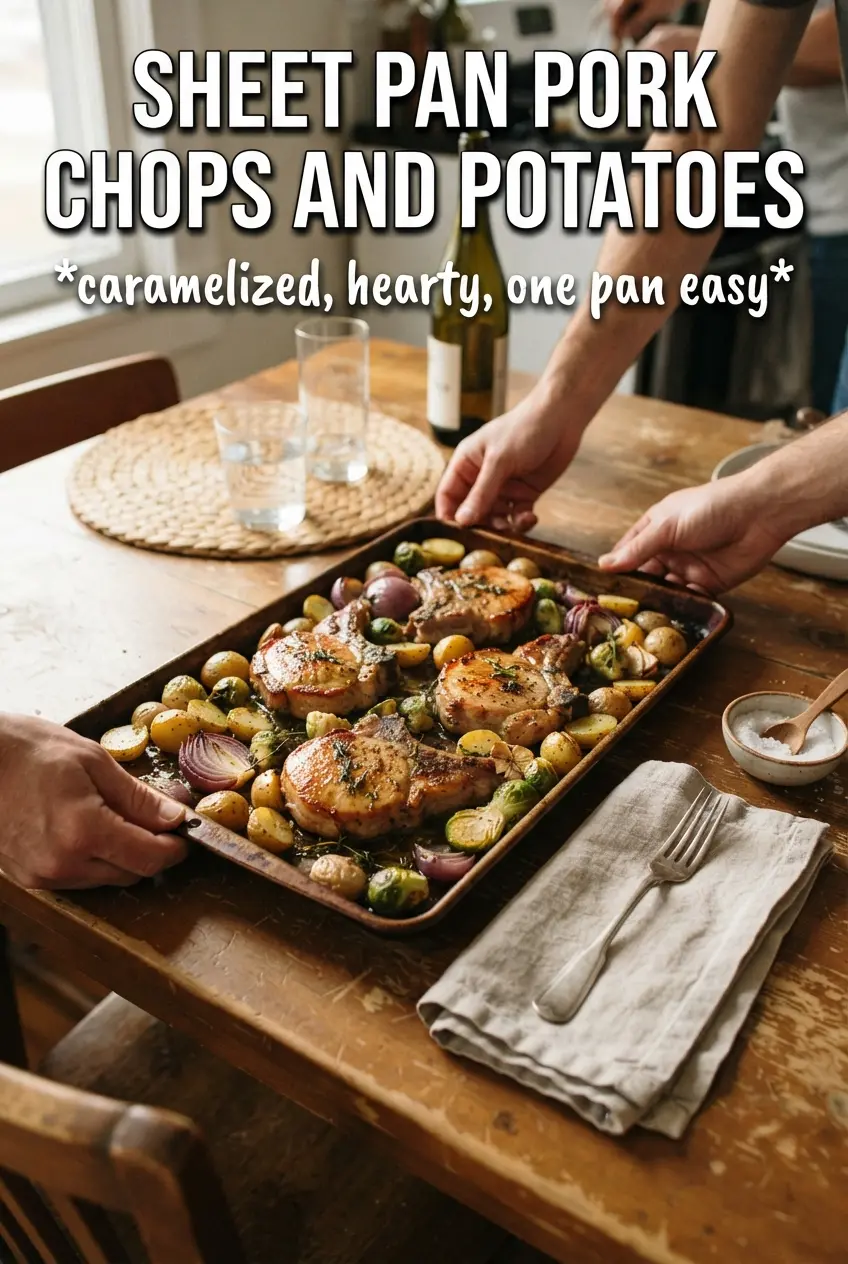
Sheet Pan Pork Chops And Potatoes
Ingredients
Equipment
Method
- Preheat the oven to 425°F and line a large rimmed baking sheet with parchment as a nonstick base.
- Toss the baby potatoes with 2 tbsp olive oil, dried rosemary, dried thyme, garlic powder, salt, and pepper, then spread them in an even layer on the pan.
- Roast the potatoes for 15 minutes at 425°F, until they start to turn golden at the edges (visual cue: slightly browned corners).
- Season the pork chops with smoked paprika, salt, and pepper.
- Sear the pork chops in a hot skillet with the remaining olive oil for 2 minutes per side, aiming for browned surfaces (visual cue: dark golden crust).
- Push the potatoes to the edges, place the pork chops in the center, and add the green beans around the chops on the same sheet pan.
- Mix the minced garlic into the melted butter, then drizzle the garlic herb butter over everything so it pools around the chops.
- Roast for 18-20 more minutes at 425°F until the pork reaches 145°F, then garnish with fresh parsley (visual cue: pork is just cooked through and potatoes are deeply caramelized).