
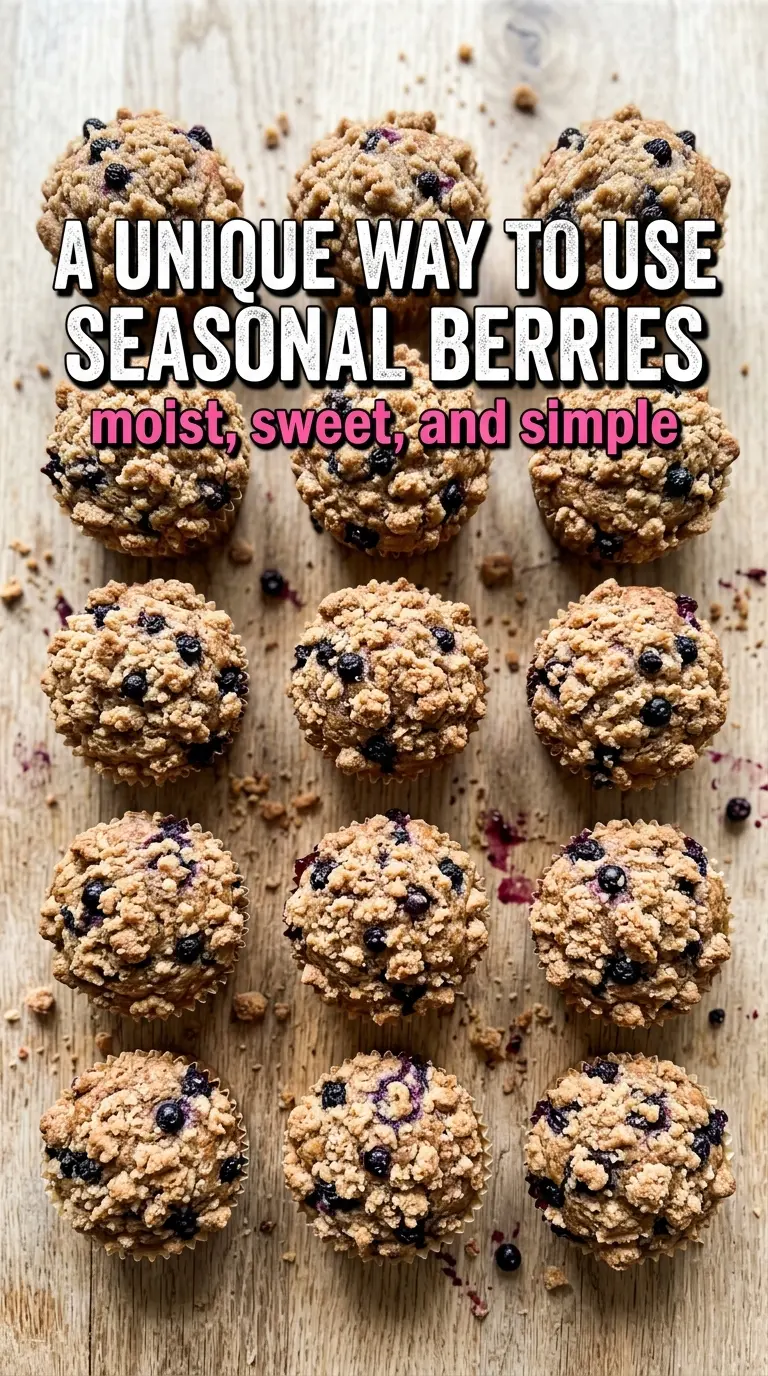
Elderberry muffins bake up with a tender crumb, little bursts of tart fruit, and a buttery streusel cap that turns an everyday muffin into something you’d gladly put next to a mug of coffee. The berries don’t disappear into the batter the way blueberries sometimes can; they stay distinct, giving each bite a bright, slightly wild edge that keeps the muffins from leaning too sweet.
What makes this version work is the balance. Elderberries bring sharpness, so the batter stays simple and gently sweet, and the streusel adds just enough richness to round everything out. The oil keeps the crumb soft for days, while the cold butter in the topping bakes into sandy, crisp clusters instead of melting into a paste.
Below, I’ll walk through the small details that matter most: how to keep the muffins tender, how to get the streusel crumbly instead of greasy, and what to do if you’re working with frozen elderberries or want to bake them a little differently.
The streusel stayed crisp and the elderberries held their shape instead of turning the batter purple. I baked them for 23 minutes and they were moist all the way through with just the right amount of tartness.
These elderberry muffins with streusel topping are the kind you’ll want to bake when you need a soft, fruit-studded breakfast with a crisp crumb on top.
The Small Mistake That Makes Muffins Tough Instead of Tender
Muffin batter punishes overmixing faster than almost anything else in the breakfast world. Once the wet ingredients hit the dry, the flour starts developing structure, and if you keep stirring past the point of combined, the crumb turns dense and a little chewy instead of soft and cakey. With elderberry muffins, that matters even more because the berries add weight and moisture of their own.
The other trap is overloading the batter with fruit or streusel. Elderberries are small, but they still need room in the crumb, and a heavy topping can sink before the center sets. A generous sprinkle is good. A full blanket that turns into a lid is not.
- Stir just until the flour disappears — a few streaks are better than a batter that’s been worked smooth.
- Fold the elderberries in at the end — that keeps them intact and keeps the batter from turning streaky and purple.
- Use cold butter for the streusel — soft butter melts into the flour and sugar, while cold cubes stay crumbly and bake up with texture.
What the Elderberries, Oil, and Streusel Are Each Doing Here
The elderberries are the point of the recipe, so they need to be fresh, clean, and stemmed carefully. Stems can taste woody and unpleasant, and if you skip that prep, the finished muffins lose a lot of their charm. If fresh elderberries are out of reach, frozen berries can stand in, but use them straight from the freezer so they don’t bleed too much color into the batter.
Oil keeps these muffins moist without making them heavy. Butter would give a richer flavor, but it also firms up more once cooled, which can make a breakfast muffin feel stale sooner. The milk and eggs provide enough structure and richness to carry the batter, while the vanilla softens the tartness from the fruit. The streusel is a mix of flour, brown sugar, and cold butter, and the brown sugar gives the topping that faint caramel note that plays well with the berries.
- All-purpose flour — gives the muffins enough structure to hold the berries without becoming bready.
- Vegetable oil — keeps the crumb soft after the muffins cool; neutral oil works best here.
- Brown sugar in the streusel — adds moisture and a deeper sweetness than white sugar would.
- Vanilla extract — rounds out the tart edge from the elderberries without competing with them.
Mixing the Batter So the Crumb Stays Light
Start With the Dry Ingredients
Whisk the flour, baking powder, salt, and sugar together until the mixture looks even and a little fluffy. That first whisk matters because it spreads the baking powder through the flour, which helps the muffins rise evenly instead of doming on one side and collapsing on the other. If the dry ingredients have lumps now, those lumps usually stay lumps in the oven.
Bring the Wet Ingredients Together Gently
Whisk the eggs, milk, oil, and vanilla until the mixture looks smooth and glossy. You don’t need to beat air into it; the goal is emulsification, not foam. Once the wet mixture goes into the dry bowl, stir with a light hand and stop as soon as the flour disappears. A thick batter with a few small streaks is the right place to stop.
Fold in the Elderberries and Top With Crumbs
Fold the berries in with just a few turns so they stay whole. Overworking them will crush the fruit and tint the batter heavily, which isn’t a disaster but does blur the clean berry pockets you want in the finished muffin. Divide the batter evenly, then pile the streusel on generously so it bakes into a crisp, sandy top instead of sliding off.
Bake Until the Centers Spring Back
At 375°F, these muffins usually need 22 to 25 minutes. Watch for the tops to set and turn lightly golden, with a toothpick coming out clean or with just a few moist crumbs. If the tops brown before the centers are done, the oven is running hot; slide the pan to a lower rack or check them a minute or two sooner next time.
How to Adjust These Muffins for Different Kitchens and Diets
Using Frozen Elderberries
Use them straight from frozen and fold them in at the very end. Thawing first makes them leak juice and can muddy the batter, while frozen berries hold their shape better in the oven.
Dairy-Free Version
Swap the milk for an unsweetened non-dairy milk with some body, like oat or soy. The muffins stay tender, though the flavor will be a touch less rich than with dairy milk.
Making Them a Little Less Sweet
Reduce the granulated sugar by 2 to 3 tablespoons if your elderberries are especially ripe. Don’t cut the streusel too much, though; that topping provides the contrast that keeps the muffins from tasting flat.
Storage and Reheating
- Refrigerator: Store in an airtight container for 3 to 4 days. The streusel softens a little, but the crumb stays moist.
- Freezer: These freeze well. Wrap individually, then store in a freezer bag for up to 2 months.
- Reheating: Warm from thawed or frozen in a 300°F oven for 8 to 10 minutes, or microwave briefly if you don’t mind losing the crisp topping. Too much microwave time turns the streusel soft and the crumb rubbery.
Questions I Get Asked About This Recipe

Elderberry Muffins With Streusel Topping
Ingredients
Equipment
Method
- Preheat the oven to 375°F and line a 12-cup muffin tin with liners. Make sure the liners are seated so batter doesn’t leak.
- Whisk together the all-purpose flour, baking powder, salt, and granulated sugar in a bowl. Mix until no dry pockets remain and the sugar looks evenly distributed.
- Whisk the eggs, milk, vegetable oil, and vanilla extract in a bowl. Pour into the dry ingredients and stir just until combined.
- Fold in the fresh elderberries until evenly suspended. Stop when the batter is thick and not overmixed.
- Combine the all-purpose flour and packed brown sugar for the streusel. Cut in the cold unsalted butter until coarse crumbs form.
- Divide the batter among the muffin cups. Sprinkle generously with the streusel topping so crumbs cover the tops.
- Bake for 22–25 minutes at 375°F, until a toothpick comes out clean. Look for lightly domed tops with visible streusel browning.
- Cool for 5 minutes before transferring to a wire rack. Let them rest until warm, not steaming hot.