
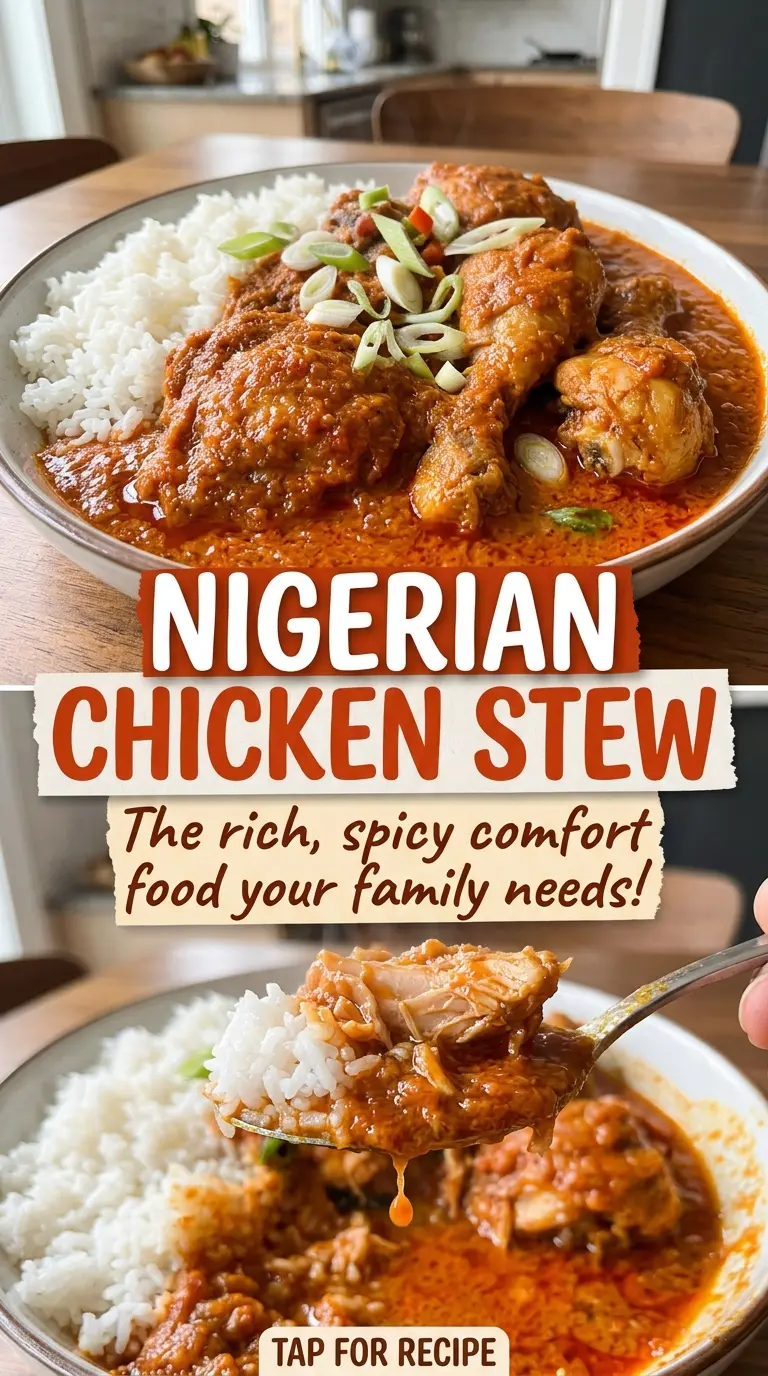
Deep orange-red Nigerian chicken stew earns its place at the table because the sauce cooks down until it loses that raw, sharp tomato edge and turns rich, sweet, and peppery around the chicken. The oil rises to the top in glossy streaks, the chicken finishes tender in the stew, and every spoonful over rice carries enough heat and depth to keep you going back for another bite.
What makes this version work is patience with the pepper base. The tomatoes, red bell peppers, onion, and Scotch bonnet need real time in the pot so the water cooks off and the stew darkens; if you rush that stage, the result tastes thin and metallic instead of full and rounded. Frying or oven-baking the chicken first also matters because it gives the meat some structure before it goes into the sauce, so it doesn’t fall apart while the stew reduces.
Below, I’ll walk through the part that changes everything: how to cook the pepper sauce until it stops tasting raw, plus the small ingredient choices that let you control the heat without losing the character of the dish.
The stew cooked down exactly the way you described, and that deepened the color and flavor so much. My chicken stayed intact, and the sauce clung to the rice instead of turning watery.
Save this Nigerian chicken stew for the nights when you want a deeply cooked pepper sauce and golden chicken over rice.
The Pepper Sauce Has to Cook Past “Blended”
The biggest mistake in Nigerian chicken stew is stopping too soon. A freshly blended mix of tomatoes, bell peppers, onion, and Scotch bonnet smells bright and looks pretty, but it still tastes thin and raw. The pot needs time for the water to evaporate and for the sauce to darken, lose that sharp tomato bite, and turn glossy as the oil separates.
That separation is your cue. You want to see the stew thicken enough to leave a trail when you drag a spoon across the bottom of the pot, and you want the color to shift from bright orange-red to a deeper brick red. If the sauce is splattering hard, the heat is too high. Lower it enough that the stew bubbles steadily without scorching on the bottom.
- Tomatoes — Plum tomatoes give the stew body, but they also carry a lot of water. That water has to cook off, so don’t rush the reduction or the finished sauce will taste loose.
- Red bell peppers — These add sweetness and color without overwhelming heat. They help the sauce taste rounded even if you reduce the Scotch bonnet a little.
- Scotch bonnet or habanero — This is the heat source, and it’s where the stew gets its signature kick. Use one pepper for moderate heat, or remove the seeds and membranes if you want the flavor without the full burn.
- Chicken pieces, bone-in — Bone-in chicken holds up better during the simmer and gives the stew more flavor than boneless meat. If you use boneless thighs, shorten the final simmer so they stay tender.
- Vegetable oil — Nigerian chicken stew needs enough oil to fry the pepper base and help it cook down properly. Don’t cut it too far or the sauce won’t fry the same way.
What Each Ingredient Is Actually Doing in This Recipe
- Primary ingredient (the star) — Quality matters most. Choose the best you can find.
- Cooking medium (oil, butter, or broth) — This carries flavors and prevents dryness.
- Seasonings (salt, pepper, spices, herbs) — Layer flavors so nothing overpowers. Build depth gradually.
- Aromatics (garlic, onion, herbs) — Cook with fat to bloom flavors. Become the foundation.
- Supporting ingredients — Complement the main ingredient without overpowering it.
- Sauce or liquid (if applicable) — Brings flavors together. Balance richness with acid.
- Acid (lemon, vinegar, wine, or other) — Brightens and prevents flat-tasting results.
- Final finish (garnish, glaze, or sauce) — Prevents one-dimensional taste and adds visual appeal.
Building the Stew So It Turns Deep and Glossy
Seasoning the Chicken First
Grate some of the onion straight into the chicken with the thyme, curry powder, bouillon, salt, and pepper, then let it sit for about 30 minutes. The onion adds moisture and a little sweetness, and that short marinade seasons the meat all the way through. If you skip the rest time, the chicken still works, but it won’t carry as much flavor into the center.
Getting the Chicken Golden
Fry the chicken in batches or oven-bake it until the outside takes on color and the meat is mostly cooked through. You’re not trying to finish it here; you’re building a layer of flavor and giving the chicken enough structure to finish in the stew without turning stringy. If the pieces are crowded in the pan, they steam instead of brown, and that softer exterior won’t hold up as well in the sauce.
Cooking the Pepper Base Down
Blend the tomatoes, red bell peppers, Scotch bonnet, and remaining onion until smooth, then fry that puree in oil over medium-high heat. Stir often and scrape the bottom of the pot, especially once the sauce starts thickening, because that’s when it likes to catch. After 30 to 40 minutes, the raw tomato smell should be gone and the oil should rise to the top in small pools around the edges.
Finishing in the Sauce
Add the chicken to the cooked pepper base and let everything simmer together until the meat is fully tender and the sauce clings to it. This last simmer is where the chicken picks up the color and flavor of the stew, so don’t boil it hard or the sauce can reduce too far and turn pasty. Taste at the end and adjust salt only after the sauce has reduced, since the seasoning concentrates as it cooks.
What to Change When You Want a Different Level of Heat or Richness
Milder Heat Without Losing the Stew’s Character
Use one Scotch bonnet instead of two, or remove the seeds and white ribs before blending. The stew will still have that peppery warmth, but the heat sits in the background instead of taking over. Keep the red bell peppers in place; they help the sauce stay full and balanced when you cut the fire down.
Chicken Thighs for a Faster, Juicier Finish
Bone-in thighs work beautifully if that’s what you have. They stay tender and forgiving, and they pick up the stew’s flavor fast. If you use smaller pieces, shorten the final simmer so the meat doesn’t overcook and start shredding apart in the sauce.
Making It Dairy-Free and Naturally Gluten-Free
This recipe already fits both needs as written as long as your bouillon is gluten-free. That means the texture and flavor come entirely from the pepper base, the chicken, and the oil, without needing any thickeners or dairy to carry the sauce.
Storage and Reheating
- Refrigerator: Store for up to 4 days. The sauce gets even deeper overnight, and the chicken stays tender.
- Freezer: It freezes well for up to 2 months. Cool it fully first, then pack the stew and sauce together in airtight containers so the chicken doesn’t dry out.
- Reheating: Warm gently on the stovetop over low heat with a splash of water if the sauce has tightened up. High heat can make the chicken tough and can scorch the pepper sauce before the center is hot.
Questions I Get Asked About This Recipe

Nigerian Chicken Stew
Ingredients
Equipment
Method
- Season the chicken pieces with half the onion (grated), thyme, curry powder, bouillon (or stock powder), salt, and pepper, then massage to coat. Marinate for 30 minutes.
- Fry or oven-bake the chicken until golden and mostly cooked through, then set aside. Keep the browned surface intact for better sauce cling.
- Blend the plum tomatoes, red bell peppers, scotch bonnet (or habanero), and remaining onion until smooth. Stir and scrape the blender as needed so the mixture is uniform.
- Heat 1/2 cup vegetable oil in a large pot over medium-high heat. Carefully fry the blended pepper sauce for 30-40 minutes, stirring frequently, until oil floats on top and the sauce darkens and looks deeply cooked.
- Add the fried chicken to the pot, coat it thoroughly with the sauce, and simmer for 15-20 minutes. Stir occasionally so chicken stays coated and the sauce thickens.
- Taste and adjust seasoning with salt and pepper as needed, then serve the stew over steamed rice. Top with fresh parsley before eating.