
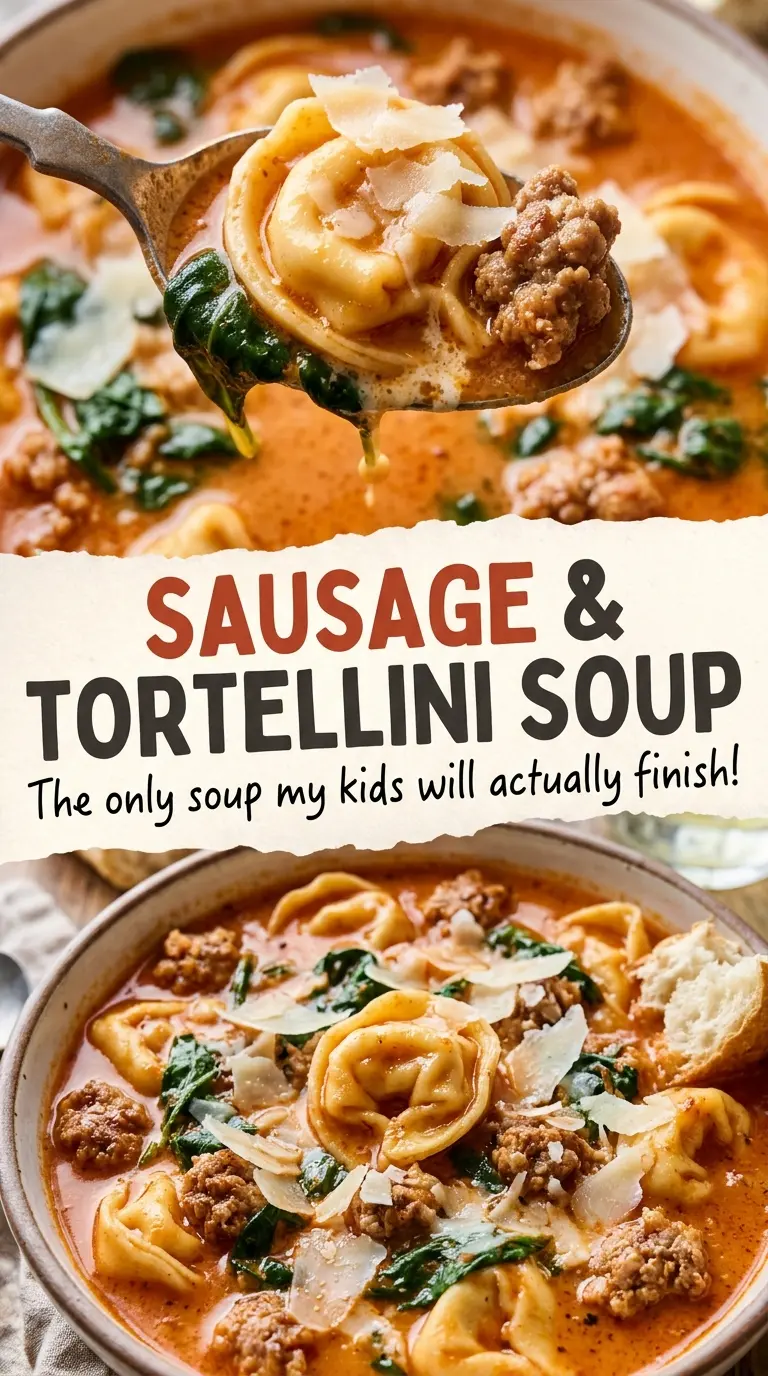
Sausage and tortellini soup lands in the bowl with a creamy tomato broth, tender pasta, and little bites of browned sausage in every spoonful. It has the kind of thickness that feels substantial without turning heavy, and the spinach folds in at the end so the soup stays bright instead of muddy. The best versions taste layered, not flat, and that comes from building the base in one pot instead of dumping everything together at once.
The sausage does the heavy lifting here, but the tomato paste and onion matter just as much. Tomato paste needs a minute in the pot to lose its raw edge and deepen into something richer, and that quick cook also picks up the browned bits left behind by the sausage. The tortellini should go in near the end so the pasta stays plump and the filling doesn’t turn soft and leaden. Once the cream goes in, the heat stays gentle; high heat can make the broth split or dull the fresh dairy finish.
Below you’ll find the small timing details that keep the tortellini from overcooking, plus a few swaps that still give you a silky, satisfying soup when you’re working with what you have.
The broth turned out creamy and rich without getting heavy, and the tortellini stayed perfectly tender when I added them at the very end. I used hot Italian sausage and the little bit of spice with the parmesan on top was exactly right.
Creamy sausage and tortellini soup for the nights when you want a one-pot dinner with a silky broth and tender pasta in every bite.
The Reason This Soup Stays Creamy Instead of Turning Grainy
Most creamy soups go sideways when the heat stays too high after the dairy goes in. That is the moment the broth can look broken, greasy, or separated around the edges. In this soup, the cream gets stirred in after the tortellini is cooked and the burner is lowered, which keeps the base smooth and gives the broth that velvety finish people expect.
The other place people lose control is the pasta. Tortellini only needs a few minutes, and if you boil it hard for too long, the filling swells, the pasta skins split, and the broth turns cloudy. Keep the boil lively only for the tomato-and-broth stage, then reduce the heat once the tortellini is nearly tender.
What Each Ingredient Is Actually Doing in This Dish
- Italian sausage — This is the backbone of the soup. It brings seasoning, fat, and browned bits that deepen the broth. Hot sausage gives you more heat; mild sausage keeps it rounder. If you use sausage links, remove the casings and break the meat up well so it browns instead of steaming.
- Refrigerated cheese tortellini — Fresh tortellini cooks fast and gives the soup enough body to feel like a meal. Shelf-stable tortellini can work, but it usually needs a little longer and can finish with a firmer bite. Add it near the end so it doesn’t bloat and go soft.
- Tomato paste — This is not just for color. It deepens the broth and adds a cooked tomato base that diced tomatoes alone can’t provide. Let it cook with the onions and garlic for a minute or two so it loses the metallic, raw edge.
- Heavy cream — This gives the soup its plush finish. Half-and-half will work in a pinch, but the broth will be thinner and a little less stable. Add the cream off a hard boil so it blends into the tomato base without separating.
- Baby spinach — Spinach wilts quickly and keeps the soup from feeling too dense. Add it at the very end so it stays green and soft instead of turning dull and overcooked. Frozen spinach isn’t the best swap here because it releases too much water and changes the texture of the broth.
How to Build the Broth Without Overcooking the Tortellini
Brown the Sausage First
Cook the sausage over medium-high heat until it loses its pink color and picks up deep brown edges. Those browned bits on the bottom matter, so don’t crowd the pot or the sausage will steam instead of sear. Drain off excess fat if there’s a lot, but leave enough behind to cook the onion without sticking. If the sausage never browns, the soup will taste flat.
Cook the Onion and Tomato Paste in the Same Pot
Drop the onion into the sausage drippings and cook it until it softens and looks glossy, about 4 minutes. Add the garlic and tomato paste next and stir until the paste darkens slightly and smells sweet instead of sharp. That short cook is what gives the broth depth. If the garlic starts to brown hard, the heat is too high and the base will turn bitter.
Simmer the Tomato Broth Before the Pasta Goes In
Pour in the diced tomatoes, broth, Italian seasoning, and red pepper flakes, then bring everything to a steady boil. This is the point where the soup takes on its shape, so let the flavors mingle for a few minutes before the tortellini goes in. A rolling boil is fine here, but once the pasta is added, you’ll want a gentler bubble so the filling stays intact.
Finish with Cream and Spinach
Add the tortellini and cook only until it is just tender. Then lower the heat and stir in the cream and spinach. The spinach should wilt in a couple of minutes, and the broth should look silky, not frothy or broken. Season at the end with salt and pepper, because the sausage, broth, and parmesan can shift the salt level more than you’d think.
Three Ways to Adapt This Soup Without Losing What Makes It Good
Make it dairy-free
Swap the heavy cream for full-fat coconut milk or an unsweetened dairy-free cooking cream. Coconut milk will soften the tomato edge and leave a faint sweetness, while a neutral dairy-free cream keeps the flavor closer to the original. Just keep the heat low when you add it so the broth stays smooth.
Use turkey sausage for a lighter version
Turkey sausage works, but it needs a little help because it doesn’t render as much fat or taste as rich on its own. Add the olive oil at the start and don’t skip the tomato paste step, since that extra browning matters even more with leaner meat. The result is lighter but still satisfying.
Make it gluten-free
Use gluten-free tortellini if you can find it, or swap in cooked gluten-free pasta and add it just before serving so it doesn’t fall apart. The broth itself is already naturally gluten-free as long as your broth and sausage are labeled accordingly. Gluten-free pasta usually softens faster, so watch the texture closely.
Stretch it for a bigger crowd
Add another cup of broth and a bit more spinach if you want to feed more people without making the soup heavy. The tortellini will still be the star, but the broth will feel a little lighter and less crowded. If you scale up, season in stages so the salt doesn’t jump too far at the end.
Storage and Reheating
- Refrigerator: Store in an airtight container for up to 3 days. The tortellini will keep absorbing broth, so expect the soup to thicken.
- Freezer: It freezes, but the tortellini texture softens after thawing. For the best result, freeze the soup base without the pasta, then cook fresh tortellini when you reheat it.
- Reheating: Warm it gently on the stove over low heat and add a splash of broth if needed. Don’t boil it hard, or the cream can separate and the tortellini will turn mushy.
Answers to the Questions Worth Asking

Sausage And Tortellini Soup
Ingredients
Equipment
Method
- Brown Italian sausage in a large pot over medium-high heat, stirring to crumble, until fully cooked and browned, then drain fat.
- Sauté onion in the same pot over medium heat for 4 minutes, stirring occasionally, until softened.
- Add garlic and tomato paste and cook for 2 minutes, stirring, until fragrant.
- Add diced tomatoes, chicken broth, Italian seasoning, and red pepper flakes, then bring to a boil.
- Add tortellini and cook for 4-5 minutes until just tender.
- Stir in heavy cream and cook for 2-3 minutes, stirring until the broth turns creamy.
- Add baby spinach and cook for 2-3 minutes until wilted.
- Season with salt and pepper to taste, then serve topped with parmesan and fresh basil.